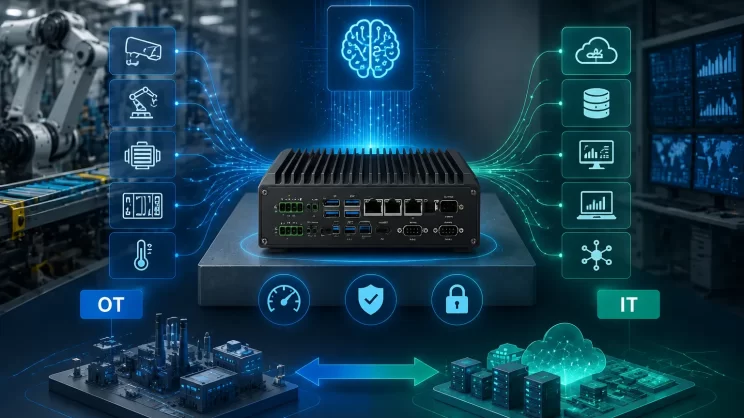
The Industrial Internet of Things (IIoT) represents the integration of advanced connectivity and smart devices into industrial processes, enabling real-time monitoring, data-driven decision-making, and automation. Understanding IIoT also involves distinguishing it from related concepts such as M2M (Machine-to-Machine), general IoT, and CPS (Cyber-Physical Systems), which each play unique roles in connecting machines, people, and systems across industries.
1. M2M (máquina a máquina)
The concept of “M2M” was mainly proposed by the communications industry. Initially, M2M mainly refers to mechanical equipment without information capabilities communicating with other equipment or information systems (IT systems) through mobile communication networks (wireless networks).
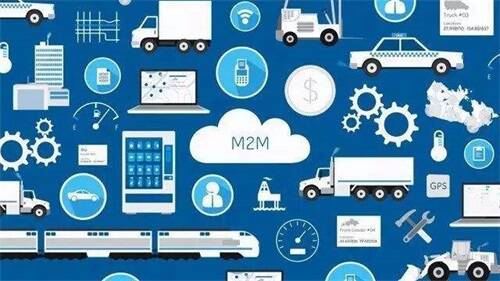
La industria de las comunicaciones cree que después de que la red satisfaga las necesidades de comunicación entre personas, también puede permitir conexiones de comunicación entre "Máquina a Máquina" para formar aplicaciones de información más eficientes. Desde entonces, el concepto de M2M se ha ampliado al de "Hombre a Máquina" o "Máquina a Humano".
En términos generales, M2M se refiere al intercambio de información y la interacción entre personas, dispositivos y sistemas de información.
The concept of M2M mainly emphasizes communication implementation, and the network plays a core role in its technical framework. Through the technical means of “wireless connection”, an “end-to-end” reliable connection is achieved. On the basis of the “connection” between things, applications such as centralized asset monitoring, equipment remote operation, logistics warehousing management, and mobile payment are realized.
2. IoT (Internet of Things)
La industria informática cree que el concepto de IoT se remonta a la máquina de Coca-Cola en red de Xerox en 1990.
Posteriormente, en 1999, el Centro de Identificación Automática del Instituto Tecnológico de Massachusetts (Estados Unidos) propuso un concepto de Internet de los objetos basado en la tecnología RFID, destacando en su definición el concepto de "dispositivos sensores de información conectados a Internet". (Definición original de RFID Internet de los objetos: conectar todos los objetos a Internet mediante dispositivos sensores de información como la identificación por radiofrecuencia para lograr una identificación y gestión inteligentes).
Today, IoT is an Internet of Things concept promoted by Internet companies, software companies, and even the entire information industry. After realizing the social interconnection between people, Internet companies hope that things can also communicate with each other through the Internet. The foundation of IoT is still the Internet, and it is the extension and development direction of the Internet.
El concepto de IO hace hincapié principalmente en la interacción a través de Internet. La globalización, la apertura, la interoperabilidad y la naturaleza social de Internet son la base que sustenta el concepto de IO. Una vez que los productos inteligentes tienen una "identidad de red", pueden derivar diversas aplicaciones de Internet: arrendamiento de productos (compartir productos inteligentes), servicios de información (como servicios de localización, pago electrónico, análisis de big data), aplicaciones de productos vestibles, etc.
3. CPS (sistema ciberfísico)
En 2006, Helen Gill, de la National Science Foundation, propuso el concepto de CPS y lo incluyó en la lista de proyectos de investigación importantes. Dado que el CPS se centra en el estudio de los sistemas de información integrados y automatizados en la industria y la fabricación, en un principio se entendió intuitivamente como el "Internet de los objetos integrados" (desde la perspectiva de la actual industria de la información, esta comprensión es algo unilateral).
En el término "Cyber Physical System", "Cyber" se refiere al sistema de información, y "Physical" al sistema físico (equipos, entorno, datos de producción).
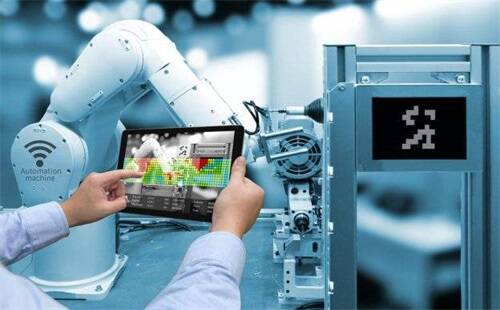
Key Features of CPS
El SPI hace hincapié en el proceso dinámico de retroalimentación y circulación de la información en tiempo real entre el mundo físico y el mundo de la información.
It deeply integrates various information technologies: sensors, embedded computing, cloud computing, network communications, and software, making various information capabilities (3C: Computing-Computer, Communication-Communication, and Control-Control) highly collaborative and autonomous, achieving Production application systems that monitor and change the properties of the physical world autonomously, intelligently, dynamically, and systematically.
The goal of CPS is to achieve deep integration between information systems and the physical world, as well as between various information systems: in terms of perception, interconnection (standard communication, application protocols), capability openness (Internet service interface, API – application programming interface), based on security and controllability (identity authentication, security encryption), and applied computing (data computing, information control), a huge, integrated, and intelligent production service system is built.
Applications of CPS
CPS covers a wide range of applications: from tiny nanorobots to huge engineering infrastructure equipment, from urban traffic information provision to remote surgery medical systems, transportation, medical care, agriculture, energy, national defense, construction, and manufacturing assembly lines are all areas it is involved in.
4. Differences Between M2M, IoT, and CPS
| Aspecto | M2M | IoT | CPS |
|---|---|---|---|
| Focus | Device-to-device communication | Internet-connected devices | Integrated cyber-physical processes |
| Core Technology | Communication networks | Internet, cloud platforms, sensors | Sensors + embedded computing + control + cloud analytics |
| Goal | Data exchange | Connectivity and services | Intelligent automation and real-time industrial control |
| Aplicaciones | Remote monitoring, telemetry | Smart homes, smart cities | Industrial 4.0, autonomous systems |
| Real-time Interaction | Limited | Partial | High and continuous |
Comparing these concepts helps clarify how CPS extends the capabilities of M2M and IoT in industrial environments.
In the industrial field, while controlling mechanical equipment, the production system also accepts and processes information (perception) fed back from the physical world. The “upload” and “download” of information in production control have a high degree of real-time collaboration. Among the three concepts of “M2M”, “IoT,” and “CPS”, CPS is designed to meet this characteristic. Therefore, it is recognized as the Internet of Things (IIOT) in the industrial field and will be used in the next-generation industrial system. basic information system.
En el ámbito industrial, los futuros escenarios de aplicación de la información son muy coherentes con el concepto de tecnología CPS, por lo que en general se cree que CPS es la tecnología central para hacer realidad el Internet industrial de las cosas.
Aunque M2M en el campo de las comunicaciones e IoT en el de Internet han sido preconcebidas y populares, se han presentado diversas aplicaciones y productos en sistemas comerciales y mercados de consumo. Sin embargo, el ámbito industrial, como arteria principal de la economía mundial, es el área central para el futuro desarrollo de la tecnología del Internet de las Cosas (es decir, CPS).
5. Conclusión
Por supuesto, M2M, IoT y CPS no están aislados unos de otros. Muchas de sus funciones técnicas se solapan o complementan entre sí. Todas representan áreas importantes del Internet de las cosas, pero tienen enfoques diferentes.
Understanding CPS and its distinctions from M2M and IoT is essential for designing modern industrial systems. CPS represents the convergence of cyber and physical processes, driving real-time automation, efficiency, and intelligent decision-making across industrial environments.