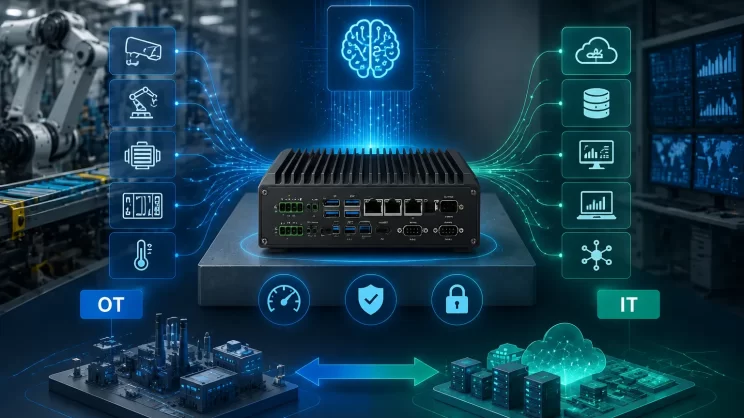
The Industrial Internet of Things (IIoT) represents the integration of advanced connectivity and smart devices into industrial processes, enabling real-time monitoring, data-driven decision-making, and automation. Understanding IIoT also involves distinguishing it from related concepts such as M2M (Machine-to-Machine), general IoT, and CPS (Cyber-Physical Systems), which each play unique roles in connecting machines, people, and systems across industries.
1. M2M (Machine to Machine)
The concept of “M2M” was mainly proposed by the communications industry. Initially, M2M mainly refers to mechanical equipment without information capabilities communicating with other equipment or information systems (IT systems) through mobile communication networks (wireless networks).
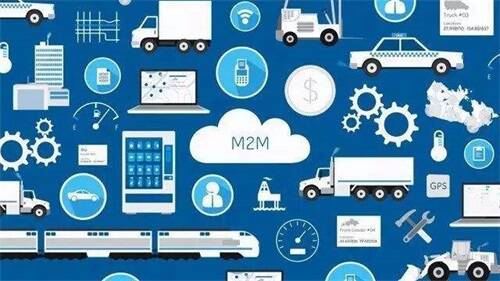
Индустрия связи считает, что после того, как сеть удовлетворит потребности в общении между людьми, она также сможет обеспечить связь между "машинами и машинами" для создания более эффективных информационных приложений. С тех пор концепция M2M была расширена до концепции "человек-машина" или "машина-человек".
Вообще говоря, M2M - это обмен информацией и взаимодействие между людьми, устройствами и информационными системами.
The concept of M2M mainly emphasizes communication implementation, and the network plays a core role in its technical framework. Through the technical means of “wireless connection”, an “end-to-end” reliable connection is achieved. On the basis of the “connection” between things, applications such as centralized asset monitoring, equipment remote operation, logistics warehousing management, and mobile payment are realized.
2. IoT (Internet of Things)
Представители ИТ-индустрии считают, что концепцию IoT можно проследить до сетевого автомата по продаже кока-колы компании Xerox в 1990 году.
Then, in 1999, the Automatic Identification Center of the Massachusetts Institute of Technology in the United States proposed an Internet of Things concept based on RFID technology, emphasizing the concept of “information sensing devices connected to the Internet” in its definition. (Original definition of RFID Internet of Things: connecting all items to the Internet through information sensing devices such as radio frequency identification to achieve intelligent identification and management.)
Today, IoT is an Internet of Things concept promoted by Internet companies, software companies, and even the entire information industry. After realizing the social interconnection between people, Internet companies hope that things can also communicate with each other through the Internet. The foundation of IoT is still the Internet, and it is the extension and development direction of the Internet.
В концепции IoT основной упор делается на взаимодействие с Интернетом. Глобализация, открытость, интероперабельность и социальная природа Интернета являются основой для поддержки концепции IoT. Как только умные продукты получают "сетевую идентификацию", они могут создавать различные интернет-приложения: лизинг продуктов (совместное использование умных продуктов), информационные услуги (например, услуги определения местоположения, электронные платежи, анализ больших данных), приложения для носимых продуктов и т. д.
3. CPS (киберфизическая система)
В 2006 году Хелен Гилл из Национального научного фонда предложила концепцию CPS и включила ее в список важных исследовательских проектов. Поскольку CPS фокусируется на изучении встроенных и автоматизированных информационных систем в промышленности и производстве, первоначально она интуитивно понималась как "встроенный Интернет вещей" (с точки зрения современной информационной индустрии, такое понимание несколько однобоко).
В термине "киберфизическая система" "кибер" относится к информационной системе, а "физическая" - к физической системе (оборудование, среда, производственные данные).
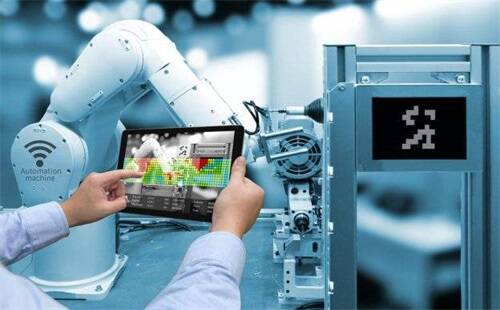
Key Features of CPS
CPS делает акцент на динамической обратной связи и циркуляции информации в реальном времени между физическим и информационным миром.
It deeply integrates various information technologies: sensors, embedded computing, cloud computing, network communications, and software, making various information capabilities (3C: Computing-Computer, Communication-Communication, and Control-Control) highly collaborative and autonomous, achieving Production application systems that monitor and change the properties of the physical world autonomously, intelligently, dynamically, and systematically.
The goal of CPS is to achieve deep integration between information systems and the physical world, as well as between various information systems: in terms of perception, interconnection (standard communication, application protocols), capability openness (Internet service interface, API – application programming interface), based on security and controllability (identity authentication, security encryption), and applied computing (data computing, information control), a huge, integrated, and intelligent production service system is built.
Applications of CPS
CPS covers a wide range of applications: from tiny nanorobots to huge engineering infrastructure equipment, from urban traffic information provision to remote surgery medical systems, transportation, medical care, agriculture, energy, national defense, construction, and manufacturing assembly lines are all areas it is involved in.
4. Differences Between M2M, IoT, and CPS
| Aspect | M2M | IoT | CPS |
|---|---|---|---|
| Фокус | Device-to-device communication | Internet-connected devices | Integrated cyber-physical processes |
| Core Technology | Communication networks | Internet, cloud platforms, sensors | Sensors + embedded computing + control + cloud analytics |
| Goal | Data exchange | Connectivity and services | Intelligent automation and real-time industrial control |
| Приложения | Remote monitoring, telemetry | Smart homes, smart cities | Industrial 4.0, autonomous systems |
| Real-time Interaction | Limited | Partial | High and continuous |
Comparing these concepts helps clarify how CPS extends the capabilities of M2M and IoT in industrial environments.
In the industrial field, while controlling mechanical equipment, the production system also accepts and processes information (perception) fed back from the physical world. The “upload” and “download” of information in production control have a high degree of real-time collaboration. Among the three concepts of “M2M”, “IoT,” and “CPS”, CPS is designed to meet this characteristic. Therefore, it is recognized as the Internet of Things (IIOT) in the industrial field and will be used in the next-generation industrial system. basic information system.
В промышленной сфере будущие сценарии применения информации в значительной степени соответствуют концепции технологии CPS, поэтому принято считать, что CPS является основной технологией для реализации промышленного Интернета вещей.
Хотя M2M в сфере коммуникаций и IoT в сфере Интернета вещей уже стали традиционными и популярными, разнообразные приложения и продукты были представлены в коммерческих системах и на потребительских рынках. Однако промышленная сфера, как главная артерия мировой экономики, является основной областью для будущего развития технологии Интернета вещей (т.е. CPS).
5. Заключение
Разумеется, M2M, IoT и CPS не изолированы друг от друга. Многие из их технических функций пересекаются или дополняют друг друга. Все они представляют собой важные области Интернета вещей, но имеют разную направленность.
Understanding CPS and its distinctions from M2M and IoT is essential for designing modern industrial systems. CPS represents the convergence of cyber and physical processes, driving real-time automation, efficiency, and intelligent decision-making across industrial environments.