The Industrial Internet of Things (IIoT) represents the integration of advanced connectivity and smart devices into industrial processes, enabling real-time monitoring, data-driven decision-making, and automation. Understanding IIoT also involves distinguishing it from related concepts such as M2M (Machine-to-Machine), general IoT, and CPS (Cyber-Physical Systems), which each play unique roles in connecting machines, people, and systems across industries.
1. M2M (Machine to Machine)
The concept of “M2M” was mainly proposed by the communications industry. Initially, M2M mainly refers to mechanical equipment without information capabilities communicating with other equipment or information systems (IT systems) through mobile communication networks (wireless networks).
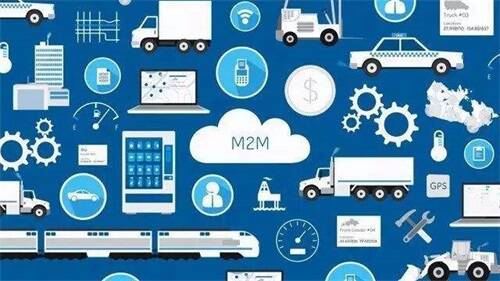
The communications industry believes that after the network meets the communication needs between people, it can also enable communication connections between “Machine to Machine” to form more efficient information applications. Since then, the concept of M2M has been extended to the concept of “Man to Machine” or “Machine to Human”.
Generally speaking, M2M refers to the information exchange and interaction between people, devices, and information systems.
The concept of M2M mainly emphasizes communication implementation, and the network plays a core role in its technical framework. Through the technical means of “wireless connection”, an “end-to-end” reliable connection is achieved. On the basis of the “connection” between things, applications such as centralized asset monitoring, equipment remote operation, logistics warehousing management, and mobile payment are realized.
2. IoT (Internet of Things)
The IT industry believes that the concept of IoT can be traced back to Xerox’s Networked Coke Machine in 1990.
Then, in 1999, the Automatic Identification Center of the Massachusetts Institute of Technology in the United States proposed an Internet of Things concept based on RFID technology, emphasizing the concept of “information sensing devices connected to the Internet” in its definition. (Original definition of RFID Internet of Things: connecting all items to the Internet through information sensing devices such as radio frequency identification to achieve intelligent identification and management.)
Today, IoT is an Internet of Things concept promoted by Internet companies, software companies, and even the entire information industry. After realizing the social interconnection between people, Internet companies hope that things can also communicate with each other through the Internet. The foundation of IoT is still the Internet, and it is the extension and development direction of the Internet.
The concept of IoT mainly emphasizes Internet interaction. The globalization, openness, interoperability, and social nature of the Internet are the basis for supporting the IoT concept. Once smart products have a “network identity”, they can derive various Internet applications: product leasing (sharing smart products), information services (such as location services, electronic payment, big data analysis), wearable product applications, etc.
3. CPS (Cyber Physical System)
In 2006, Helen Gill of the National Science Foundation proposed the concept of CPS and listed it as an important research project. Since CPS focuses on the study of embedded and automated information systems in industry and manufacturing, it was initially intuitively understood as the “embedded Internet of Things” (from the perspective of the current information industry, this understanding is somewhat one-sided).
In the term “Cyber Physical System”, “Cyber” refers to the information system, and “Physical” refers to the physical system (equipment, environment, production data).
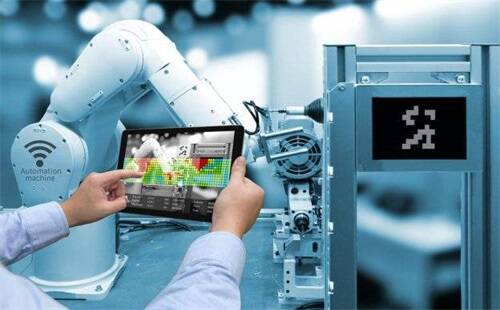
Key Features of CPS
CPS emphasizes the real-time, dynamic information feedback and circulation process between the physical world and the information world.
It deeply integrates various information technologies: sensors, embedded computing, cloud computing, network communications, and software, making various information capabilities (3C: Computing-Computer, Communication-Communication, and Control-Control) highly collaborative and autonomous, achieving Production application systems that monitor and change the properties of the physical world autonomously, intelligently, dynamically, and systematically.
The goal of CPS is to achieve deep integration between information systems and the physical world, as well as between various information systems: in terms of perception, interconnection (standard communication, application protocols), capability openness (Internet service interface, API – application programming interface), based on security and controllability (identity authentication, security encryption), and applied computing (data computing, information control), a huge, integrated, and intelligent production service system is built.
Applications of CPS
CPS covers a wide range of applications: from tiny nanorobots to huge engineering infrastructure equipment, from urban traffic information provision to remote surgery medical systems, transportation, medical care, agriculture, energy, national defense, construction, and manufacturing assembly lines are all areas it is involved in.
4. Differences Between M2M, IoT, and CPS
| Aspect | M2M | IoT | CPS |
|---|---|---|---|
| Focus | Device-to-device communication | Internet-connected devices | Integrated cyber-physical processes |
| Core Technology | Communication networks | Internet, cloud platforms, sensors | Sensors + embedded computing + control + cloud analytics |
| Goal | Data exchange | Connectivity and services | Intelligent automation and real-time industrial control |
| Applications | Remote monitoring, telemetry | Smart homes, smart cities | Industrial 4.0, autonomous systems |
| Real-time Interaction | Limited | Partial | High and continuous |
Comparing these concepts helps clarify how CPS extends the capabilities of M2M and IoT in industrial environments.
In the industrial field, while controlling mechanical equipment, the production system also accepts and processes information (perception) fed back from the physical world. The “upload” and “download” of information in production control have a high degree of real-time collaboration. Among the three concepts of “M2M”, “IoT,” and “CPS”, CPS is designed to meet this characteristic. Therefore, it is recognized as the Internet of Things (IIOT) in the industrial field and will be used in the next-generation industrial system. basic information system.
In the industrial field, future information application scenarios are highly consistent with the CPS technology concept, so it is generally believed that CPS is the core technology for realizing the industrial Internet of Things.
Although M2M in the communication field and IoT in the Internet field have been preconceived and popular, a variety of applications and products have been presented in commercial systems and consumer markets. However, the industrial field, as the main artery of the global economy, is the core area for the future development of Internet of Things technology (ie CPS).
5. Conclusion
Of course, M2M, IoT, and CPS are not isolated from each other. Many of their technical functions are overlapping or complementary to each other. They all represent important areas of the Internet of Things, but they have different focuses.
Understanding CPS and its distinctions from M2M and IoT is essential for designing modern industrial systems. CPS represents the convergence of cyber and physical processes, driving real-time automation, efficiency, and intelligent decision-making across industrial environments.