What exactly is the “M2M” often mentioned in the Internet of Things?
M2M (Machine-to-Machine) is a communication technology that enables devices, machines, and sensors to exchange data automatically without human intervention. It is one of the foundational technologies behind the Internet of Things (IoT).
Obviously, understanding the differences between iot and M2M, connecting objects. Without M2M technology, it would be impossible to connect objects to form a huge Internet of Things. M2M technology and products are important technologies and products that constitute the network layer of the Internet of Things.
Why is M2M important in IoT?
M2M is considered the foundation of IoT because it enables devices to collect, exchange, and transmit data automatically. Without M2M communication, IoT systems would not be able to connect sensors, machines, gateways, and cloud platforms efficiently.

2. M2M concept
First of all, M2M is a means and method for connecting people and machines. Broadly speaking, M2M includes: Machine to Machine; Man to Machine; Machine to Man; Mobile to Machine.
M2M technology integrates data collection, GPS, remote monitoring, communication, information, and other technologies to realize the sharing of information between machines, equipment, application processing processes, and background information systems, and even operators, to complete the automation of business processes. M2M technology enables all machines and equipment to have wireless networking and communication capabilities. It allows machines and people to achieve seamless connections across time and space.
3. M2M application system composition
1. Intelligent machines
“Intelligence” refers to making machines “speak” and giving them the ability to perceive, process, and wirelessly transmit information.
2. M2M hardware
The machine can be equipped with networking capabilities and remote communication components to extract information, extract the required information from different devices and transmit it to the analysis part.
3. Communication network
Including wide area network (wireless mobile communication network, satellite communication network, Internet, and public telephone network), local area network (Ethernet, wireless LAN, Bluetooth, wifi), personal area network (Zigbee, sensor network), M2M hardware transmission through the above network, the delivery of information to a designated location is at the core of the M2M technology framework.
4. Middleware
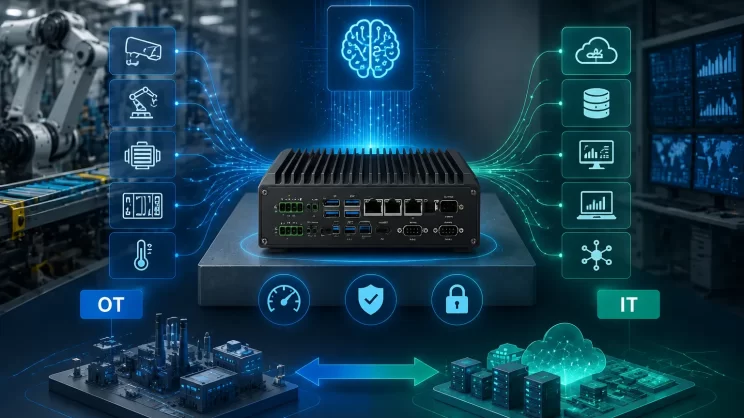
M2M gateway completes the conversion between different protocols and establishes a bridge between the communication network and the IT system.
4. M2M application fields
1. Retail and payment fields: At present, electronic payment systems based on mobile phone services have been widely used, and using mobile communication modules for daily consumption is also a good choice.
2. Household application fields: Daily water, electricity, and gas meters use M2M devices to enable automatic meter reading. Data is transmitted through modern cellular, LPWAN, or Wi-Fi networks directly to utility billing systems, eliminating the need for manual data collection.
3. Logistics and transportation industry: Utilize the wide coverage of mobile communication networks to realize functions such as order inquiry and management, transportation arrangements, handover and payment system control, and greatly improve service speed, service quality, and service flexibility.
4. Medical industry: Remote monitoring, remote inspection, and data aggregation of patients are realized through M2M devices, allowing for remote consultation.
5. Industrial application fields: In industry, it is increasingly popular to choose GPRS and CDMA monitoring modules. This group of modules has significant features in remote measurement, remote equipment management, and remote control.
The above is an introduction to M2M-related knowledge. M2M technology combines communication and network technologies to connect machines and equipment that are everywhere in people’s daily lives into a network, forming a huge network that includes wide area networks, local area networks, and personal area networks, ensuring that devices around them become smart enough.