Industrial gateway remote management is most useful when engineers can configure, program, and troubleshoot field devices without repeatedly traveling to the site. In this guide, we walk through how to use IOTClient to manage gateways from a central platform, from adding and grouping devices to remote configuration, remote programming, and LAN access. We also cover the dashboard, user and role management, and tenant settings, so you can understand the complete workflow from connecting the first gateway to managing multiple devices and users in daily operation.
I. Overview
The product integrates core functions such as industrial gateway remote management, remote programming, and remote LAN, providing a comprehensive remote operation and maintenance solution for industrial equipment. Through a cloud platform and secure VPN tunnel technology, engineers can complete equipment debugging, program updates, and troubleshooting without on-site travel, significantly reducing travel costs and response time. The product features a plug-and-play design, enabling one-click connection; operation is simple and intuitive, providing an excellent user experience. Simultaneously, the system employs multiple security mechanisms to ensure the security of data transmission and device access, making remote operation and maintenance simple, efficient, and reliable.
For a practical example of how this works with a 4G-connected field gateway, see our remote device management setup using a 4G industrial gateway and IOTClient.
II. Preparation
- Access address: bridge.iotrouter.com
- Account Login: First-time users, please complete account registration before logging in.
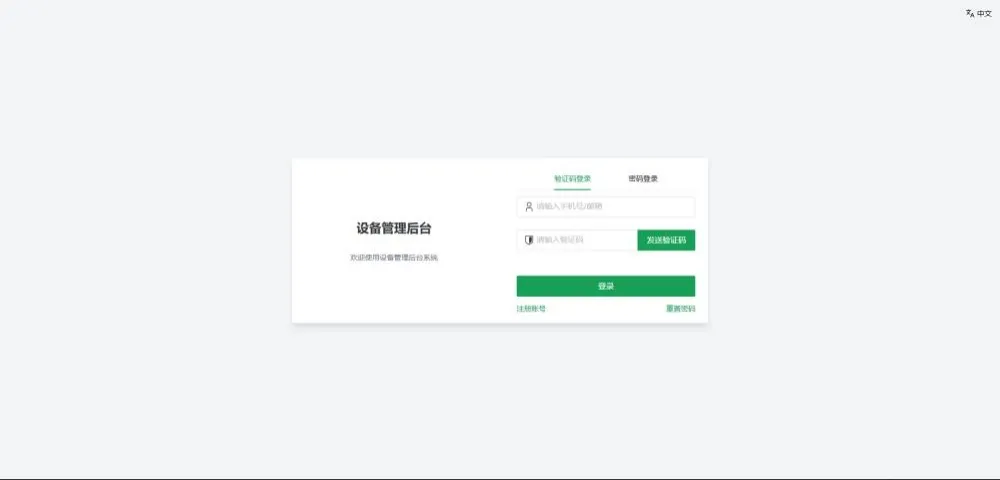
III. Dashboard
Successfully logged into the device management backend and entered the dashboard homepage. The page will display an overview of the devices under the current tenant, including key data such as the total number of pasarelas industriales, online rate, number of remote devices, device status, and model distribution.
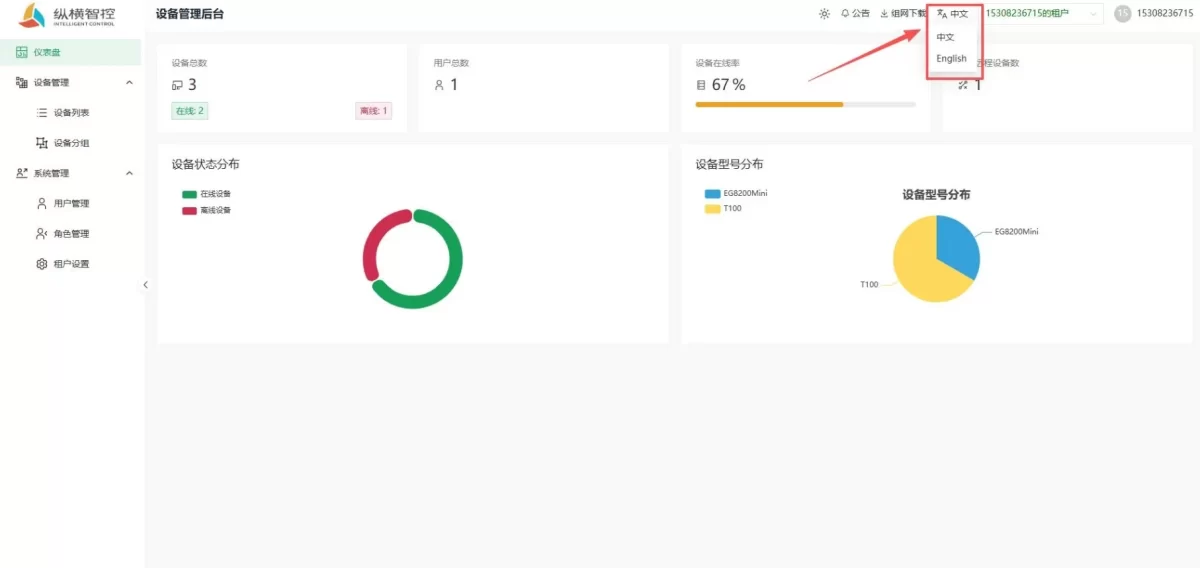
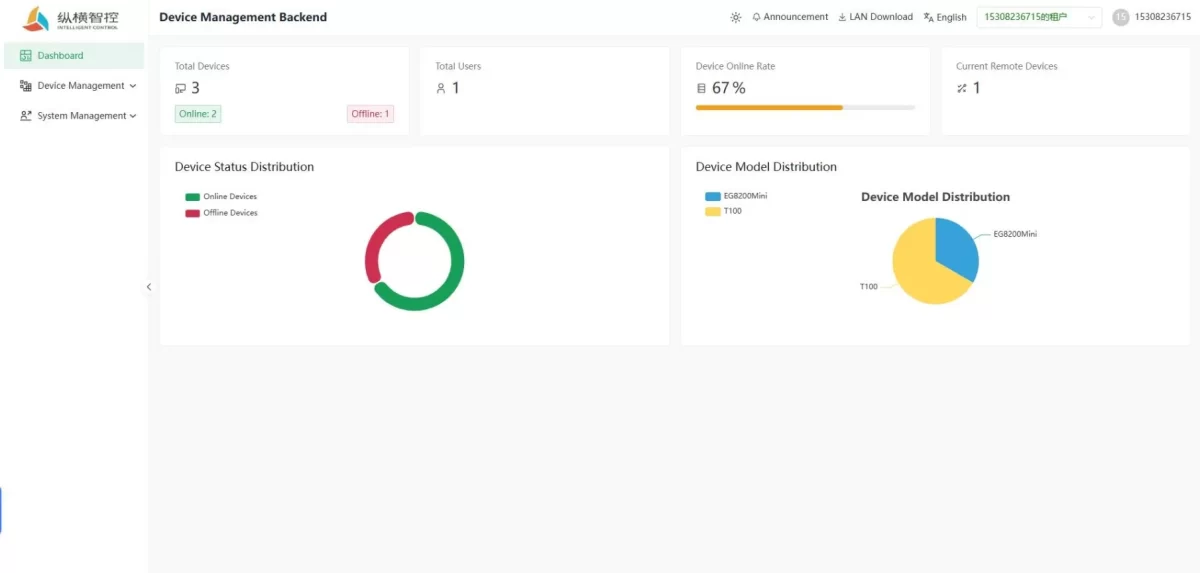
- Total number of devices: Displays the total number of devices added by the current tenant, and also indicates the number of offline devices.
- Total Users: Displays the total number of user accounts associated with the current tenant.
- Device online rate: Displays the percentage of devices that are online.
- Current number of remote devices: Displays the number of devices currently being accessed remotely.
- Device status distribution: A pie chart visually displays the percentage of devices that are offline.
- Equipment model distribution: A pie chart showing the percentage of different equipment models.
IV. Equipment Management
1. Equipment List
The device list is the core page of device management, providing functions for adding, deleting, querying, modifying, and remotely maintaining devices.
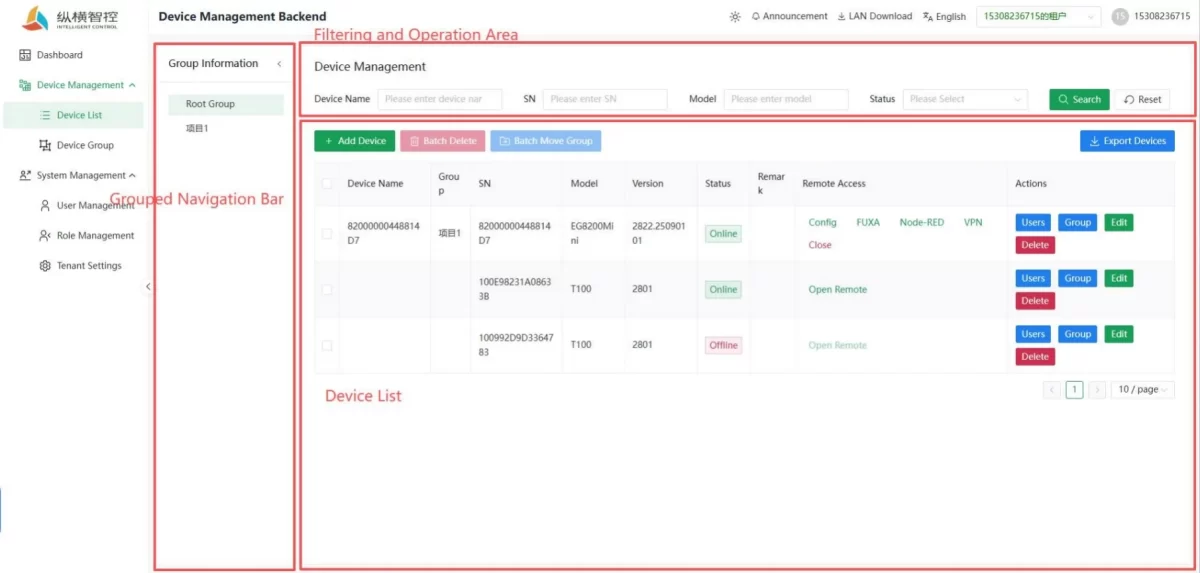
1) Group navigation bar
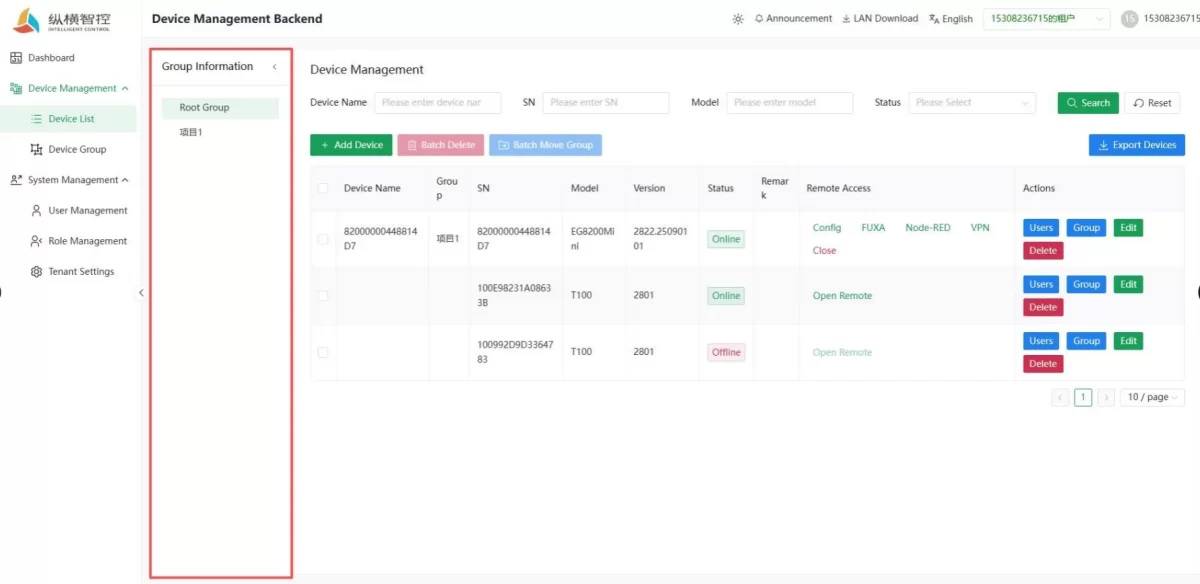
- Root Group: The system default group, displaying all devices under the current tenant.
- Custom (e.g., “Project 1”) groups: User- defined groups are used to manage devices by project/scenario, facilitating quick and easy filtering.
2) Filtering and Operation Area
a) Equipment screening
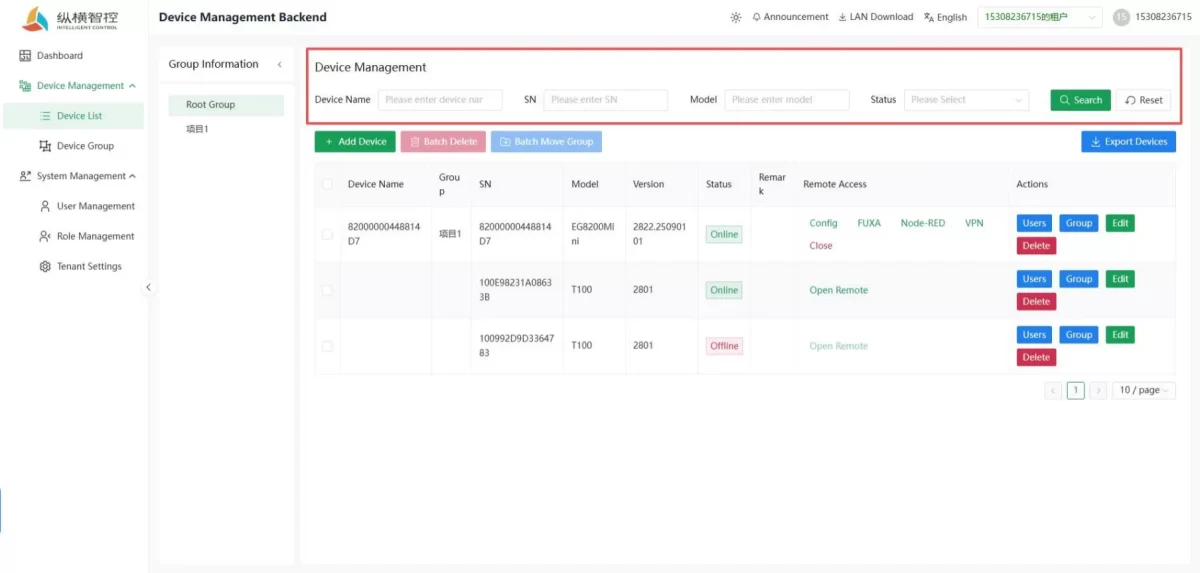
- Equipment filtering: Supports quick searching of equipment by name, serial number, model, and status.
b) New equipment
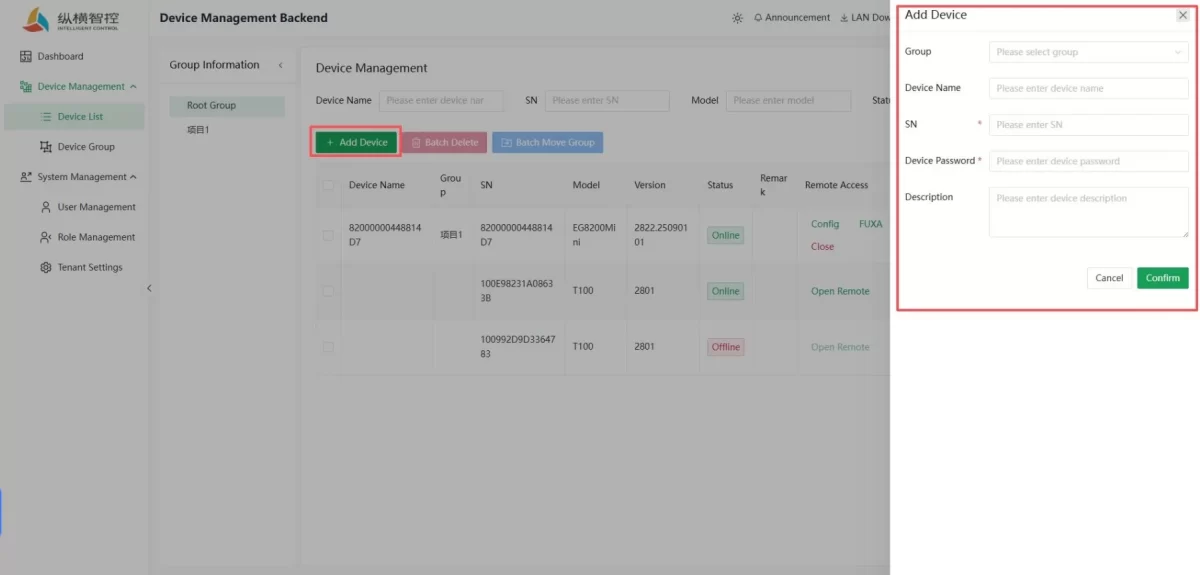
- Add a device: Configure the group and customize the device name in the pop-up window, fill in the gateway’s unique SN serial number and the device login password, and submit to complete the binding. (Each gateway has a unique SN and password. After the gateway is bound, others cannot bind it again unless the owner deletes the gateway under the corresponding account.)
c) Batch operations
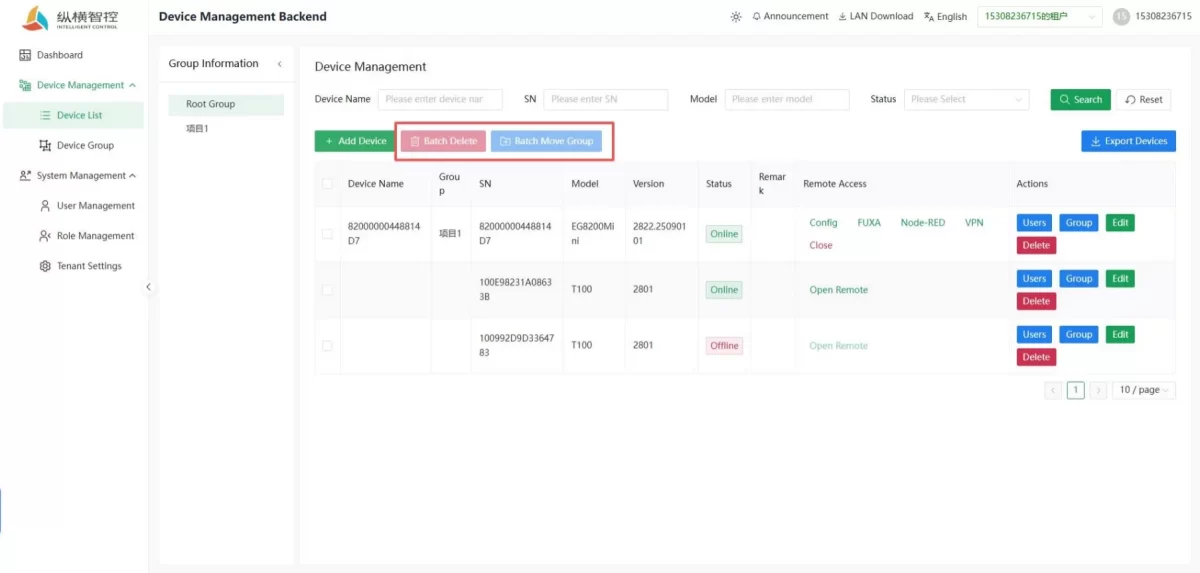
- Batch operations: After selecting multiple devices, you can delete devices in batches with one click, or move devices to other groups in batches.
3) Equipment List
This area serves as the core display and operation portal for single device management.
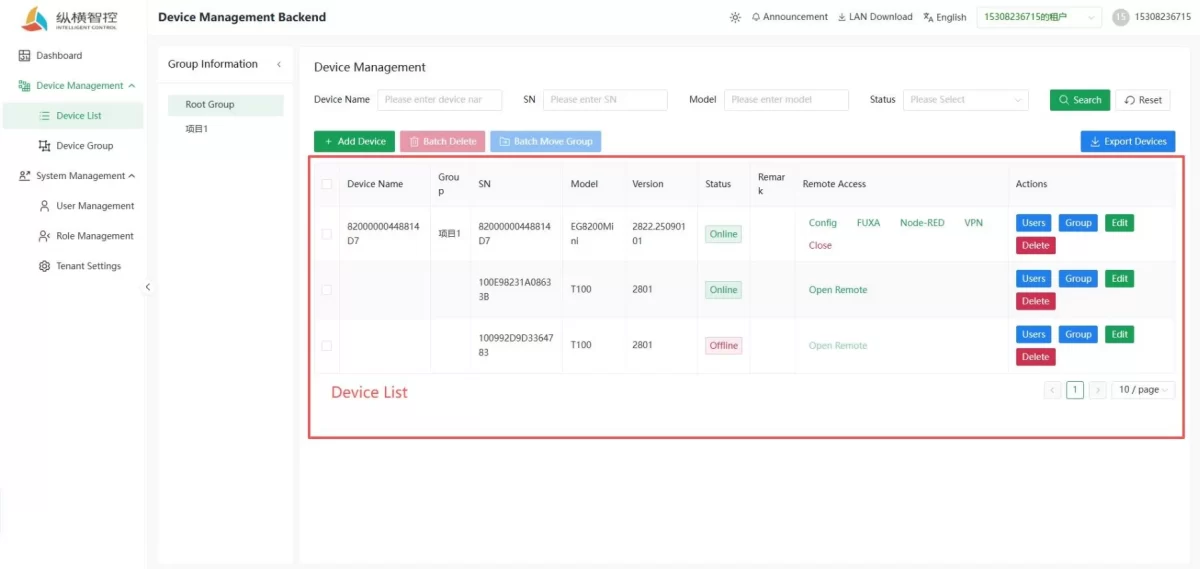
- Information Display: Device Name, Group, SN, Model, Version, Online Status, and Remarks
- Remote access: Supports enabling/disabling remote access for quick access to configuration and setup interfaces.
- Operation and maintenance: Provides management functions such as user assignment, group adjustment, editing, and deletion.
a) Remote configuration
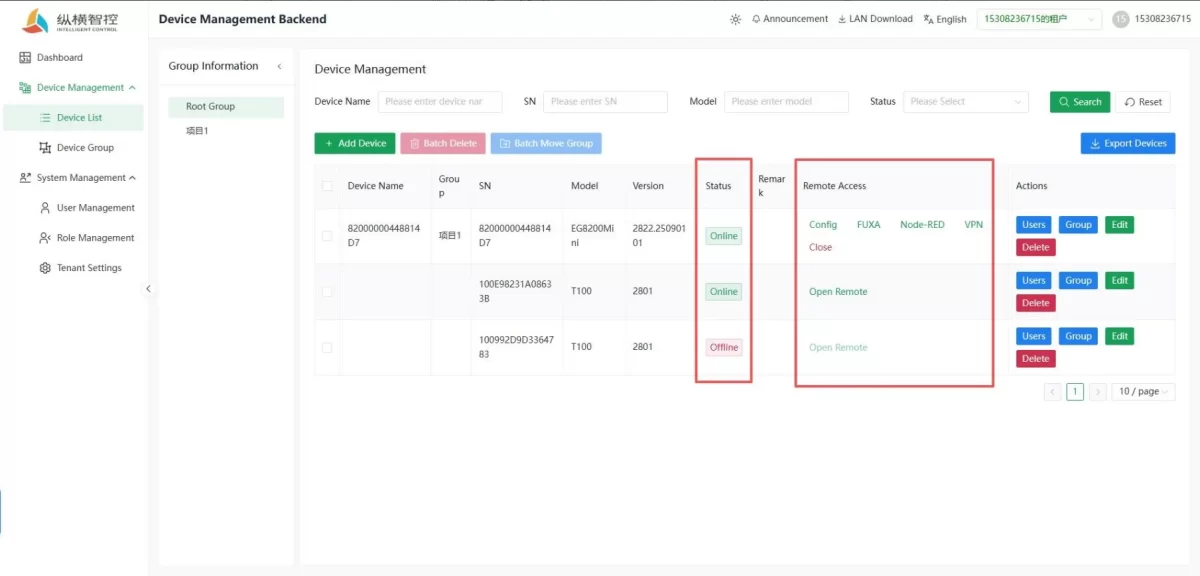
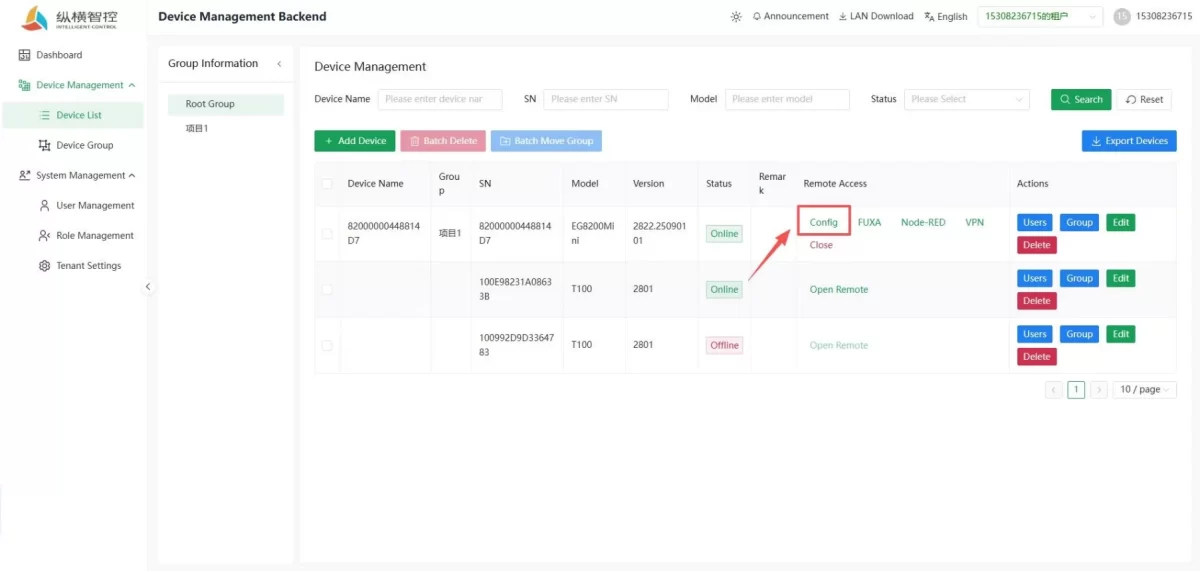
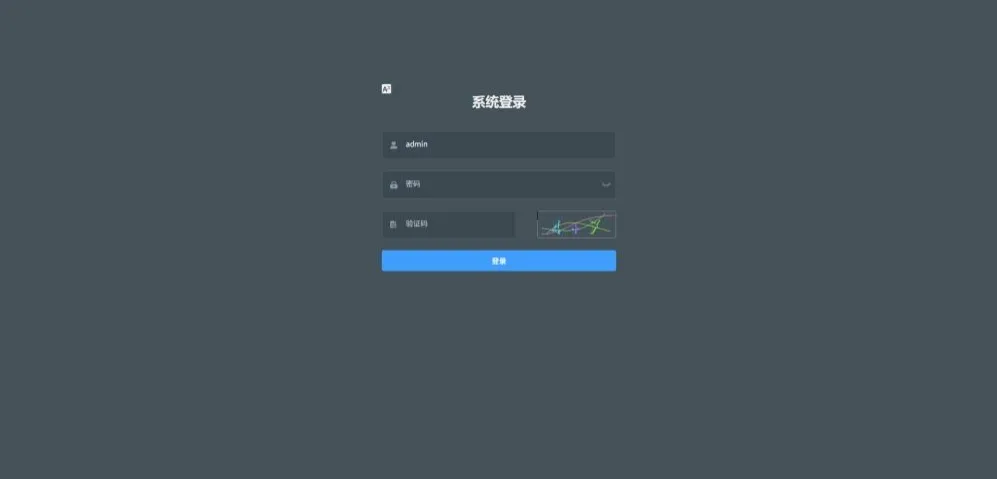
- Remote configuration: Ensure the gateway is online, click “Enable Remote Configuration,” and upon successful configuration, clicking the “Configure” button will automatically open a browser and redirect you to the gateway’s configuration interface.
b) Remote programming
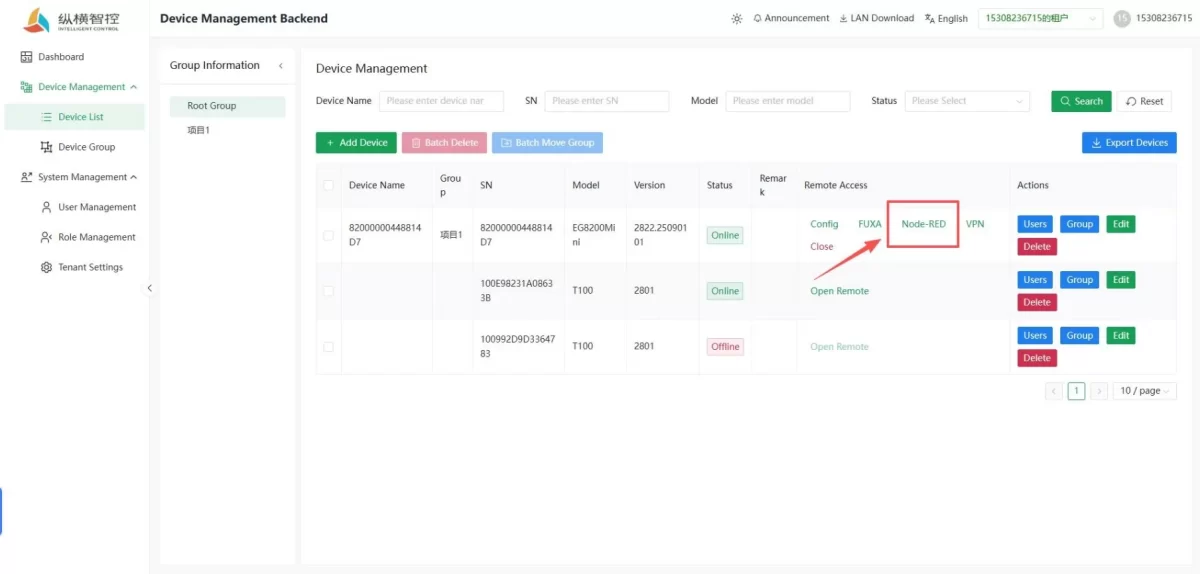
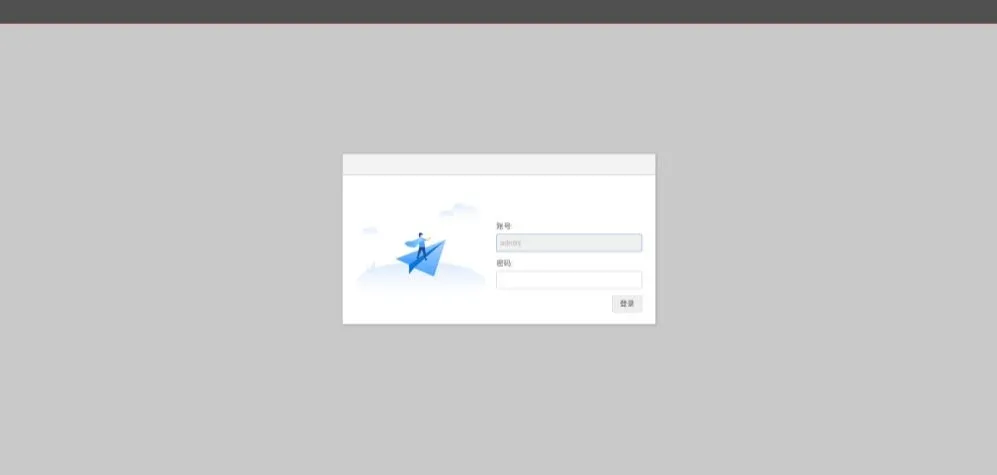
- Remote Programming: Clicking the Remote Programming button will automatically open a browser and redirect you to the gateway’s programming interface.
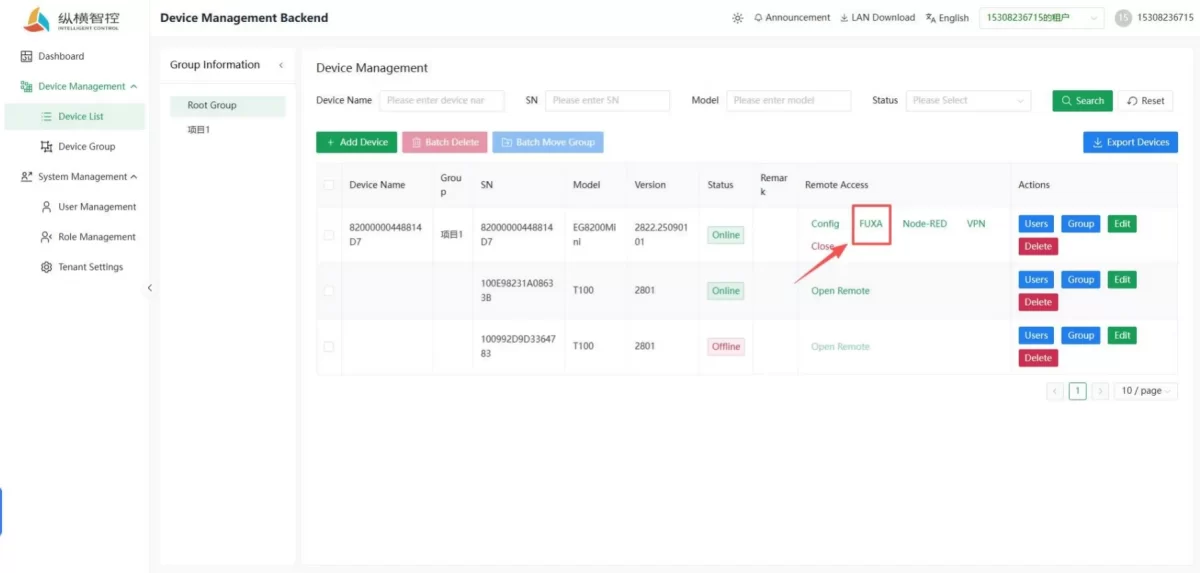
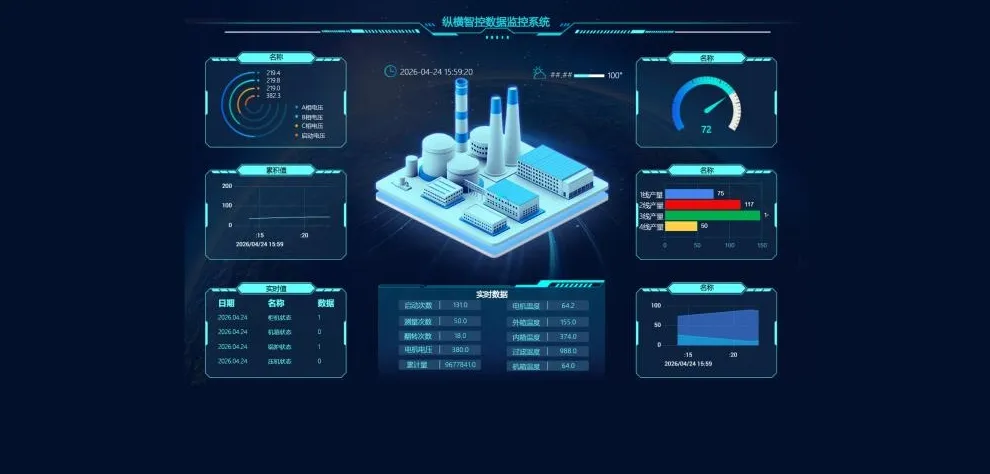
- Remote configuration: Clicking the remote configuration button will automatically redirect you to the web configuration interface. Note: Only gateways that support configuration functions can use this feature.)
c) Intraneto Penetration
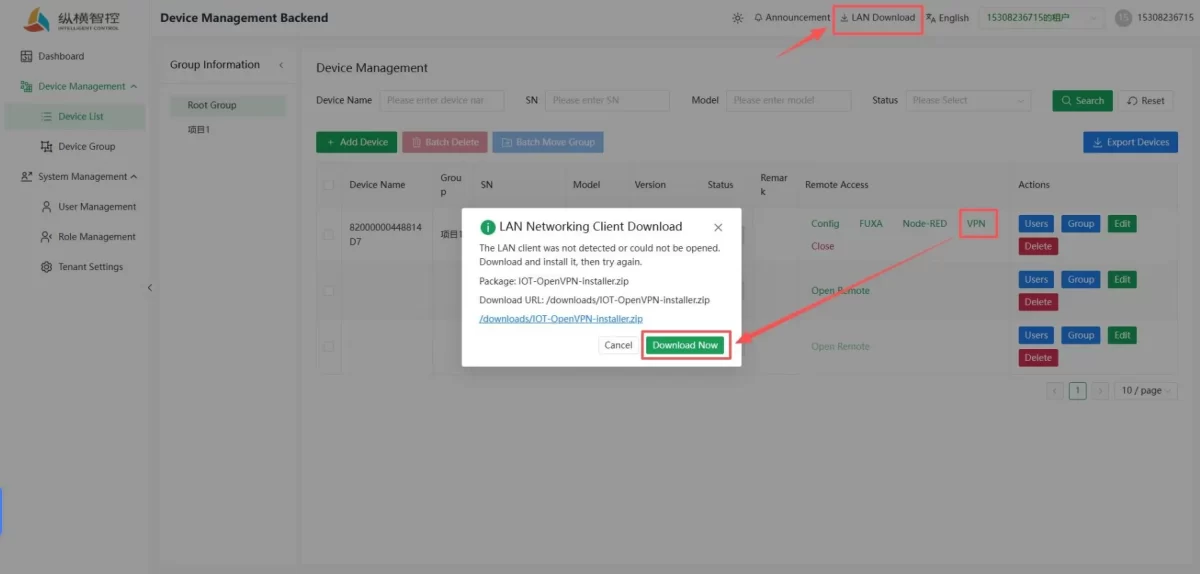
When using the “LAN” function for the first time, the system will prompt that no client has been detected. You can download and install it according to the instructions, or you can install the IOT-OpenVPN client in advance through the “Network Download” entry at the top.
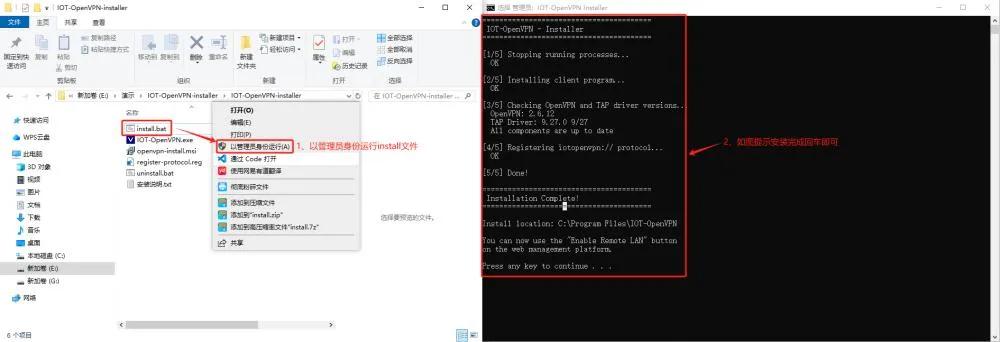
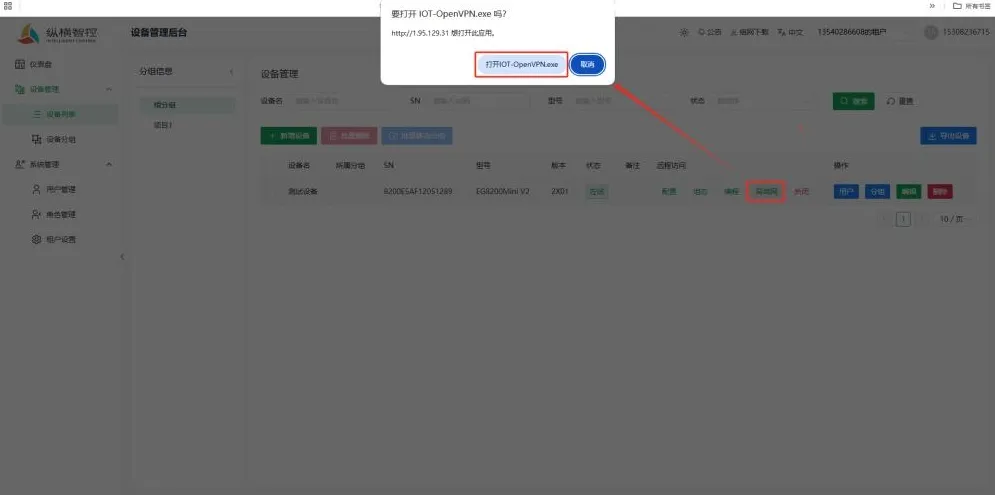
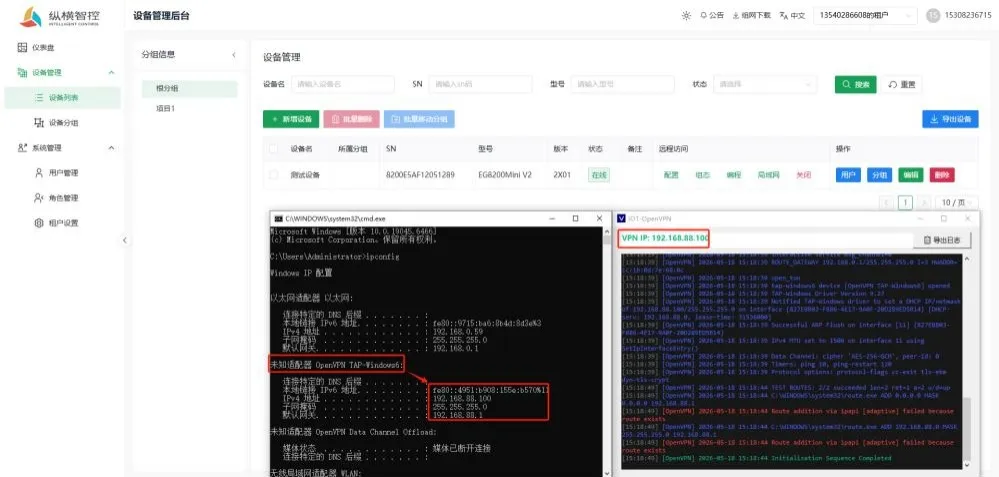
IP address successfully assigned; the local machine can now directly access the local area network where the gateway is located.
Note: The network segment used by the computer cannot be the same as the gateway network segment, otherwise, it may cause the remote LAN to fail. The IOT-OpenVPN software interface cannot be closed; closing it will disable intranet penetration.
2. Equipment grouping
The device grouping interface is used for hierarchical management of devices. It supports creating groups by project, scenario, or business line, which facilitates subsequent batch management, permission allocation, and operation and maintenance.
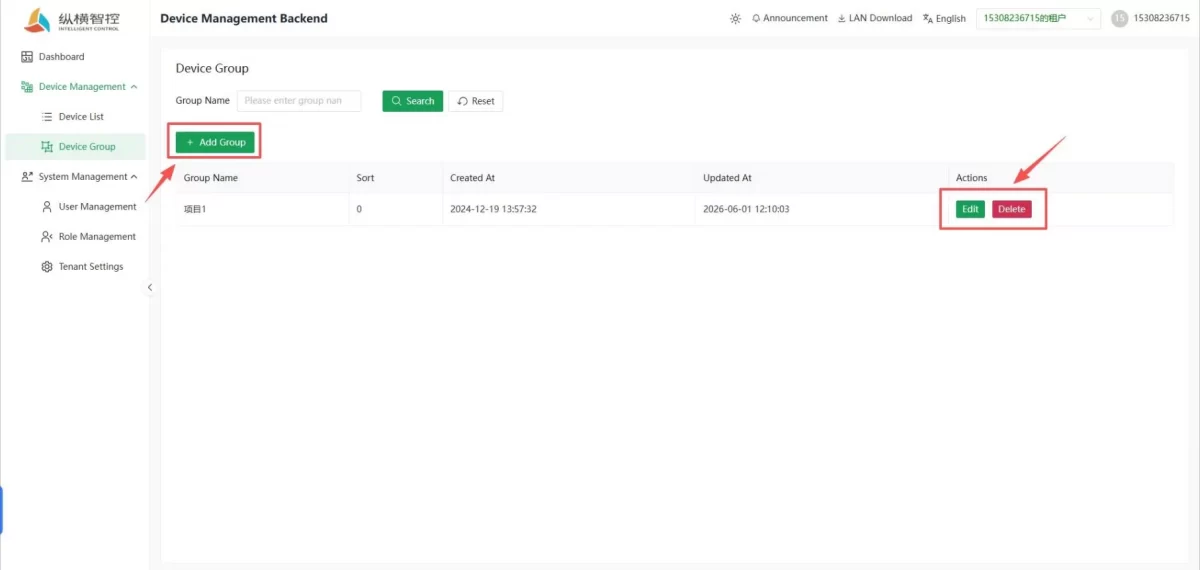
- Group search and filtering: Supports quick retrieval of target groups by group name and, with the search reset button, efficiently locates groups.
- Add a group: Click the Add Group button to create a new device group for categorizing and managing devices.
- Group list information: The list displays the group name, sort order, creation time, and update time for easy management and traceability.
- Grouping operations: Supports editing and deleting existing groups (ensure there are no devices in the group before deletion).
V. System Management
1. User Management
1) User Filtering
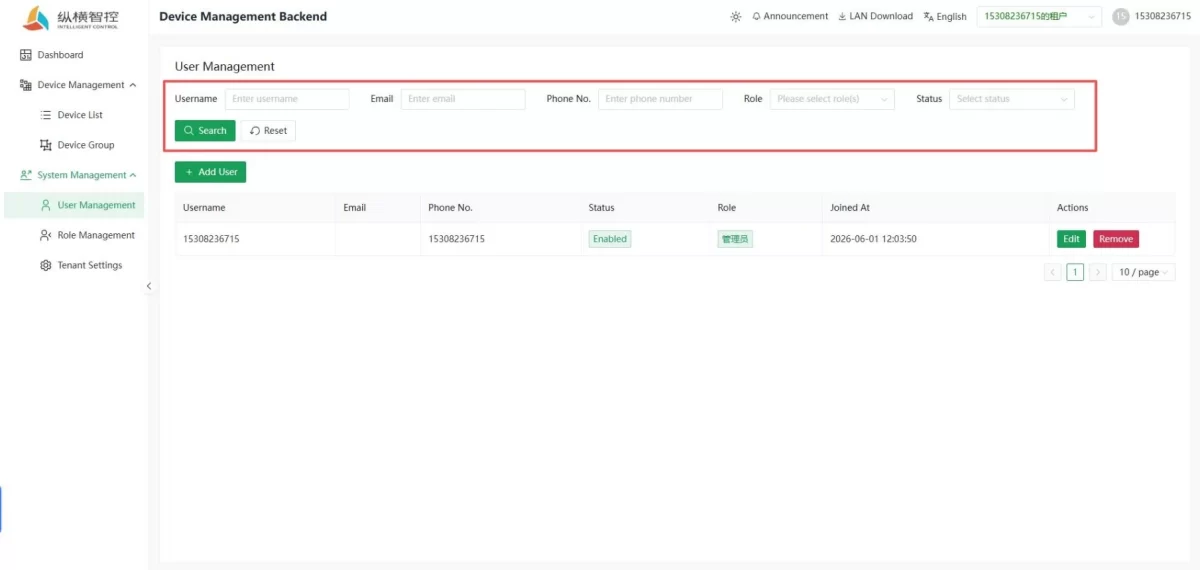
- User filtering: Supports filtering users by username, email, mobile number, role, and status.
2) New users
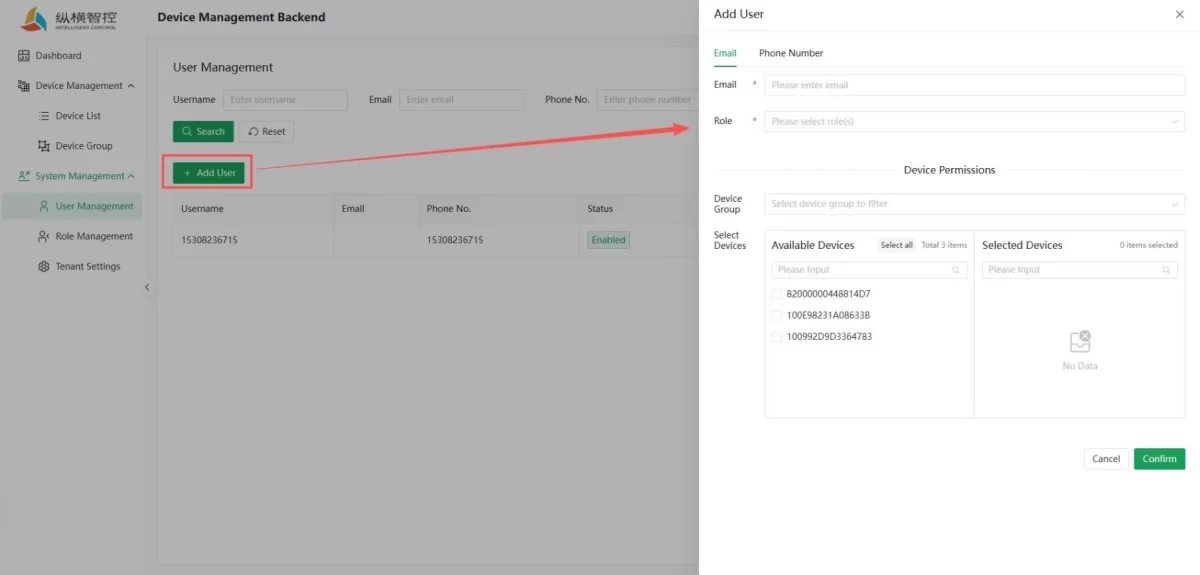
- Add a user: Click the “Add User” button, enter the registered user’s mobile phone number/email address in the pop-up window, and select the role. Device permissions are optional and can be adjusted later. After confirming, the user addition is complete.
2. Role Management
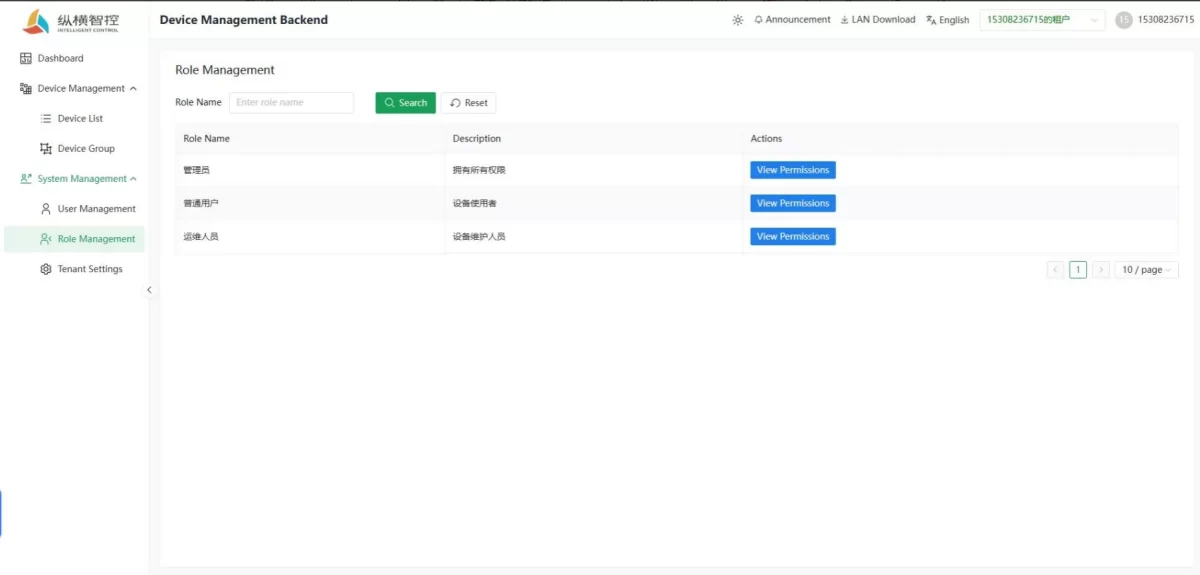
- Role Management: The role management module provides information display and permission viewing functions for preset roles, including three types: administrators, regular users, and operations and maintenance personnel. The responsibilities and permission scope of each role are clearly defined. Administrators can assign matching role permissions to users based on their actual business scenarios, achieving reasonable permission control.
3. Tenant settings
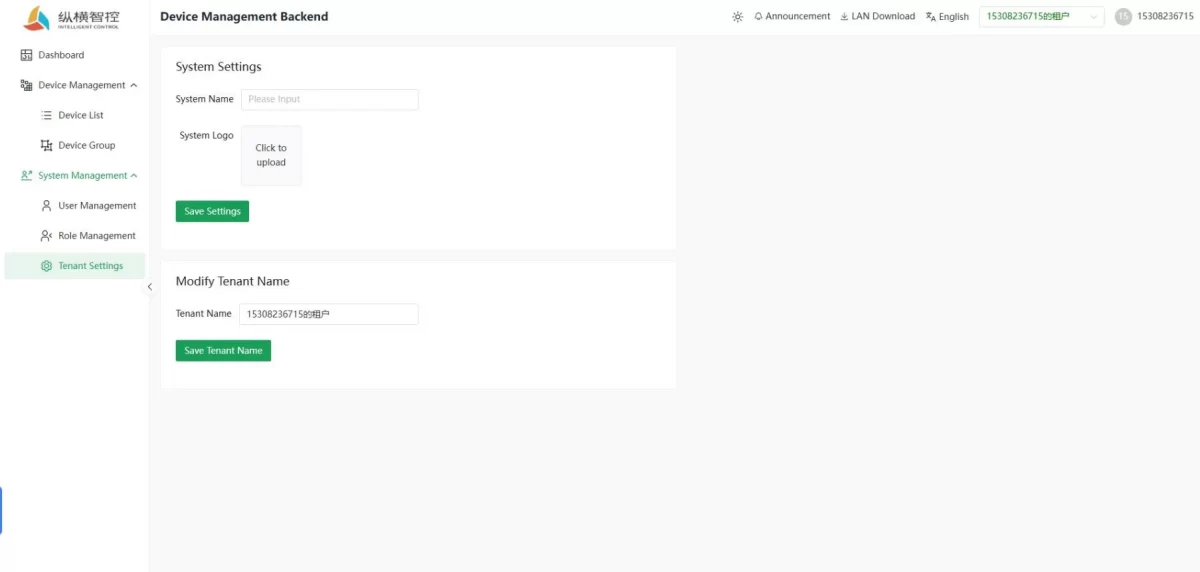
- Tenant settings: Supports custom system name, uploading a system logo, and modifying tenant name. Save the settings to update the relevant configuration.

Agnes Wang es especialista en soluciones de IoT en IOTRouter, donde se dedica principalmente a las pasarelas de IoT industrial, la computación en el borde y las soluciones de automatización industrial.
Está especializada en tecnologías de comunicación industrial, entre las que se incluyen Modbus, IEC 60870-5-104, MQTT, OPC UA, integración de PLC y aplicaciones de monitorización remota. Colabora en la redacción de artículos técnicos y guías de aplicación sobre soluciones de IoT industrial, conversión de protocolos y computación periférica.