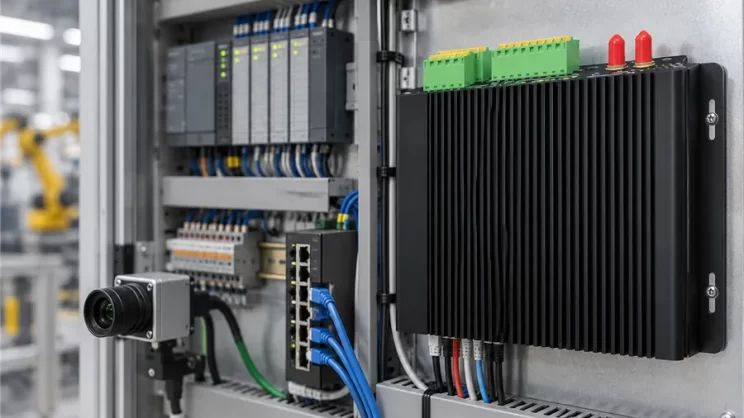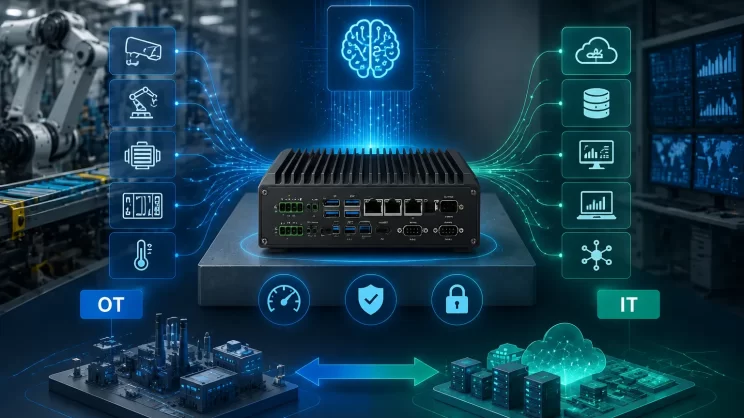
In industrial automation, deployment efficiency is often hindered by hardware rigidity. Standard gateways typically feature fixed I/O configurations that rarely align perfectly with site-specific requirements. This mismatch forces engineers into complex integration cycles involving multiple protocol converters, discrete I/O modules, and industrial routers.
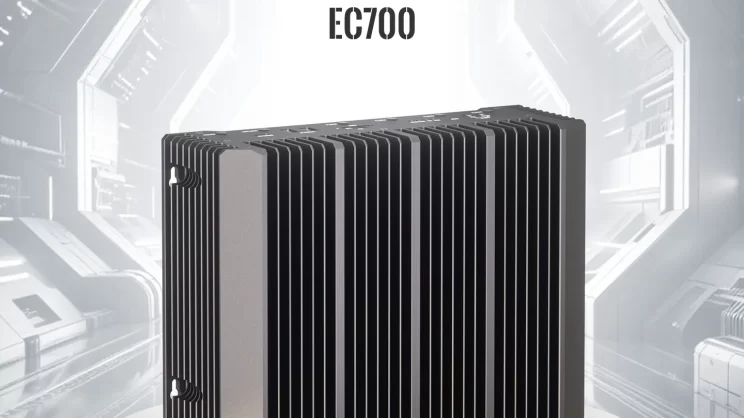
Il EM300 Modular Controller addresses these structural inefficiencies by integrating signal acquisition, logic control, and edge computing into a single modular node designed for “Acquisition-Control-Transmission-Management” full-link operations.
1. Modular Architecture and Granular Scalability
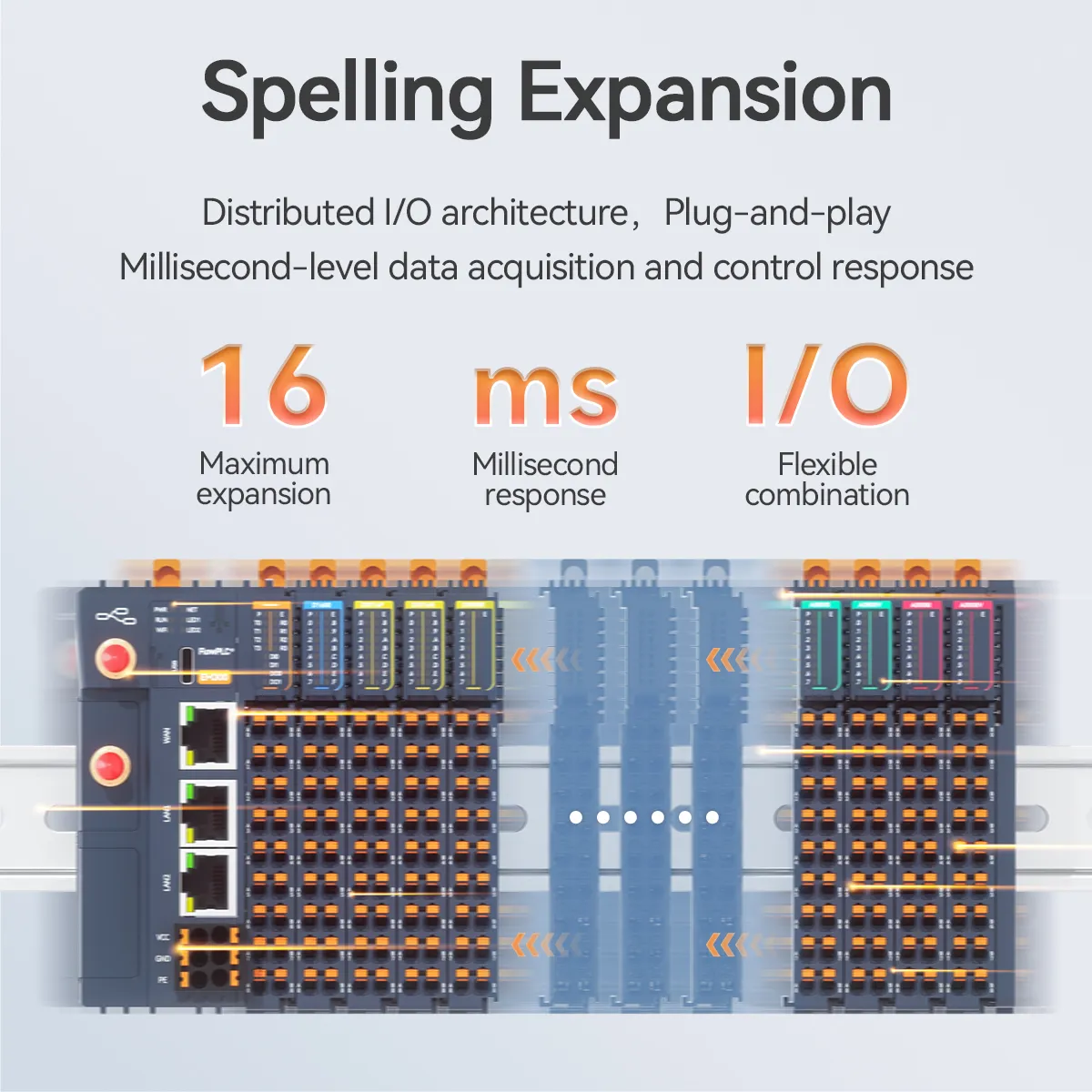
Traditional fixed-port gateways lead to either wasted capacity or the need for additional sub-racks. The EM300 utilizes a distributed I/O architecture designed for seamless expansion.
-
Expansion Capability: The system supports up to 16 hot-swappable modules (DI/DO, AI/AO). The internal bus transmits signals in milliseconds, and each module is automatically recognized upon connection, eliminating the need for additional configuration or software-based setup.
-
Interfaccia hardware: Deployment is facilitated by Push-in terminals, 35mm DIN rail mounts, and integrated metal FE (Functional Earth) contacts. The modules utilize color-coded faceplates and signal LEDs for rapid identification and diagnostic verification during maintenance.
2. Data Integrity and Power Failure Contingencies
Industrial sites require specific hardware safeguards to prevent file system corruption and data gaps during power fluctuations.
-
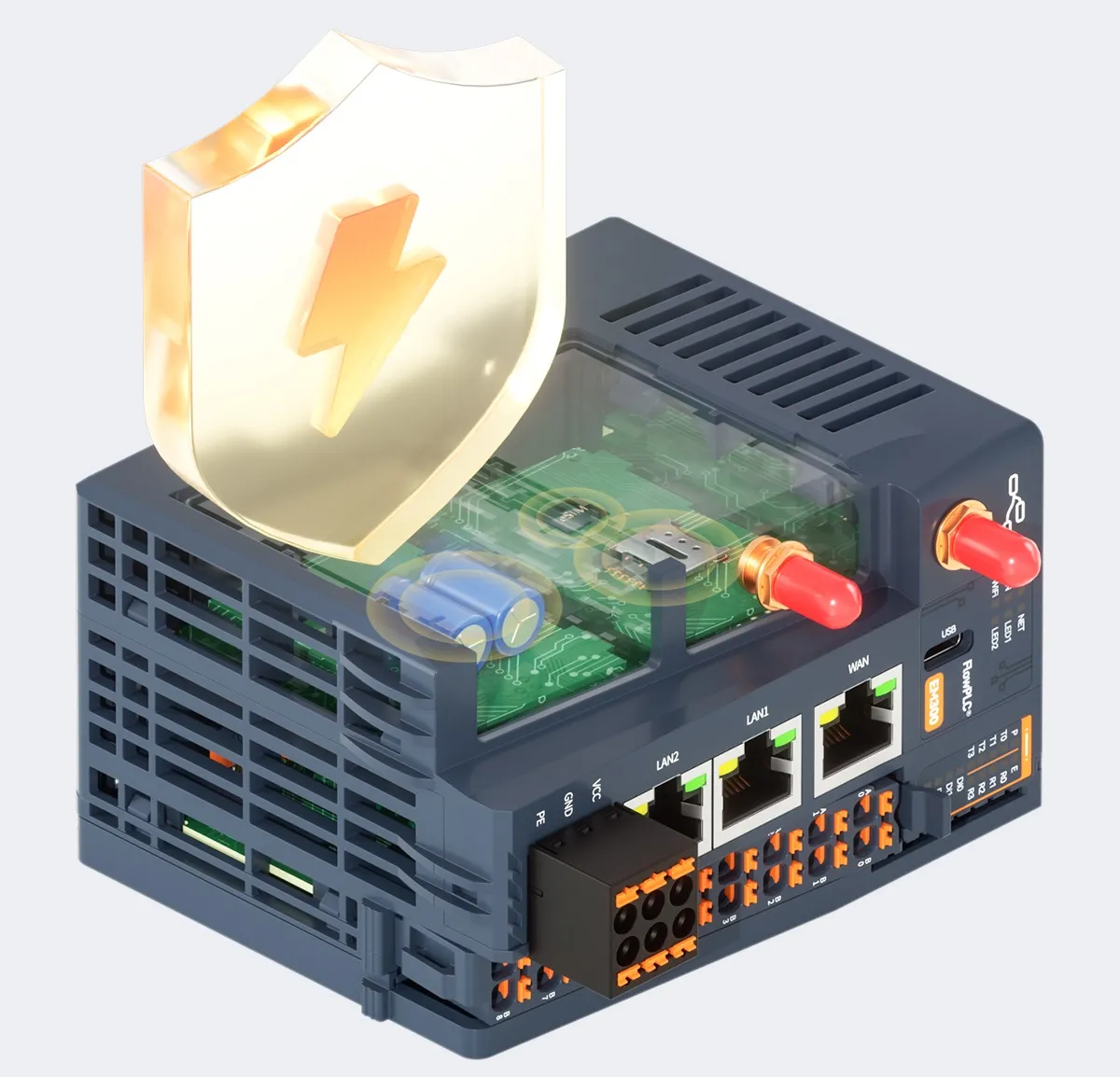
Active Power Management: With an optional integrated UPS circuit, the device detects input voltage drops and utilizes internal energy reserves to momentarily maintain power. This allows the system to perform a controlled shutdown sequence rather than an immediate failure.
-
Fault Tolerance: During a power event, the system executes three critical tasks: flushing buffered data to non-volatile storage, triggering a “Last Will” notification to the cloud, and safely unmounting the file system. Combined with dual hardware watchdogs, this ensures the system reboots to a clean state.
-
Connectivity Redundancy: The EM300 features integrated SMD SIM chips and dual SIM card slots, providing redundant cellular links to maintain communication in unstable network environments.
3. Integrated Protocol Library and Cloud Connectivity
The EM300 serves as a universal translator for “brownfield” projects where legacy and modern systems coexist.
-
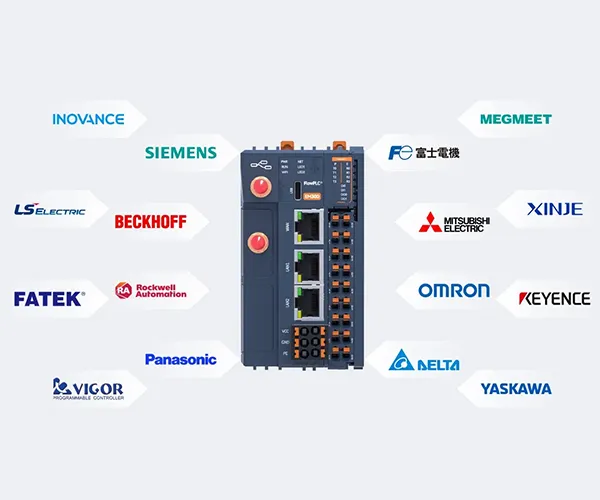
Connectivity Engine: The device features a built-in library covering approximately 99% of mainstream PLC brands, including Siemens, Mitsubishi, Omron, and Delta.
-
Protocol Mapping: Southbound support includes Modbus, DL/T645, HJ212, and BACnet. Northbound connectivity supports MQTT, HTTP, and TCP, enabling seamless data mapping and integration with cloud platforms such as Alibaba Cloud and OneNET without the need for custom driver development.
4. Remote Engineering and Subnet Communication
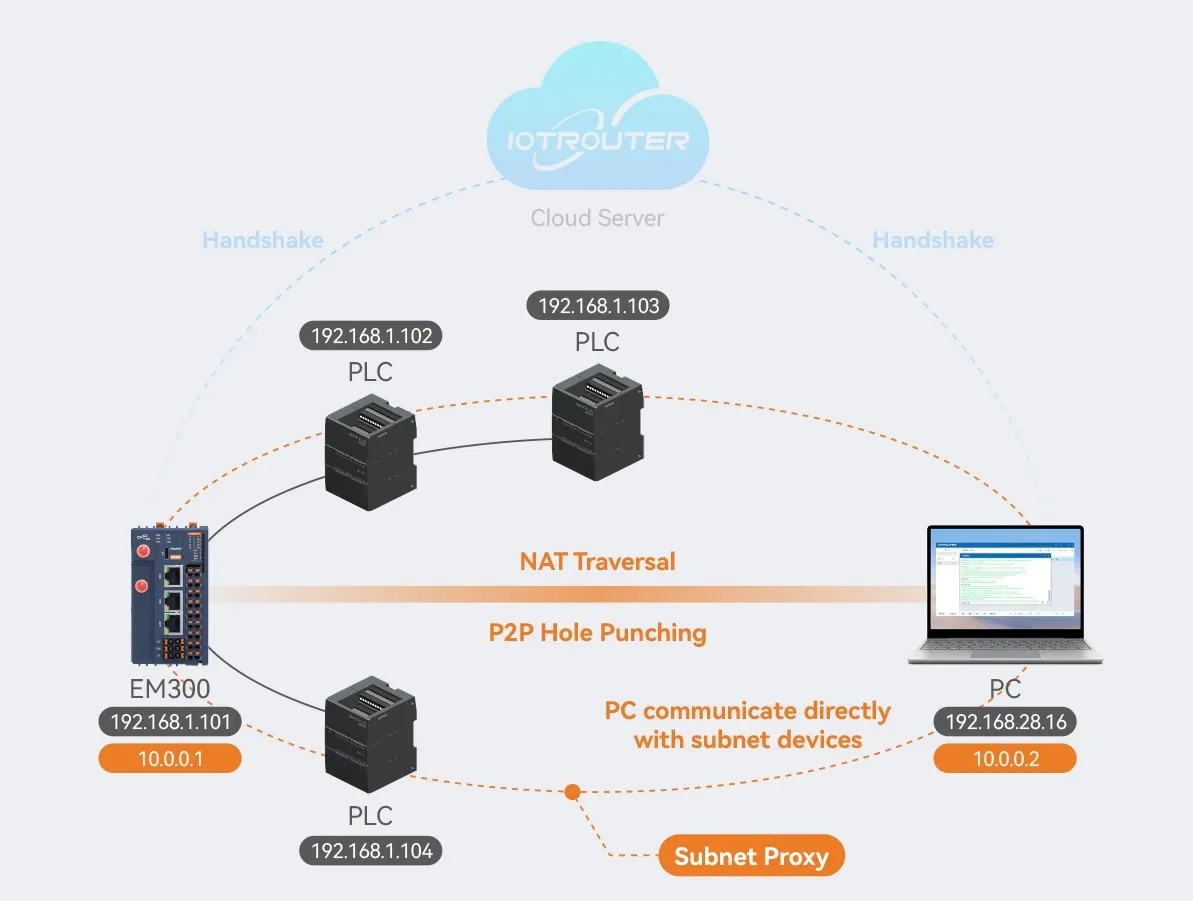
To minimize onsite maintenance costs, the EM300 provides a secure, transparent link through the IoTClient software e P2P tunneling.
-
Virtual Presence: Engineers can perform remote PLC debugging and firmware updates as if physically connected to the local site switch, eliminating the requirement for public IP addresses.
-
Subnet Interconnectivity: The system enables direct communication between subnet devices and supports the cross-regional interconnection of PLCs, DTUs, and RTUs, bridging the gap between geographically dispersed assets.
5. Low-Code Development and Customization
To reduce the complexity of traditional industrial programming, the EM300 provides a standardized, browser-based development environment.
-
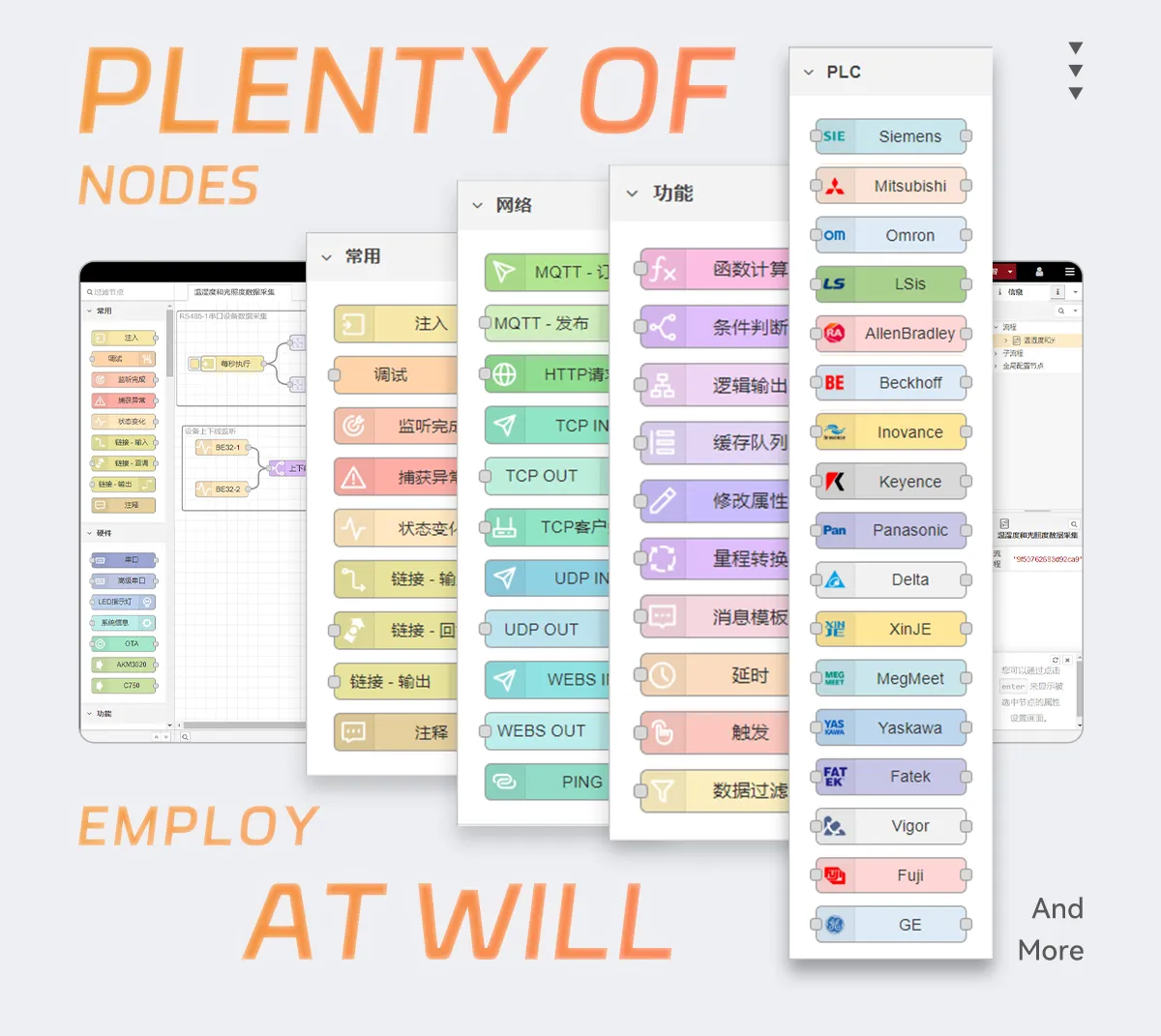
Visual Orchestration: The integration of Nodo rosso allows for drag-and-drop orchestration of logic flows directly via a web browser.
-
Rapid Development: For specialized logic, the platform supports JavaScript (JS). Developers can deploy code instantly without the overhead of setting up compilation environments or flashing firmware, reducing development cycles from weeks to hours.
-
Business Flexibility: The architecture is designed to support OEM/ODM customization, allowing for hardware and software tailoring to meet specific industrial business requirements.
Conclusione
By consolidating the roles of protocol gateways, logic controllers, and industrial routers, the EM300 Modular Controller provides a high-reliability carrier for industrial digital transformation. Its focus on modular scalability, data integrity, and remote accessibility ensures that project deployment remains flexible while minimizing long-term operational costs across the equipment lifecycle.