Dans de nombreux déploiements IoT industriels, la connexion des appareils de terrain distribués aux systèmes cloud reste un défi majeur. Dans cet article, nous allons parler de ce qu'est la passerelle industrielle LoRa et comment la choisir.
Comme nous le savons, LoRa est une technologie de communication en réseau étendu à faible consommation d'énergie. L'émergence de la technologie LoRa répond aux exigences de l'internet des objets en matière de longue distance et de faible consommation d'énergie et est donc largement utilisée dans divers secteurs. Les passerelles LoRa sont largement utilisées dans les scénarios IoT industriels tels que la gestion intelligente de l'eau, la surveillance de l'énergie et le contrôle à distance des équipements.
Comment Passerelle LoRa Travaux dans les systèmes IdO
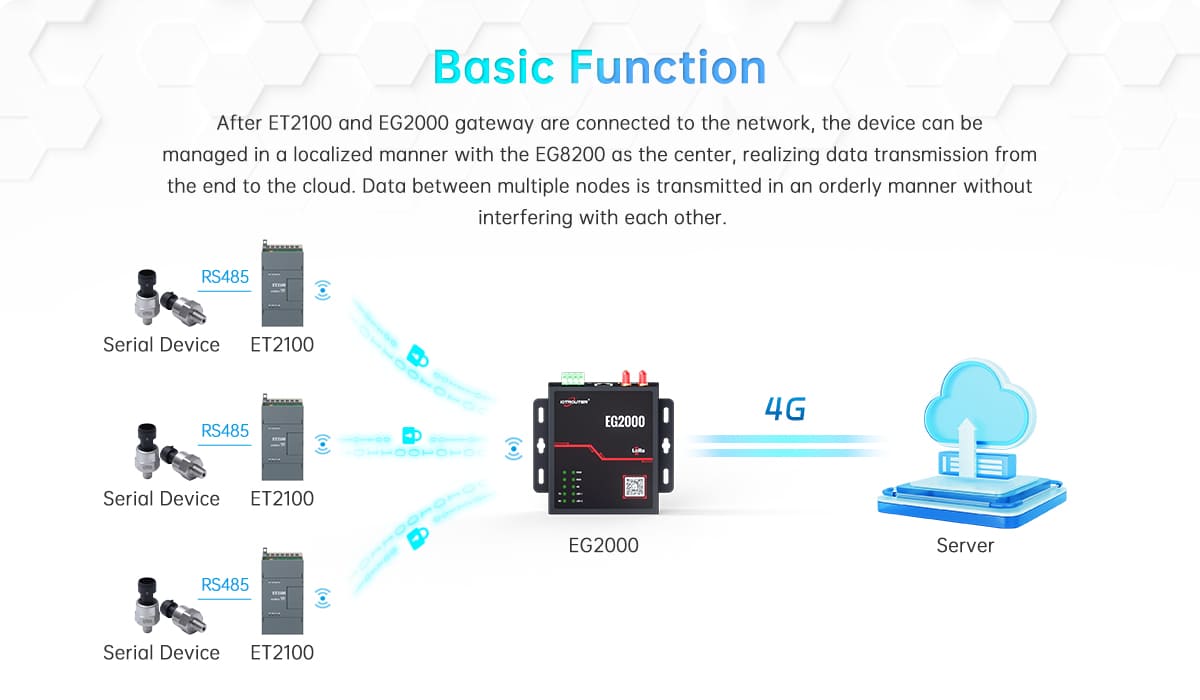
Avant de comprendre le fonctionnement des systèmes IoT industriels, il est important d'examiner d'abord le rôle d'une passerelle LoRa. Une passerelle LoRa, également connue sous le nom de concentrateur sans fil LoRa, est un appareil qui utilise la technologie de modulation sans fil LoRa pour permettre la transmission de données sur de longues distances.
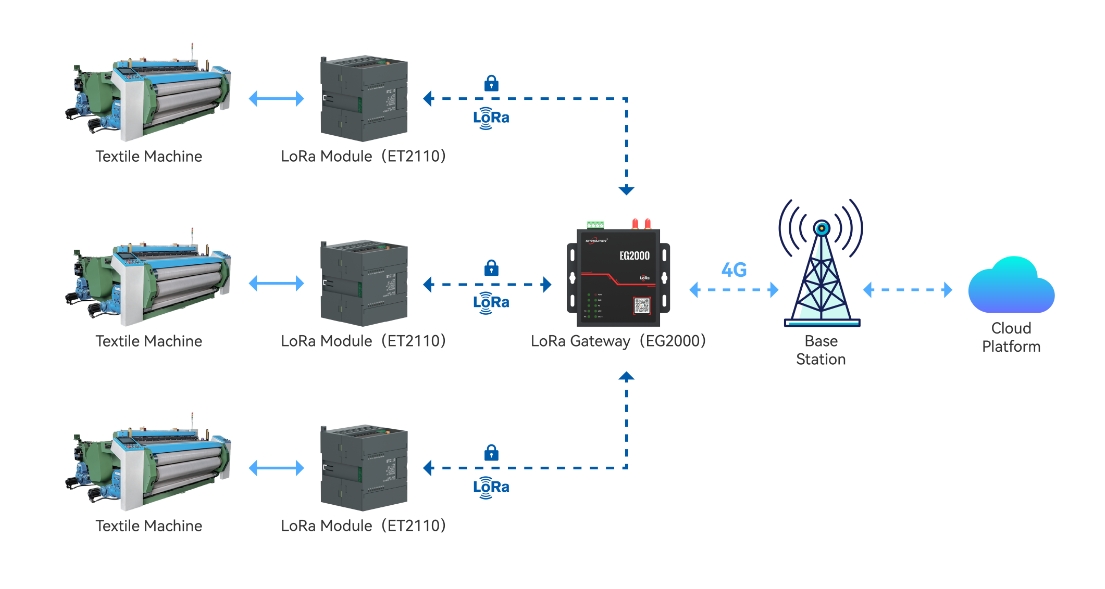
Dans cette image, la passerelle LoRa est située au cœur du réseau en étoile LoRa. Il s'agit d'un pont d'information entre le terminal et le serveur (Server) et d'un émetteur-récepteur multicanal. Elle peut être combinée avec le module de nœud LoRa sans modifier les protocoles et les données de l'utilisateur, et utilise un mécanisme de transmission totalement transparent pour réaliser l'envoi et la réception de données sans fil. Cette structure en couches explique pourquoi les systèmes LoRa sont souvent utilisés dans des applications telles que la surveillance intelligente de l'eau, les systèmes énergétiques et le suivi d'équipements à distance.
Présentation de la passerelle LoRa
LoRa existe depuis longtemps et de nombreux types de passerelles LoRa ont vu le jour. Les passerelles LoRa traditionnelles sont souvent confrontées à des limitations en termes d'évolutivité, de compatibilité des protocoles et d'intégration dans le cloud. Les applications IoT industrielles continuant à se développer, les passerelles LoRa modernes devraient prendre en charge la communication multiprotocole, le traitement des données de périphérie et les capacités de mise en réseau flexibles.
1. Passerelle LoRa moderne EG2000
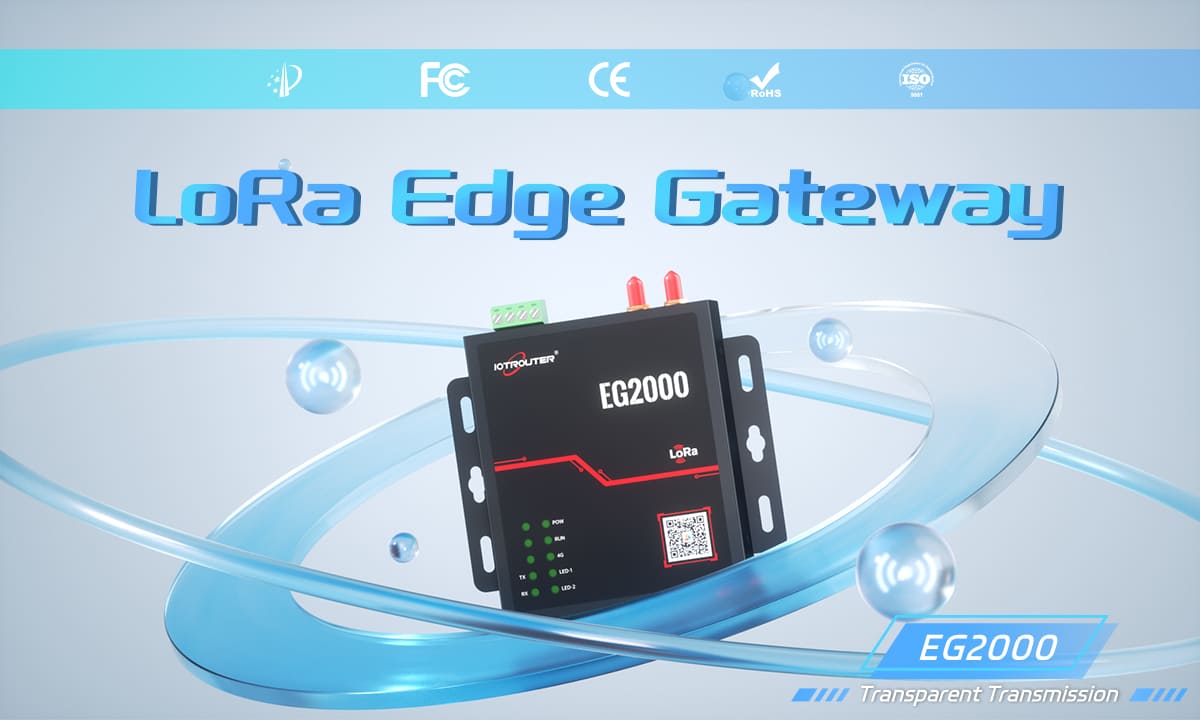
Contrairement aux concentrateurs LoRa traditionnels, EG2000(LoRa/LoRaWAN) intègre des capacités de calcul en périphérie avec un support multi-protocole, permettant l'acquisition, le traitement et la transmission de données en continu depuis les appareils de terrain jusqu'au nuage.
Les utilisateurs n'ont pas besoin de se préoccuper du processus de construction spécifique du réseau sans fil LoRa. Ils peuvent rapidement générer leurs propres solutions d'application sans fil en utilisant simplement nos produits matériels LoRa et les interfaces API standard fournies.
Il prend en charge Technologie LoRa à spectre étalé avec une distance de transmission allant jusqu'à 8-10 km, combinée à la connectivité 4G et Ethernet pour un réseau de liaison stable.
En outre, sa capacité de calcul en périphérie permet aux utilisateurs de traiter les données localement, ce qui réduit la latence et améliore l'efficacité du système dans des déploiements réels tels que la gestion intelligente de l'eau, la surveillance de l'énergie et le contrôle industriel à distance.
Dans l'ensemble, l'EG2000 est mieux adapté aux déploiements IoT industriels évolutifs et à long terme où la fiabilité, la flexibilité et l'intégration sont nécessaires.
2. Passerelle LoRa antérieure (abandonnée)
Les modèles antérieurs, tels que le ZHC-GW8000, étaient conçus pour la transmission de données sans fil de base à l'aide de protocoles LoRa privés. Cependant, ce modèle n'est plus disponible et a été remplacé par des passerelles LoRa plus avancées.
3. Passerelle LoRa traditionnelle vs Passerelles modernes
Par rapport aux anciens concentrateurs LoRa, les passerelles modernes comme EG2000 offrent ces caractéristiques, ce qui les rend plus adaptées aux déploiements IoT industriels évolutifs et à long terme.
| Fonctionnalité | Passerelle traditionnelle | Moderne Passerelle |
|---|---|---|
| Connectivité | LoRa uniquement | LoRa + 4G + Ethernet |
| Soutien au protocole | Limitée | MQTT / Modbus / TCP/IP |
| Traitement des données | En avant seulement | L'informatique en périphérie |
| Intégration dans le nuage | De base | Prêt pour l'informatique en nuage |
| Évolutivité | Faible | Haut |
Principaux éléments à prendre en compte lors du choix d'une passerelle LoRa
Lors de l'évaluation d'une passerelle LoRa pour un projet IoT industriel, plusieurs facteurs pratiques doivent être confirmés au cours de la phase de sélection.
1. Distance de communication
La portée typique de “10 km” est basée sur des conditions d'essai idéales. Dans les déploiements réels, la distance réelle est affectée par le type d'antenne, les obstructions environnementales et les paramètres de débit de données aériennes. Il est recommandé d'effectuer des essais sur le terrain à l'avance ou de calculer le budget de liaison et de garder une marge suffisante.
2. Conformité de la bande de fréquences
Les réglementations relatives aux fréquences sub-GHz varient d'une région à l'autre. Il est important de confirmer la bande de fréquence du pays cible avant le déploiement afin de s'assurer que l'appareil est conforme aux réglementations locales.
3. Limitation de la charge utile des données
LoRa est conçu pour la transmission de petites données. Chaque paquet prend généralement en charge jusqu'à 200 octets environ. Si la taille des données dépasse cette limite, il convient d'envisager d'autres méthodes de communication ou la segmentation des paquets.
4. Évolutivité du système
Le nombre de modules esclaves connectés à une seule passerelle doit être évalué à l'avance. Les déploiements à grande échelle peuvent nécessiter plusieurs passerelles ou un réseau segmenté pour éviter les limitations de communication ou d'adressage.
Conclusion
Dans l'ensemble, les passerelles LoRa constituent un moyen pratique de connecter des appareils industriels distribués à des systèmes en nuage dans des environnements où le câblage est difficile ou coûteux. En comprenant l'architecture du système et les principaux paramètres de sélection, les utilisateurs peuvent concevoir des déploiements IoT plus stables et plus évolutifs en fonction des exigences réelles du projet.
Dernière mise à jour : mars 2026