In many industrial IoT deployments, connecting distributed field devices to cloud systems remains a major challenge. In this article, we will talk about what the industrial LoRa gateway is and how to pick it.
As we know, LoRa is a low-power wide area network communication technology. The emergence of LoRa technology addresses the long-distance and low-power requirements of the Internet of Things and is therefore widely used across various industries. LoRa gateways are widely used in industrial IoT scenarios such as smart water management, energy monitoring, and remote equipment control.
How LoRa Gateway Works in IoT Systems
Before understanding how industrial IoT systems work, it is important to first look at the role of a LoRa gateway. A LoRa gateway, also known as a LoRa wireless concentrator, is a device that uses LoRa wireless modulation technology to enable long-distance data transmission.
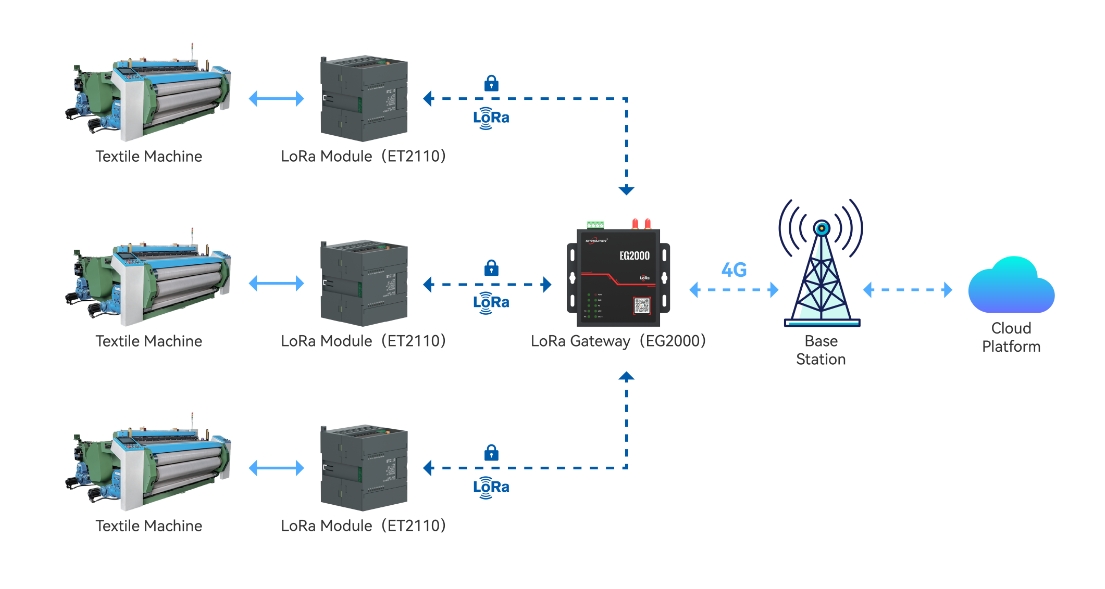
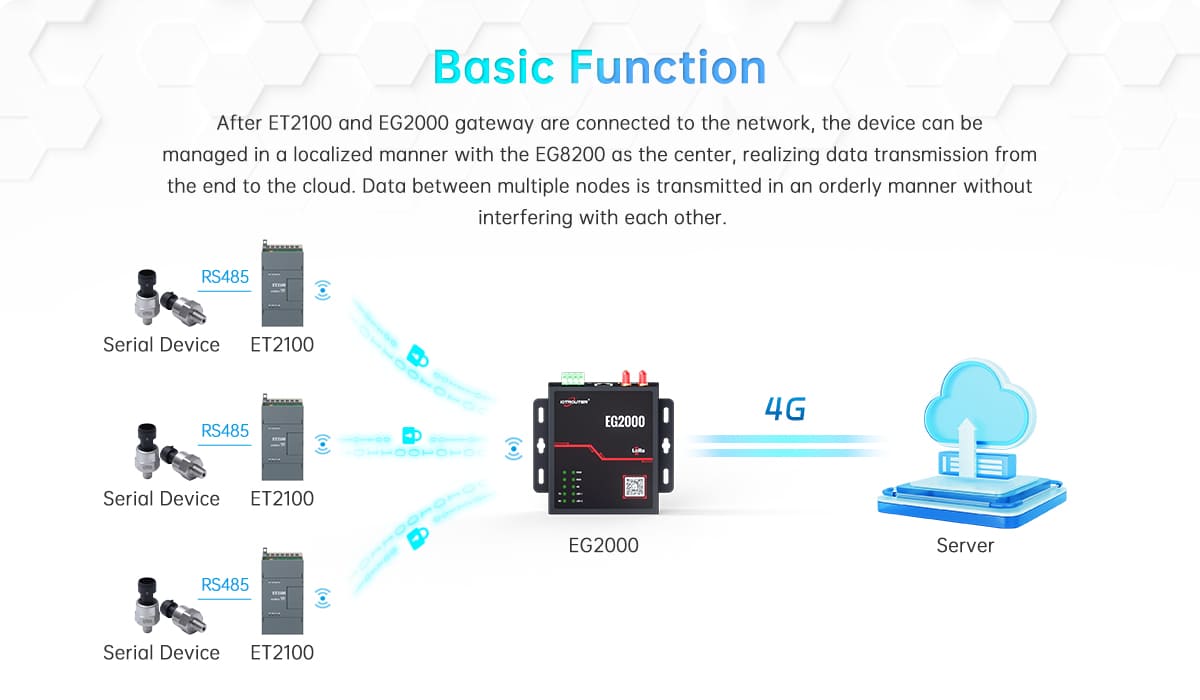
In this picture, the LoRa gateway is located at the core of the LoRa star network. It is an information bridge between the terminal and the server (Server) and a multi-channel transceiver. It can be combined with the LoRa node module without changing any of the user’s protocols and data, and uses a fully transparent transmission mechanism to realize wireless data sending and receiving. This layered structure is why LoRa systems are often used in applications like smart water monitoring, energy systems, and remote equipment tracking.
Overview of LoRa Gateway
As LoRa has been around for a long time, many types of LoRa gateways have emerged. Traditional LoRa gateways often face limitations in scalability, protocol compatibility, and cloud integration. As industrial IoT applications continue to grow, modern LoRa gateways are expected to support multi-protocol communication, edge data processing, and flexible networking capabilities.
1. Modern LoRa gateway EG2000
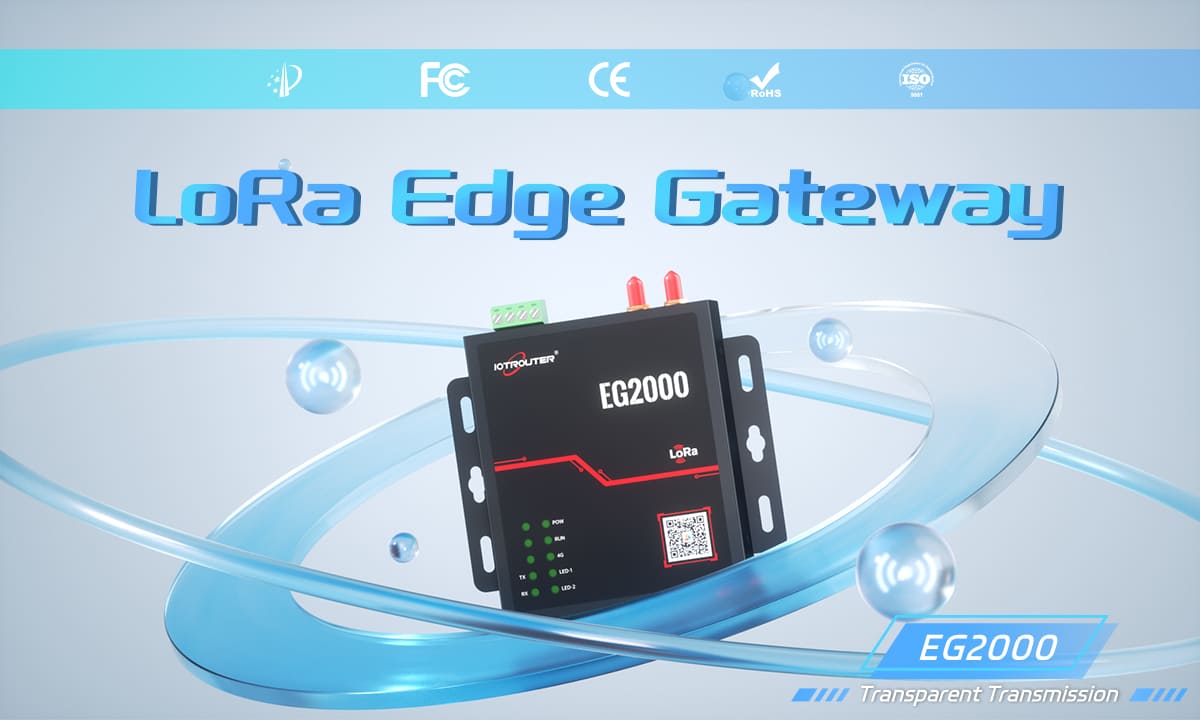
Unlike traditional LoRa concentrators, EG2000(LoRa/LoRaWAN) integrates edge computing capabilities with multi-protocol support, enabling seamless data acquisition, processing, and transmission from field devices to the cloud.
Users do not need to care about the specific construction process of the LoRa wireless network. They can quickly generate their own wireless application solutions by simply using our LoRa hardware products and the provided standard API interfaces.
It supports LoRa Spread Spectrum Technology with a transmission distance of up to 8–10 km, combined with 4G and Ethernet connectivity for stable backhaul networking.
In addition, its edge computing capability allows users to process data locally, reducing latency and improving system efficiency in real-world deployments such as smart water management, energy monitoring, and remote industrial control.
Overall, the EG2000 is better suited for scalable and long-term industrial IoT deployments where reliability, flexibility, and integration are required.
2. Earlier LoRa Gateway (Discontinued)
Earlier models, such as ZHC-GW8000, were designed for basic wireless data transmission using private LoRa protocols. However, this model is no longer available and has been replaced by more advanced LoRa edge gateways.
3. Traditional LoRa Gateway vs Modern Gateways
Compared with earlier LoRa concentrators, modern gateways like EG2000 offer these features, making them more suitable for scalable and long-term industrial IoT deployments.
| Feature | Traditional Gateway | Modern Gateway |
|---|---|---|
| Connectivity | LoRa only | LoRa + 4G + Ethernet |
| Protocol Support | Limited | MQTT / Modbus / TCP/IP |
| Data Processing | Forward only | Edge computing enabled |
| Cloud Integration | Basic | Native cloud-ready |
| Scalability | Low | High |
Key considerations when selecting a LoRa gateway
When evaluating a LoRa gateway for an industrial IoT project, several practical factors should be confirmed during the selection stage.
1. Communication distance
The typical “10 km” range is based on ideal test conditions. In real deployments, the actual distance is affected by antenna type, environmental obstructions, and air data rate settings. It is recommended to perform field testing in advance or calculate the link budget and keep a sufficient margin.
2. Frequency band compliance
Different regions use different sub-GHz frequency regulations. It is important to confirm the target country’s frequency band before deployment to ensure the device complies with local regulations.
3. Data payload limitation
LoRa is designed for small-data transmission. Each packet typically supports up to around 200 bytes. If the data size exceeds this limit, alternative communication methods or packet segmentation should be considered.
4. System scalability
The number of slave modules connected to a single gateway should be evaluated in advance. Large-scale deployments may require multiple gateways or a segmented network design to avoid communication or addressing limitations.
Conclusion
Overall, LoRa gateways provide a practical way to connect distributed industrial devices to cloud systems in environments where wiring is difficult or costly. By understanding the system architecture and key selection parameters, users can design more stable and scalable IoT deployments based on real project requirements.
Last updated: March 2026