Node-RED has become a popular tool for Industrial IoT applications, enabling engineers to build data workflows, connect devices, and automate industrial processes. But for industrial application developers in China, it has always been a challenge to find practical and systematic Node-RED resources.
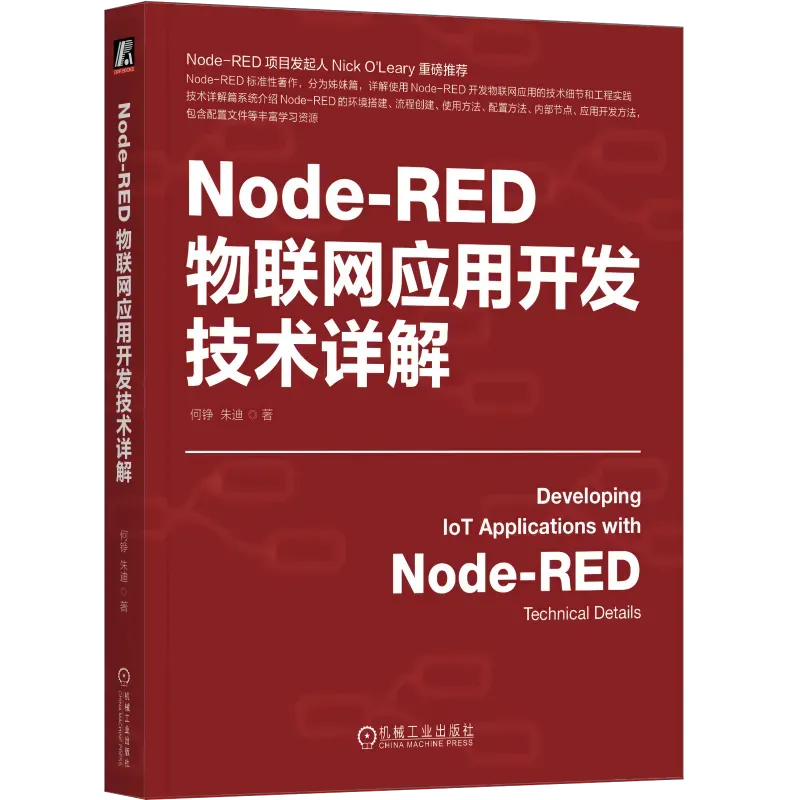
That changes with the recent publication of Node-RED IoT Application Development Technical Details. The book is authored by He Zheng and Zhu Di and is positively reviewed by Nick O’Leary, creator of Node-RED.

What the Book Includes
The book goes through Node-RED from the ground up: design concepts, installation, building flows, understanding built-in nodes, and actually building applications. It includes 44 pre-built flows solving common problems you encounter when using Node-RED.
There’s a second volume, Node-RED IoT Application Development Engineering Practice, which goes deeper into building custom nodes, working in teams, and walking through four full engineering cases: data acquisition, smart home setups, office automation, and energy management.
These two books together serve as a solid reference for Chinese-speaking developers working with Node-RED, whether they are just beginning or already building production systems.
Why is IOTRouter in the Acknowledgments?
One thing I loved about the book was the acknowledgments. The authors specifically thank IOTRouter, Hu Tao, and Easy and Enjoyment for their Modbus examples and technical support.
It is worth paying attention to.
Modbus has been around since 1979, and you will find it in a wide variety of PLCs, meters, sensors, and controllers. It is all over industrial settings. But it’s not always easy to get it working with Node-RED. You have register mapping, the right function codes to choose, byte ordering, and timing polls across several devices to deal with. These details are often where engineers struggle the most during real deployments.
IOTRouter provides Node-RED-enabled Passerelles IoT industrielles that connect PLCs, sensors, meters, and other field devices with modern IoT platforms. They have a lot of experience working with Modbus in real factories and sites. So when the authors needed good real-world examples for the Modbus chapters, IOTRouter was able to provide case studies that actually reflected what happens in the field. The original announcement said this was not a paid sponsorship, just an example of one part of the technical community sharing knowledge with another.

Node-RED Industrial IoT Gateways for Factory Applications
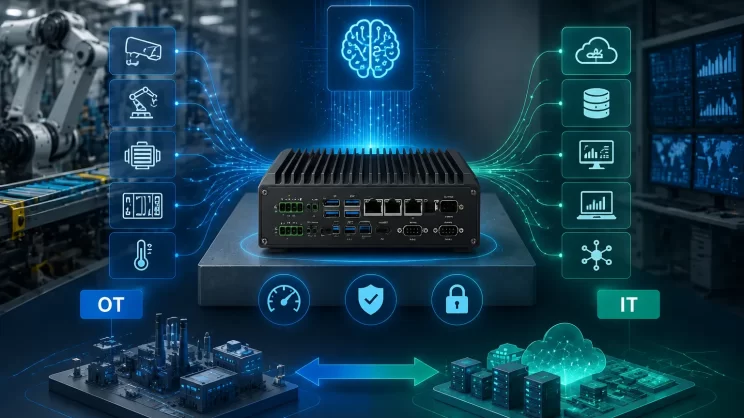
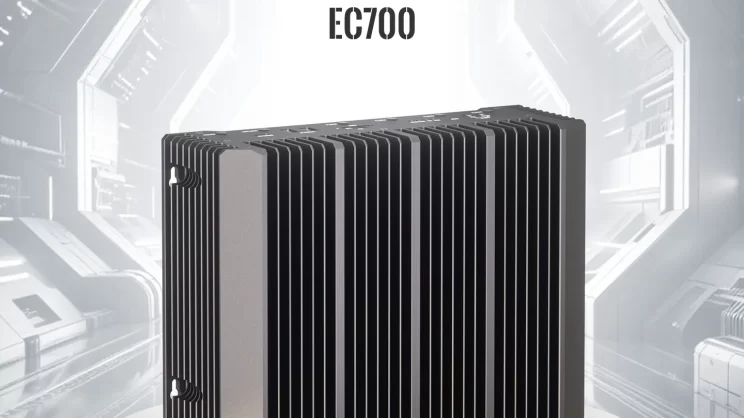
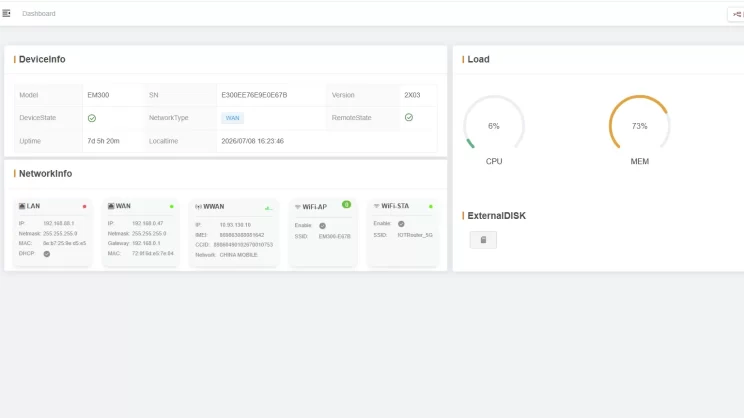
Many IOTRouter gateways come pre-configured with Node-RED and a good selection of industrial nodes pre-installed. Many support RS485, Ethernet, and wireless connectivity, so they fit into a range of installation scenarios.
3-Piece Stack: Node-RED, NeuronEX-Lite & ThingsBoard
In a typical Industrial IoT architecture, NeuronEX-Lite handles protocol acquisition while Node-RED manages workflow logic. NeuronEX-Lite supports industrial protocol acquisition, including Modbus, OPC UA, Siemens S7, Mitsubishi MC, Omron Fins, and many others, and supports millisecond-level data acquisition scenarios. This is topped with Node-RED, which handles the business logic—filtering data, doing calculations, sending alerts, and pushing data to the cloud.
The split makes sense: NeuronEX-Lite gets the data; Node-RED decides what to do with it.
IOTRouter is an official hardware partner of ThingsBoard, so gateways can push data directly to ThingsBoard using MQTT. ThingsBoard provides you with device management, dashboards, alerts, and remote control without building a cloud platform from scratch. If you are building an industrial IoT deployment, the ability to connect existing tools, rather than starting from scratch, saves a lot of time.
Why Field Experience with Modbus Really Matters
If you ever worked with Modbus in a real project, you will know that reading the protocol specification is only half the story. The hard parts start to creep in when you start wiring things together: figuring out why a register read is returning the wrong value, dealing with mismatches in endianness, or scheduling polls so you don’t overload a slow serial link. These are not problems you would expect to find in a datasheet.
That’s why the IOTRouter contributions are useful. The cases in the book are based on real industrial situations rather than purely theoretical examples. If you’re a developer trying to adapt one of those flows to your own hardware, you’ll probably see fewer surprises, because the examples already take into account the kinds of quirks that show up in the field.
The broader architecture—sensors and PLCs feeding data to a gateway, Node-RED handling the orchestration, and the cloud providing visibility and control—has become a common pattern in industrial IoT. Having real-world examples of the stack working together is a valuable resource for anyone building similar systems.
SUMMARY
Node-RED IoT Application Development Technical Details fills a real void in the Chinese-language documentation of Node-RED. The reference to IOTRouter’s work in the book acts as an external validation of their practical experience with Modbus in industrial settings.
IOTRouter continues to invest in the Node-RED ecosystem, and their hardware provides a practical way to get Node-RED into production in factories and smart buildings.” With the growth of the industrial IoT space, good reference material and solid hardware make it easier for engineers to actually get things done.
FAQs
1. What is Node-RED, and what is it used for in Industrial IoT?
Node-RED is a visual programming tool that enables you to connect up nodes in a web browser and create flows of data. It is extensively utilized in industrial IoT to extract data from PLCs, sensors, and meters, process the data, trigger alarms, and send data to cloud platforms. It means less custom code for you to write and makes it easier for OT and IT teams to work together.
2. How does Node-RED work with Modbus devices in Industrial IoT systems?
You can connect Node-RED to Modbus devices via a gateway, which deals with the physical Modbus RTU or TCP connection. The gateway reads registers and coils and passes that on to Node-RED, where you can build flows to process it and take action on it. But once that is set up, the flow can run without any additional code; you still have to set up the register addresses, function codes, and byte order correctly.
3. Why are industrial gateways important for Node-RED?
Gateways bridge the gap between field devices and IT systems. They handle protocol conversion, electrical isolation, and network connectivity, while Node-RED focuses on application logic. A gateway that comes with Node-RED pre-installed and pre-configured industrial nodes saves you the effort of setting up the environment and figuring out driver integration. This lowers the barrier for engineers who want to focus on solving business problems rather than dealing with low-level hardware details.