Introduzione
As enterprise networks become more complex, organizations are increasingly integrating security functions into network infrastructure. Instead of managing separate security appliances and networking devices, some companies are adopting converged network security platforms that combine routing, switching, and security management.
What Is a Converged Network Security Architecture?
A converged network security architecture combines network connectivity and security functions into a unified infrastructure. Instead of deploying independent firewalls, switches, and routing systems from multiple vendors, organizations can integrate security capabilities directly into their network environment.
While conducting research interviews for a small but rapidly growing business recently, I encountered for the first time an organization with a “no network provider” network. That is, instead of using Cisco or Dell or even a white-box solution for switching and routing, the company simply deployed Fortinet equipment across its entire network. That is, every network component is part of their security infrastructure.
Benefits of Integrating Security into Network Infrastructure
Organizations adopting this approach aim not only to embed security into their network infrastructure but also to improve operational efficiency in several areas:
Simplified Network Management
A centralized management platform can control network and security components from a single interface. This reduces operational complexity and allows administrators to monitor the entire infrastructure more efficiently.
Faster Deployment and Standardization
Organizations can reduce deployment complexity by maintaining only a limited number of standardized device models. This makes configuration, maintenance, and expansion easier across different locations.
Easier Multi-site Expansion
New locations can follow the same architecture, reducing deployment time and ensuring consistent security policies.
In addition, organizations can maintain a small inventory of replacement units to support faster recovery across different locations. They can also easily use Security Operations Center as a Service and use professional services for nearly all the rest of their network operations. Essentially, their security solution can also become their complete network solution.
Other vendors, such as Versa Networks and WatchGuard, also provide similar converged network security solutions.
Should Enterprises Adopt Converged Network Security Architecture?
The answer depends on the organization’s size, complexity, and security requirements.

Advantages of Converged Network Security Architecture
On the plus side, there are some clear benefits centered around operational simplicity and ease of management since there is only one vendor and a minimal number of device types making up a converged network/security stack. What’s more, putting security at the core of the network should greatly reduce the likelihood, if not the impossibility, of a disconnect between security policy and network practices, which is all too common in environments where security is separated from connectivity.
Risks of Single-Vendor Security Infrastructure
Il rovescio della medaglia è che la monocultura dell'IT rende l'infrastruttura più suscettibile ai punti deboli della piattaforma scelta e ai problemi del fornitore. Se c'è una vulnerabilità di sicurezza nel sistema operativo di un dispositivo centrale, l'intera rete e tutte le sedi potrebbero essere vulnerabili allo stesso modo nello stesso momento: un singolo attacco che mette in pericolo tutti. Se la sicurezza ha un livello infrastrutturale separato, i problemi del livello di sicurezza possono essere attenuati modificando le configurazioni del livello di rete, così come il livello di sicurezza riduce i rischi della rete. Se un fornitore viene acquisito o acquisisce un altro fornitore, il supporto per l'intera infrastruttura di connettività sarà a rischio durante il periodo di transizione.
Il rovescio della medaglia di avere solo una morsa quando le cose vanno male è una minore leva nella negoziazione dei prezzi e un potenziale aumento dei costi. Più ci si affida a un fornitore per qualcosa, più è difficile aumentare la propria quota e passare a un nuovo fornitore.
Therefore, the decision to adopt a converged security architecture should depend on business size, network complexity, and internal IT capabilities.
Is Integrated Network Security Suitable for Small and Medium-Sized Enterprises?
For small and medium-sized companies, the appeal and real benefits of making security systems part of the entire network are most obvious. They are more likely to have uniform and relatively simple needs and have smaller staffing levels. They are more likely to struggle to afford, attract, and retain the talent they need in security and networking. Therefore, adopting a unified platform allows organizations to build expertise around a single system, simplify employee training, or outsource management more efficiently.
Why Large Enterprises May Prefer Hybrid Security Architectures
Per le grandi aziende, i vantaggi sono meno evidenti. Queste tendono ad avere ambienti ed esigenze più complesse ed è meno probabile che tollerino i rischi delle monocolture, perché sono in grado di gestire e supportare meglio gli ecosistemi misti.
The Role of Network Infrastructure in Zero Trust Security
In modern network architectures, security and connectivity are becoming increasingly integrated. However, organizations still need to balance security convergence with flexibility and risk management.
Network switches can and should play a central role when implementing a zero-trust architecture (everyone should be doing this) or SD-LAN or deploying a software-defined perimeter (SDP). The switch should be the policy enforcement point, enforcing policies defined and managed in some kind of security policy engine. They should be able to do this even if they aren’t all from the same vendor, let alone the same security vendor.
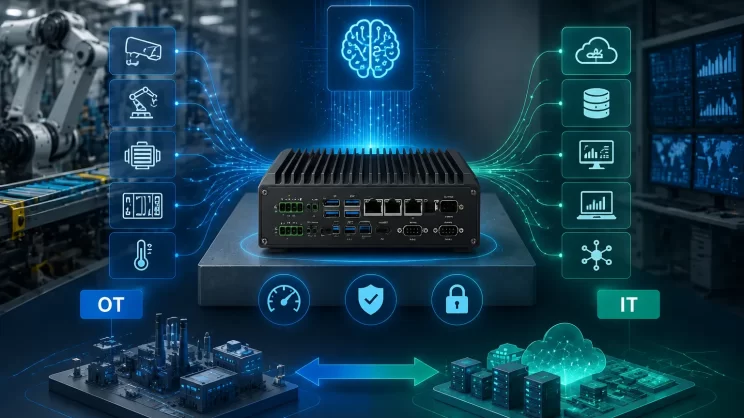
While these concepts are commonly discussed in enterprise IT environments, similar principles are becoming increasingly important in industrial IoT networks. Industrial organizations also need to protect connected devices while maintaining reliable communication between field equipment and higher-level systems.
Industrial IoT Network Security Considerations
In industrial IoT environments, network security is becoming increasingly important as gateway edge, industrial routers, and connected devices are deployed across factories, energy systems, and remote sites. A secure industrial network requires not only protection at the IT layer but also reliable communication between field devices, PLC systems, industrial edge controllers, and cloud platforms.
Industrial IoT environments introduce additional challenges compared with traditional enterprise networks. Many industrial applications also require secure remote access, reliable data transmission, and continuous operation under harsh environmental conditions.
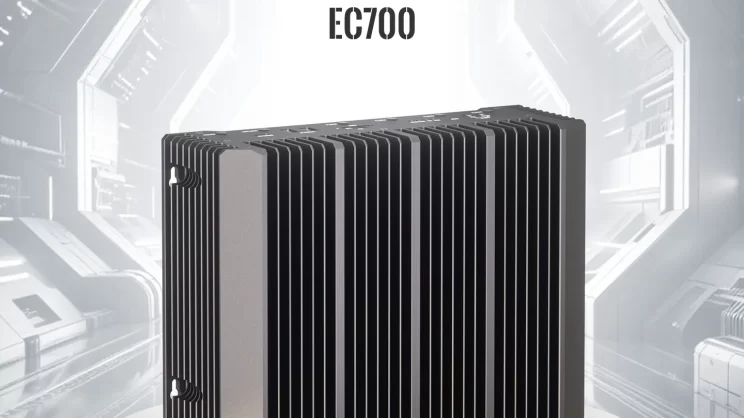
Therefore, industrial network security needs to consider both cybersecurity protection and operational reliability. Industrial gateways, routers, and edge computing devices help establish secure communication channels while maintaining reliable data exchange between field devices and upper-level systems.