Einführung
As enterprise networks become more complex, organizations are increasingly integrating security functions into network infrastructure. Instead of managing separate security appliances and networking devices, some companies are adopting converged network security platforms that combine routing, switching, and security management.
What Is a Converged Network Security Architecture?
A converged network security architecture combines network connectivity and security functions into a unified infrastructure. Instead of deploying independent firewalls, switches, and routing systems from multiple vendors, organizations can integrate security capabilities directly into their network environment.
Als ich kürzlich für ein kleines, aber schnell wachsendes Unternehmen Forschungsinterviews durchführte, stieß ich zum ersten Mal auf eine Organisation mit einem Netzwerk “ohne Netzwerkausrüster”. Das heißt, anstatt Cisco, Dell oder gar eine White-Box-Lösung für Switching und Routing zu verwenden, setzte das Unternehmen im gesamten Netzwerk ausschließlich Geräte von Fortinet ein. Das heißt, jede Netzwerkkomponente ist Teil der Sicherheitsinfrastruktur.
Benefits of Integrating Security into Network Infrastructure
Organizations adopting this approach aim not only to embed security into their network infrastructure but also to improve operational efficiency in several areas:
Simplified Network Management
A centralized management platform can control network and security components from a single interface. This reduces operational complexity and allows administrators to monitor the entire infrastructure more efficiently.
Faster Deployment and Standardization
Organizations can reduce deployment complexity by maintaining only a limited number of standardized device models. This makes configuration, maintenance, and expansion easier across different locations.
Easier Multi-site Expansion
New locations can follow the same architecture, reducing deployment time and ensuring consistent security policies.
In addition, organizations can maintain a small inventory of replacement units to support faster recovery across different locations. They can also easily use Security Operations Center as a Service and use professional services for nearly all the rest of their network operations. Essentially, their security solution can also become their complete network solution.
Other vendors, such as Versa Networks and WatchGuard, also provide similar converged network security solutions.
Should Enterprises Adopt Converged Network Security Architecture?
The answer depends on the organization’s size, complexity, and security requirements.

Advantages of Converged Network Security Architecture
Positiv zu vermerken sind einige klare Vorteile hinsichtlich der einfachen Bedienung und Verwaltung, da ein konvergentes Netzwerk-/Sicherheits-Stack aus nur einem Anbieter und einer minimalen Anzahl von Gerätetypen besteht. Darüber hinaus dürfte die Einbettung der Sicherheit in den Kern des Netzwerks die Wahrscheinlichkeit einer Diskrepanz zwischen Sicherheitsrichtlinien und Netzwerkpraktiken – die in Umgebungen, in denen Sicherheit und Konnektivität voneinander getrennt sind, nur allzu häufig auftritt – erheblich verringern, wenn nicht sogar ganz ausschließen.
Risks of Single-Vendor Security Infrastructure
Der Nachteil ist, dass jede Monokultur in der IT die Infrastruktur anfälliger für Schwachstellen der gewählten Plattform und für Probleme mit dem Anbieter macht. Wenn im Betriebssystem eines zentralen Geräts eine Sicherheitslücke besteht, könnten das gesamte Netzwerk und alle Standorte gleichzeitig in gleicher Weise gefährdet sein – ein einziger Angriff würde alle gefährden. Verfügt die Sicherheit über eine separate Infrastrukturebene, können Probleme in der Sicherheitsebene durch Änderungen der Konfigurationen auf der Netzwerkeebene gemindert werden, genauso wie die Sicherheitsebene Risiken im Netzwerk reduziert. Wird ein Anbieter von einem anderen übernommen oder übernimmt er selbst einen anderen Anbieter, ist der Support für die gesamte Konnektivitätsinfrastruktur während der Übergangsphase gefährdet.
Die Kehrseite davon, bei Problemen nur einen Würgegriff in der Hand zu haben, ist, dass man bei Preisverhandlungen weniger Verhandlungsspielraum hat und möglicherweise höhere Kosten in Kauf nehmen muss. Je stärker man bei einer Sache von einem einzigen Lieferanten abhängig ist, desto schwieriger ist es, seinen Marktanteil zu erhöhen und zu einem neuen Lieferanten zu wechseln.
Therefore, the decision to adopt a converged security architecture should depend on business size, network complexity, and internal IT capabilities.
Is Integrated Network Security Suitable for Small and Medium-Sized Enterprises?
For small and medium-sized companies, the appeal and real benefits of making security systems part of the entire network are most obvious. They are more likely to have uniform and relatively simple needs and have smaller staffing levels. They are more likely to struggle to afford, attract, and retain the talent they need in security and networking. Therefore, adopting a unified platform allows organizations to build expertise around a single system, simplify employee training, or outsource management more efficiently.
Why Large Enterprises May Prefer Hybrid Security Architectures
Für große Unternehmen liegen die Vorteile weniger auf der Hand. Diese verfügen in der Regel über komplexere Umgebungen und Anforderungen und sind weniger bereit, die Risiken von Monokulturen in Kauf zu nehmen, da sie besser in der Lage sind, gemischte Ökosysteme personell zu besetzen und zu unterstützen.
The Role of Network Infrastructure in Zero Trust Security
In modern network architectures, security and connectivity are becoming increasingly integrated. However, organizations still need to balance security convergence with flexibility and risk management.
Netzwerk-Switches können und sollten eine zentrale Rolle bei der Implementierung einer Zero-Trust-Architektur (die jeder einführen sollte), eines SD-LAN oder eines Software-Defined Perimeter (SDP) spielen. Der Switch sollte als Policy Enforcement Point fungieren und die Richtlinien durchsetzen, die in einer Art Security Policy Engine definiert und verwaltet werden. Dies sollte auch dann möglich sein, wenn die Switches nicht alle vom selben Hersteller stammen, geschweige denn vom selben Sicherheitsanbieter.
While these concepts are commonly discussed in enterprise IT environments, similar principles are becoming increasingly important in industrial IoT networks. Industrial organizations also need to protect connected devices while maintaining reliable communication between field equipment and higher-level systems.
Industrial IoT Network Security Considerations
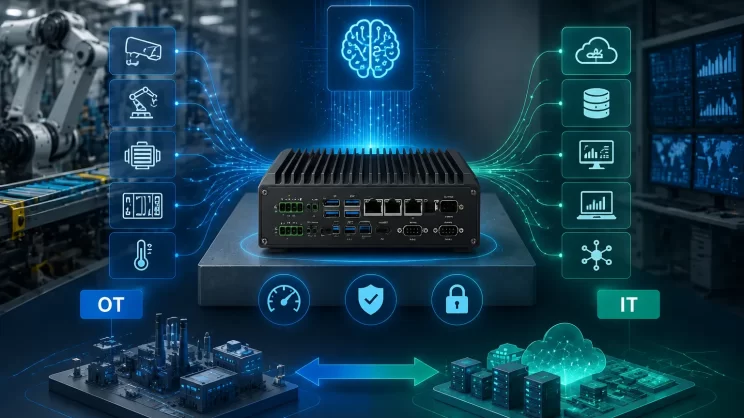
In industrial IoT environments, network security is becoming increasingly important as Edge-Gateways, industrial routers, and connected devices are deployed across factories, energy systems, and remote sites. A secure industrial network requires not only protection at the IT layer but also reliable communication between field devices, PLC systems, industrial edge controllers, and cloud platforms.
Industrial IoT environments introduce additional challenges compared with traditional enterprise networks. Many industrial applications also require secure remote access, reliable data transmission, and continuous operation under harsh environmental conditions.
Therefore, industrial network security needs to consider both cybersecurity protection and operational reliability. Industrial gateways, routers, and edge computing devices help establish secure communication channels while maintaining reliable data exchange between field devices and upper-level systems.