
Como componente de amplificación y expansión de la ejecución de la salida de señal, el relé intermedio desempeña un papel importante en el sistema de control automático. De acuerdo con la normativa del sistema de inspección periódica de equipos, deben realizarse regularmente las inspecciones y pruebas necesarias sobre el estado de funcionamiento de los equipos. Sin embargo, en el trabajo in situ, la detección de relés intermedios es un eslabón débil que se pasa por alto con facilidad.
This article analyzes the necessity of PLC’s transformation of relay control circuits, focuses on the transformation of PLC’s relay control circuits, and finally puts forward relevant opinions and suggestions for the renovation project of PLC’s relay control circuits, guiding the application of PLC in control circuits. Provide some reference.
Introducción
PLC es un controlador programable. Es un nuevo control de automatización industrial device based on a microprocessor and developed by integrating computer technology, communication technology, and control technology. The working process of PLC is generally divided into three stages: input sampling, program execution, and output refresh. The completion of the above three stages is called a scan cycle.
During PLC operation, because the scan cycle time is relatively short and the previous process has not yet executed the output, the following program terminates the action of the previous process, causing the automated production line to fail to operate normally. Timer (T) is an important aspect of the basic instructions of PLC. It can realize time-based control functions by relying on the internal clock pulse of the PLC.
El relé auxiliar (M) es un relé suave dentro del PLC, que desempeña el papel de transformación lógica y memoria lógica en el diagrama de escalera del PLC. Este artículo utiliza el contacto normalmente abierto del temporizador y el relé auxiliar como condición de disparo para eliminar fallos en el control automatizado de la línea de producción.
1 Análisis de la transformación PLC del circuito de control de relés
First, determine the main circuit, the input part, and the output part. The first is to determine the main circuit. In the process of using PLC technology, PLC can transform the relay control circuit. If there is no improvement and expansion of its functions, generally speaking, the main circuit will not change. Moreover, if there is no protection part in the circuit, the relevant staff must add it to the circuit. Also, if you want to expand the circuit function, you must redesign the circuit so that it can adapt to new changes and requirements.
La segunda es determinar la parte de entrada. La información de entrada es la información principal para controlar los aparatos eléctricos. Sólo confirmando la información de entrada podemos comprender mejor los contactos de los aparatos eléctricos de control maestro.
La tercera es determinar la parte de salida. La llamada salida es la parte que controla la ejecución de los aparatos eléctricos. En la proceso de utilización de la tecnología PLC para controlar relés, hay que determinar la parte de ejecución del control de los aparatos eléctricos. La parte de salida requiere un entorno de control de CA. Si el PLC no está equipado con una interfaz de CA, entonces la interfaz externa del relé intermedio debe desempeñar el papel de introducir la alimentación de CA en el dispositivo.
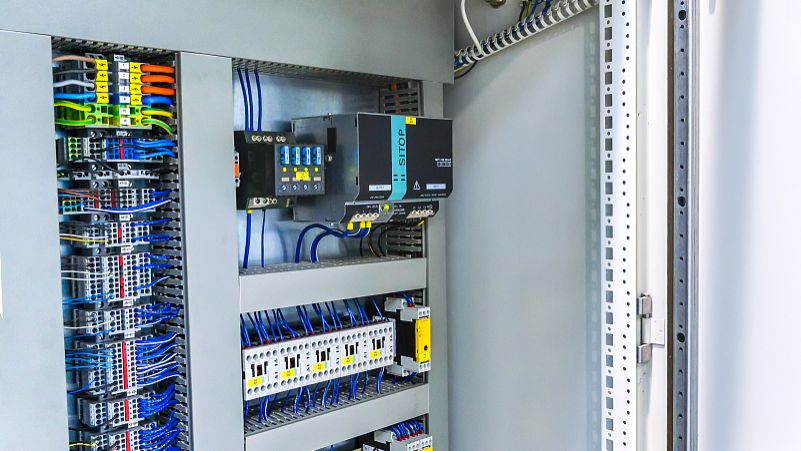
En segundo lugar, las cuestiones relacionadas a las que hay que prestar atención durante el proceso de transformación específico. El primer paso es entender las tareas específicas, entender los dispositivos específicos de salida y entrada, y dibujar el diagrama de cableado del PLC antes de realizar operaciones específicas. En términos generales, los contactos de la parte de entrada deben utilizar contactos normalmente abiertos. Sólo de esta manera algunas personas que acaban de entrar en contacto con la tecnología PLC pueden entender mejor esta tecnología y dominar aún más la conversión entre los programas PLC y los diagramas esquemáticos de control.
Relations, however, use hard chaining for the output part, and the chaining part must be retained. The second step is to select the programming components. Generally speaking, the input part is replaced by X, and the output part is replaced by Y. Pay attention to the one-to-one correspondence of the numbers for these two parts. The third step is to avoid short circuits and eliminate contact competition.
Due to the characteristics and nature of the PLC’s scanning working method, competition may occur in some cases, which will eventually lead to a phase-to-phase short circuit of the power supply. The occurrence of this situation will cause big problems, so competition must be eliminated and improved. security and stability.
Finally, there are two points that need to be paid attention to in PLC technology. The difference between PLC technology and relays mainly includes two aspects: on the one hand, the order of PLC cannot be reversed when scanning. It scans step by step according to certain steps. However, relay circuits can make all relays. The contacts of the relay act simultaneously, which means that the sequence of the relay steps can be reversed. On the other hand, the PLC ladder diagram is a very strict QR code. There cannot be cross lines in the PLC ladder diagram. In addition, the contacts cannot be placed in a vertical position.
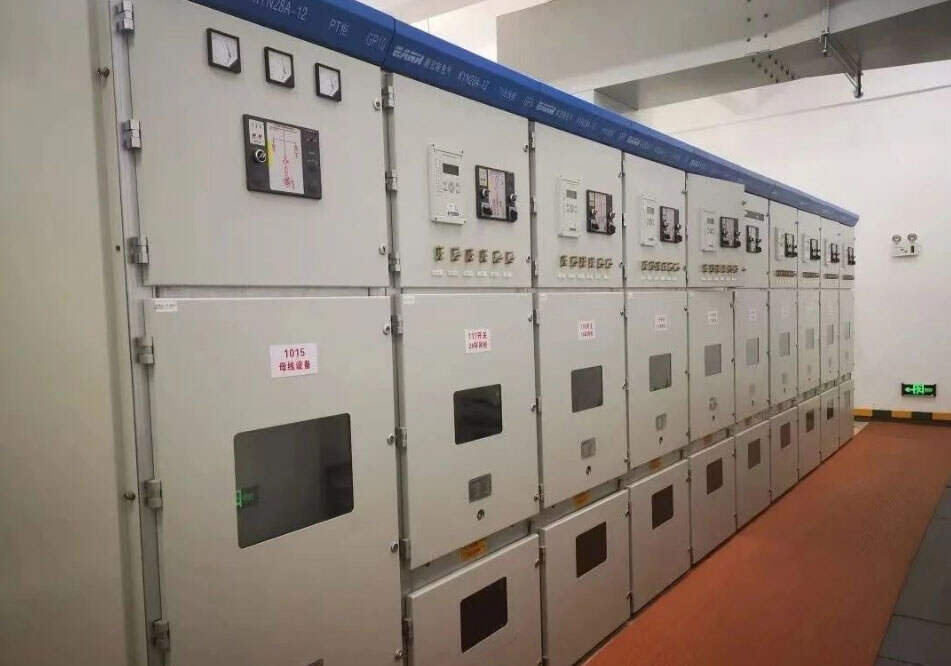
2 Ejemplos de aplicación del relé auxiliar
En el PLC, el relé auxiliar (M) funciona como un relé intermedio en el sistema de control de relés. El relé auxiliar no puede accionar directamente cargas externas y sólo se utiliza para la programación interna.
Al descargar y depurar el programa, se descubrió que el cilindro de elevación de la estación de la unidad oscilaba arriba y abajo y no podía restablecerse por completo, lo que provocaba que el programa posterior de la unidad no pudiera ejecutarse. Después del análisis, el error en este programa es que debido a que el cilindro de elevación es un solo cilindro controlado electrónicamente, el contacto normalmente abierto del temporizador se cierra instantáneamente, y el resorte del cilindro de elevación se restablece.
Since the reset time exceeds the scan cycle of the PLC, the lifting cylinder is set again, thus causing the lifting cylinder to oscillate up and down. In order to completely reset the lifting cylinder, when the normally open contact of the timer is closed instantaneously, the auxiliary relay M0 is set, and the normally open contact of M0 is used as the trigger condition for cylinder reset. M0 is reset at the end of the program. Through debugging, the station can operate normally.
3 Reforzar las opiniones y sugerencias del PLC sobre la transformación de los circuitos de control de relés
First, relevant personnel should strengthen their understanding of PLC technology and improve staff’s awareness of using PLC technology. To give full play to the role of PLC technology, you must first have a full understanding of PLC technology, master all aspects and requirements that need to be paid attention to, and various skills in the application of PLC technology.
Moreover, you must also use PLC technology according to the requirements. Only in this way can the safety and rationality of the application of PLC technology be improved. In addition, relevant staff must strengthen their awareness of the application of PLC technology, actively use PLC technology in traditional line control, and use PLC technology to transform relay control lines.
Second, sufficient preparations must be made when using PLC technology. In the process of using PLC technology, you must first draw the PLC drawings and design them scientifically and rationally based on the actual situation. Moreover, in the process of using PLC technology, you must be realistic and formulate a PLC operation plan based on the actual situation. In addition, relevant materials must be prepared during the process of PC transforming the relay control circuit, so that the PLC can smoothly transform the relay control circuit.
Third, certain rules and sequences must be followed when using a PLC to transform relay control circuits. Since PLC technology has some new characteristics compared to traditional technology, certain rules and requirements must be followed in the process of using PLC technology.