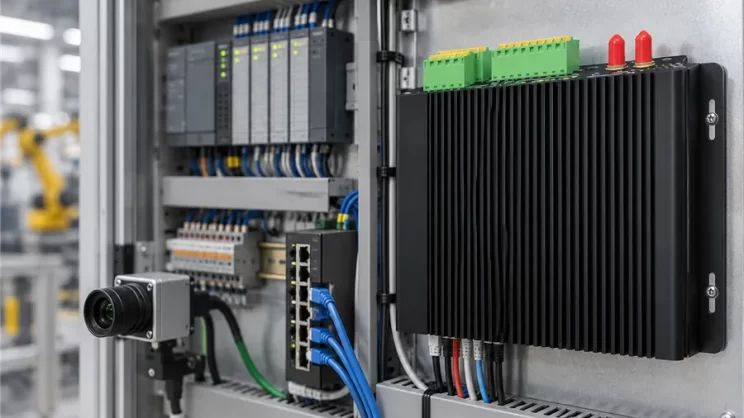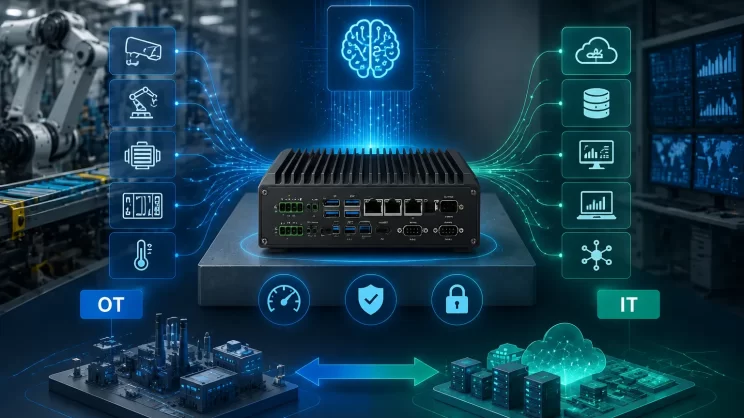
RTU is an electronic device installed at a remote site. It is used to monitor and measure sensors and equipment installed at a remote site. It is responsible for monitoring and controlling on-site signals and industrial equipment. The RTU converts the measured status or signal into a data format that can be sent on the communication media. It also converts the data sent from the central computer into commands to realize functional control of the equipment.
As the hub device between the serial device side and the platform side, RTU’s communication protocol is also very important. At present, most RTUs adopt the Modbus protocol, and Zongheng Intelligent Control has also adapted to the MQTT protocol currently popular in the Internet of Things.
Why choose MQTT? MQTT was originally an instant messaging protocol developed by IBM. It is a protocol designed for communication with a large number of remote sensors and control devices that have limited computing power and work on low-bandwidth, unreliable networks. Its biggest advantage is that it has strong compatibility and can support all platforms. It can connect almost all networked items to the Internet.
El protocolo MQTT puede funcionar con una sobrecarga de protocolo extremadamente baja y un bajo consumo energético, y admite millones de conexiones de clientes. En concreto, MQTT puede enviar fácilmente notificaciones a los clientes, lo que reduce la carga tanto en los servidores como en los clientes. MQTT cuenta con numerosas características útiles adecuadas para aplicaciones orientadas al IoT.
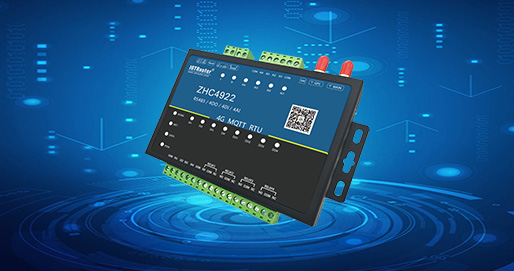
The ZHC4922 independently developed and produced by Zongheng Intelligent Control is an industrial-grade 4G RTU that provides 4-channel DI, 4-channel DO, 4-channel AI and 1-channel RS485 interfaces. It supports local logic processing operations, automatic collection and active reporting, and MQTT RTU/TCP automatic It has special functions such as adaptation, automatic calibration threshold reporting, configuration software docking, and wet and dry node IO detection. It supports one-to-one and many-to-one networks, and the visualization of the configuration software interface window enables users to connect, debug, and configure equipment on-site or remotely. It can also be perfectly connected to the Alibaba Cloud IoT platform.