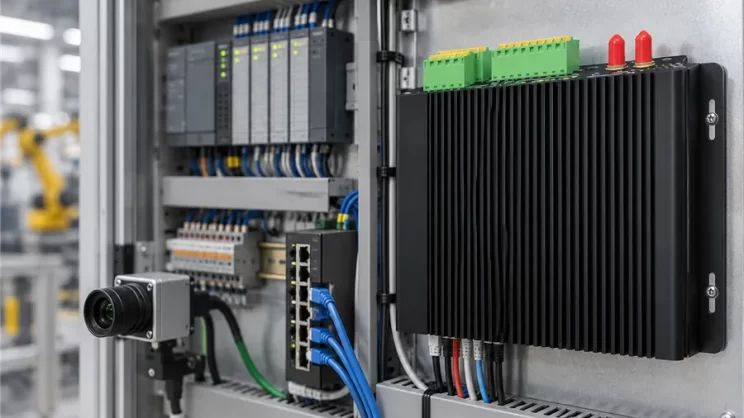
Communication technologies in the Internet of Things include long-distance wireless communication and short-distance wireless communication. This article will talk about short-distance wireless communication networking technology. As the wireless communication technology of the Internet of Things continues to innovate, we commonly see short-distance wireless communication technologies such as Zigbee, WiFi, Bluetooth, and LoRa.
Drahtlose Kurzstreckenkommunikations-Netzwerktechnologie
1. LoRa communication technology
LoRa is a kind of LPWAN communication technology. It is an ultra-long-distance wireless transmission solution based on spread spectrum technology adopted and promoted by Semtech Company in the United States. This solution changes the previous trade-off between transmission distance and power consumption, providing users with a simple system that can achieve long distance, long battery life, and large capacity, thereby expanding the sensor network. Currently, LoRa mainly operates in free frequency bands around the world, including 433, 868, and 915 MHz, etc.
Standard: LoRaWAN
Frequency: 433, 868, 915 MHz
Communication distance: 3- 8 km
Data rate: 30kb/s~180kb/s [depending on the product itself and communication distance]
Sicherheit: hoch
Application scenarios: oil fields, remote meter reading
Advantages: low power consumption, long communication distance, supports multiple networking methods
Disadvantages: spectrum interference. As the deployment of LoRa devices and networks increases, there will be certain spectrum interference between them.
2. ZigBee communication technology
Der Name ZigBee stammt von dem achtstelligen Tanz der Bienen. Bienen fliegen und tanzen mit ihren Flügeln im Zickzack, um ihren Artgenossen mitzuteilen, wo sich Pollen befindet. Auf diese Weise bilden sie ein Kommunikationsnetz in der Gruppe. Die ZigBee-Technologie eignet sich für automatische Steuerungs- und Fernsteuerungsbereiche und kann in verschiedene Geräte integriert werden.
Norm: 802.15.4
Frequenz: 868MHz-868,6MHz, 902MHz-928MHz und 2,4GHz-2,4835GHz
Datenrate: 20kbps, 40kbps und 250kbps
Kommunikationsentfernung: 20-350m
Sicherheit: Mittel
Anwendungsszenarien: Industrieautomobile, Landwirtschaft, medizinische Versorgung, Smart Home
Advantages: low power consumption, low cost, low latency, large network capacity, short distance, support for Mash network
Nachteile: Schwache Fähigkeit, Mauern zu durchdringen, höhere Kosten, geringe Fähigkeit zur Selbstorganisation des Netzes, schwache Anti-Interferenz-Leistung

3. Wifi communication technology
Short-range wireless communication technology, WiFi connections are often a priority for many developers, especially given the popularity of WiFi in home environments within local area networks. In addition to being clearly stated, the existing infrastructure is extensive and provides fast data transfer and the ability to process large amounts of data.
Standard: Basierend auf 802.11n
Frequenz: 2,4GHz, 5GHz Frequenzband
Datenrate: 600 Mbit/s maximal, 150-200 Mbit/s (typisch).
Kommunikationsentfernung: 20-300m
Sicherheit: niedrig
Anwendungsszenarien: intelligente Häuser, intelligente Busse, U-Bahnen, Parks
Vorteile: große Reichweite, einfache Anwendung, geringe Kosten
Nachteile: begrenzte Kommunikationsdistanz, hohe Sicherheitsrisiken, geringe Stabilität, hoher Stromverbrauch und schlechte Netzwerkfähigkeit
4. Bluetooth communication technology
Short-distance wireless communication technology Bluetooth uses short-baud high-frequency (UHF) radio waves and uses frequency-hopping technology to resist signal fading; fast frequency hopping and short packet technology can reduce co-channel interference and ensure transmission reliability; forward error correction Coding technology can reduce the impact of random noise during long-distance transmission; FM modulation can be used to reduce the complexity of equipment, etc.
Standard: Bluetooth 4.2 Kernspezifikationen
Frequenz: 2,4 bis 2,485GHz
Kommunikationsentfernung: 10-300m
Datenrate: 1Mbps
Sicherheit: hoch
Anwendungsszenarien: Mobiltelefone, Smart Homes, Wearables
Vorteile: geringer Stromverbrauch, niedrige Latenzzeit, Unterstützung komplexer Netzwerke, intelligente Verbindung
Nachteile: kurze Übertragungsdistanz, durchschnittliche Übertragungsrate, inkompatible Protokolle zwischen verschiedenen Geräten, schlechte Vernetzungsmöglichkeiten und Probleme mit Funkwellenstörungen auf der 2,4-GHz-Frequenz
Schlüsselwörter in diesem Artikel: LoRa communication technology, industrial-grade LoRa RTU