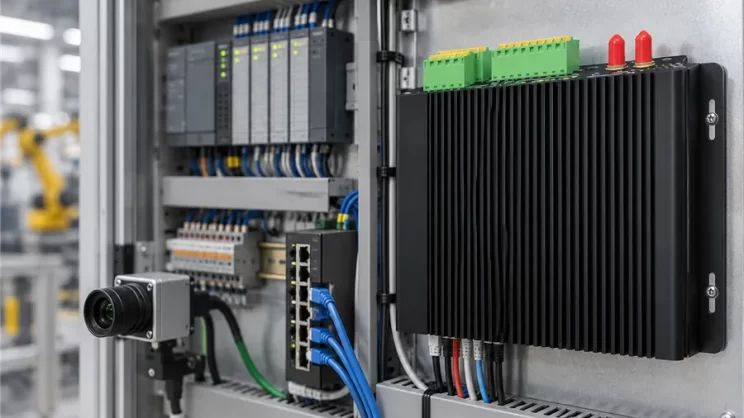
Communication technologies in the Internet of Things include long-distance wireless communication and short-distance wireless communication. This article will talk about short-distance wireless communication networking technology. As the wireless communication technology of the Internet of Things continues to innovate, we commonly see short-distance wireless communication technologies such as Zigbee, WiFi, Bluetooth, and LoRa.
Draadloze communicatienetwerktechnologie voor de korte afstand
1. LoRa communication technology
LoRa is a kind of LPWAN communication technology. It is an ultra-long-distance wireless transmission solution based on spread spectrum technology adopted and promoted by Semtech Company in the United States. This solution changes the previous trade-off between transmission distance and power consumption, providing users with a simple system that can achieve long distance, long battery life, and large capacity, thereby expanding the sensor network. Currently, LoRa mainly operates in free frequency bands around the world, including 433, 868, and 915 MHz, etc.
Standard: LoRaWAN
Frequency: 433, 868, 915 MHz
Communication distance: 3- 8 km
Data rate: 30kb/s~180kb/s [depending on the product itself and communication distance]
Beveiliging: hoog
Application scenarios: oil fields, remote meter reading
Advantages: low power consumption, long communication distance, supports multiple networking methods
Disadvantages: spectrum interference. As the deployment of LoRa devices and networks increases, there will be certain spectrum interference between them.
2. ZigBee communication technology
The name ZigBee comes from the eight-character dance of bees. Bees rely on flying and zig-zagging their wings to communicate the location of pollen to their companions. In this way, they form a communication network in the group. ZigBee technology is suitable for automatic control and remote control fields and can be embedded in various devices.
Standaard: 802.15.4
Frequentie: 868MHz-868,6MHz, 902MHz-928MHz en 2,4GHz-2,4835GHz
Gegevenssnelheid: 20kbps, 40kbps en 250kbps
Communicatieafstand: 20-350m
Beveiliging: Gemiddeld
Toepassingsscenario's: industriële auto's, landbouw, medische zorg, smart home
Advantages: low power consumption, low cost, low latency, large network capacity, short distance, support for Mash network
Nadelen: zwak vermogen om door muren heen te dringen, hogere kosten, slecht zelforganiserend netwerkvermogen, slechte anti-interferentieprestaties

3. Wifi communication technology
Short-range wireless communication technology, WiFi connections are often a priority for many developers, especially given the popularity of WiFi in home environments within local area networks. In addition to being clearly stated, the existing infrastructure is extensive and provides fast data transfer and the ability to process large amounts of data.
Standaard: Gebaseerd op 802.11n
Frequentie: 2,4GHz, 5GHz frequentieband
Gegevenssnelheid: 600 Mbps maximaal, 150-200Mbps (normaal).
Communicatieafstand: 20-300m
Beveiliging: laag
Toepassingsscenario's: slimme huizen, slimme bussen, metro's, parken
Voordelen: brede dekking, eenvoudig te gebruiken, lage kosten
Nadelen: beperkte communicatieafstand, hoge veiligheidsrisico's, slechte stabiliteit, hoog energieverbruik en slechte netwerkmogelijkheden
4. Bluetooth communication technology
Short-distance wireless communication technology Bluetooth uses short-baud high-frequency (UHF) radio waves and uses frequency-hopping technology to resist signal fading; fast frequency hopping and short packet technology can reduce co-channel interference and ensure transmission reliability; forward error correction Coding technology can reduce the impact of random noise during long-distance transmission; FM modulation can be used to reduce the complexity of equipment, etc.
Standaard: Bluetooth 4.2 Kernspecificaties
Frequentie: 2,4 tot 2,485 GHz
Communicatieafstand: 10-300m
Gegevenssnelheid: 1Mbps
Beveiliging: hoog
Toepassingsscenario's: mobiele telefoons, slimme huizen, wearables
Voordelen: laag stroomverbruik, lage latentie, ondersteuning voor complexe netwerken, intelligente verbinding
Nadelen: korte transmissieafstand, gemiddelde transmissiesnelheid, incompatibele protocollen tussen verschillende apparaten, slechte netwerkmogelijkheden en interferentieproblemen met radiogolven op de 2,4GHz-frequentie.
Trefwoorden in dit artikel: LoRa communication technology, industrial-grade LoRa RTU