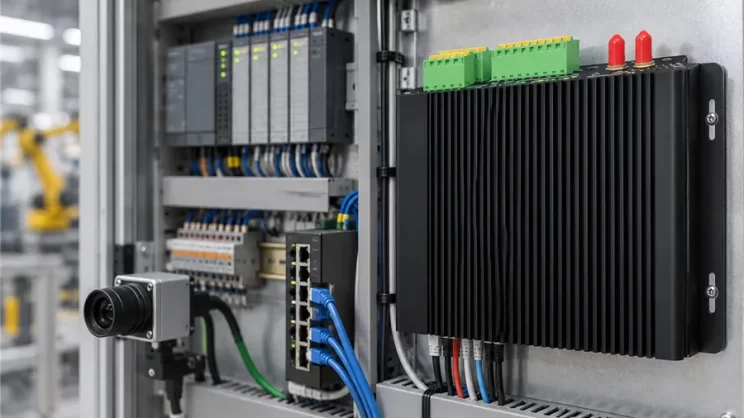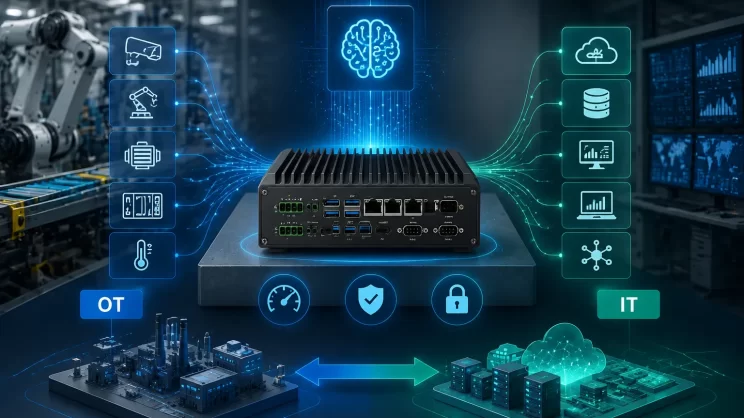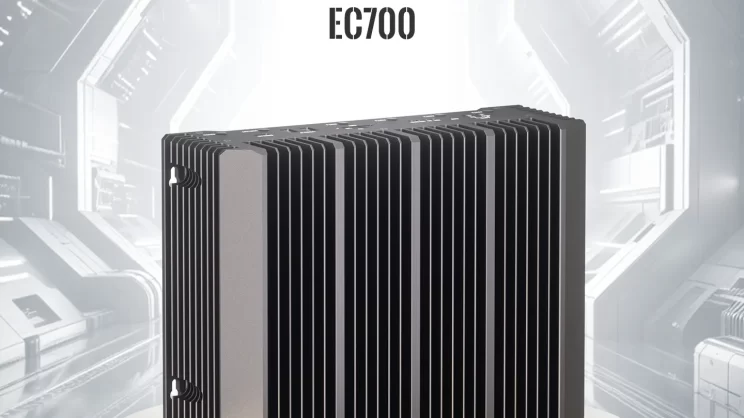
An industrial edge computing controller (also known as an industrial edge controller) is an industrial computing device deployed close to field equipment. It connects field devices with higher-level software systems to enable data acquisition, local processing, protocol conversion, and data integration between industrial systems. Its role is different from that of a PLC: a PLC is mainly responsible for device control and automation logic execution, while an industrial edge controller mainly solves data connectivity and system integration challenges between industrial devices.
Why Do Modern PLC Systems Need Industrial Edge Controllers?
In industrial automation, the core value of a PLC has always been clear: reliably executing control tasks. In production lines, energy systems, and infrastructure projects, PLCs execute automation logic, control equipment operating sequences, manage I/O signals, and keep systems running reliably.
But today, factories need more than just device control. Industrial projects are connecting to more digital systems, and companies want to put the data generated by equipment to work. A modern factory may have PLCs from different vendors, industrial meters, sensors, building automation devices, and energy equipment—all using different communication protocols—while higher-level systems need to collect and analyze that data in a unified way. PLCs can support some data connectivity through communication modules or software extensions, but cross-device, cross-protocol PLC data integration is usually not their primary design goal.
One option is to upgrade or replace the PLC, but many PLC systems in factories, energy, and infrastructure projects have been running reliably for years with mature, proven control logic. Replacing them is often impractical and can disrupt existing production. A more practical approach is to add a data connectivity layer on top of the existing control system so field devices can communicate with modern software platforms. That is exactly the role of an industrial edge controller: it does not replace the PLC. Instead, it works alongside the PLC to add data acquisition, protocol conversion, and system integration without changing the existing control logic.
So modern PLC systems need industrial edge controllers not because PLCs are not good enough, but because factory requirements have changed. The PLC continues to handle control, while the edge controller handles data acquisition, protocol conversion, and higher-level integration—getting equipment data out, moving it where it needs to go, and making it useful.
PLC vs. Industrial Edge Computing Controller: Different Roles in Modern Automation
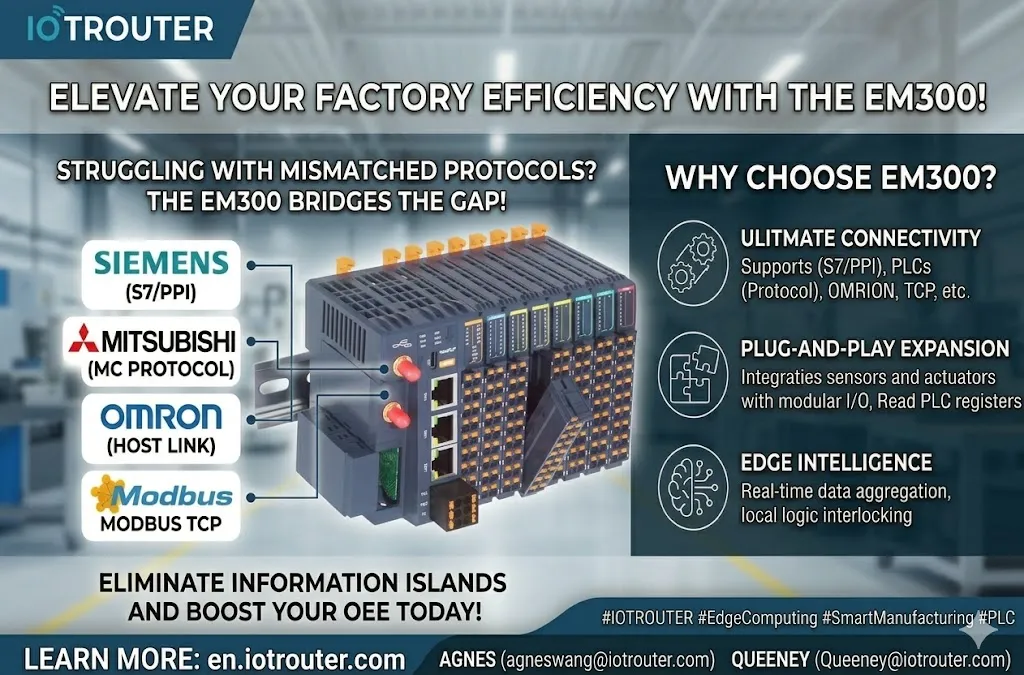
In real industrial projects, PLCs and industrial edge controllers often run in the same system but handle different tasks. To make the comparison concrete, we’ll use Siemens S7-1200/S7-1500 PLCs and the IOTRouter EM300 Industrial Edge Computing Controller as examples. The table below compares them across several key dimensions.
| Comparison Item | Siemens PLC (e.g., S7-1200/S7-1500) | IOTRouter EM300 |
|---|---|---|
| Device Type | Programmable Logic Controller | Industrial Edge Controller |
| Primary Purpose | Machine and process control | Edge connectivity, data processing, protocol conversion, and remote communication |
| Main Role | Execute control logic and control machines | Connect, process, convert, route, and transmit industrial data |
| Programming | TIA Portal (Ladder, FBD, Structured Text, SCL, etc.) | Node-RED / visual programming (Linux environment) |
| Real-time Control | Designed for deterministic PLC control | Suitable for local automation logic, not a dedicated hard real-time PLC |
| Protocol Support | Depends on model and additional communication modules | Modbus, OPC UA, BACnet, MQTT, HTTP, IEC104, IEC61850 and more |
| IoT / Cloud | Usually requires additional software or modules | Built-in MQTT/HTTP/WebSocket, easy cloud integration |
| PLC Connectivity | Primarily used within the Siemens ecosystem | Connects Siemens, Mitsubishi, Omron, Allen-Bradley, Delta, and other PLCs and devices |
| Network & Remote Access | Depends on model and additional communication hardware | Multiple Ethernet ports, 4G LTE (optional), routing, VPN, firewall, remote management (SSH) |
| Expandable I/O | Siemens-specific I/O modules | Up to 16 hot-swappable I/O modules |
| Edge Computing | Not the primary function | Edge computing, data preprocessing, local logic |
| Industrial Design | Industrial design (varies by model) | -40°C to 85°C, industrial design |
In simple terms, the PLC handles device control, while the industrial edge controller extends device data connectivity so field data can flow into more industrial software systems.
Key Functions of an Industrial Edge Computing Controller
In automation systems, an industrial edge controller—often acting as an industrial automation gateway—connects upward to SCADA, MES, and IoT platforms, and downward to PLCs, industrial meters, sensors, and other field devices. In between, it handles protocol conversion, data mapping, and edge-side data processing.
Protocol Compatibility
Mainstream industrial edge controllers—often used as an industrial IoT gateway—usually treat multi-protocol support as a key capability. Modbus RTU/TCP, OPC UA, MQTT, and HTTP are generally included, and some products also cover industry-specific protocols such as IEC 104, IEC 61850, and BACnet. The broader the protocol support, the fewer additional communication conversion devices engineers typically need for device integration.
Remote Communication and Device Management
Distributed industrial equipment—such as remote pump stations, energy sites, and unmanned sites—is expensive to maintain on site. In addition to collecting data, industrial edge controllers need remote communication capabilities so engineers can check status, diagnose issues, and access field network devices remotely.
These devices typically provide Ethernet, with some supporting 4G LTE, and use VPN, routing, and SSH for remote access. Field data can be uploaded to SCADA, MES, or IoT platforms, while helping engineers reduce some on-site maintenance work.
Edge-Side Data Processing
Industrial projects usually need more than data transmission; they also need data processing based on specific application requirements, such as data filtering, data conversion, alarm logic, and communication flow handling. Industrial edge controllers generally provide a visual or low-code programming environment so engineers can build data processing flows on site. Common options include Node-RED, and some products support Docker containers for running custom applications. Keep in mind that these programming environments are designed for data flows, not hard real-time tasks such as motion control or safety control.
Modular I/O Expansion
Some projects only need to read PLC data, while others need to connect directly to field signals. Energy management systems, wastewater treatment systems, and building automation systems, for example, often require additional digital or analog data acquisition. Industrial edge controllers usually use a modular I/O design that can be flexibly expanded based on project needs.
Typical Applications of Industrial Edge Controllers
PLC Data Acquisition and Remote Monitoring in Smart Factories
In manufacturing environments, PLCs continue to control production equipment. Industrial edge controllers collect equipment operating status, alarm information, and related data, then transmit it to monitoring systems. Typical applications include equipment condition monitoring, production data acquisition, and remote diagnostics. These are common examples of edge computing in manufacturing.
Industrial Energy Management
Energy systems typically include meters, controllers, PV equipment, and energy storage equipment, and different devices may use different communication methods. Industrial edge controllers can collect data from these devices and transmit it to an energy management platform. Applications include industrial energy monitoring, PV system monitoring, and BESS data acquisition.
Building Automation System Integration
Modern buildings typically include HVAC systems, energy meters, and control devices. These systems may come from different vendors and use different communication protocols. By supporting protocols such as BACnet and Modbus, industrial edge computing controllers help different systems integrate data and connect to a unified management platform.
The Future of Industrial Automation: Combining Control and Edge Computing
The direction of industrial automation is not about replacing PLCs. PLCs will continue to handle reliable device control and process automation, while industrial edge controllers provide data connectivity, protocol handling, and edge data processing for modern industrial systems.
By combining PLCs with an industrial edge computing controller, companies can preserve proven automation architectures, improve equipment data utilization, enable remote monitoring, and connect to modern industrial software platforms. For industrial projects that already have a large installed base of PLCs, industrial edge controllers offer a more practical path to digital upgrades and serve as an important foundation for connecting traditional automation equipment with industrial IoT platforms.