
In the world of industrial automation, “Profinet, Profibus, and CANbus” are common terms, yet when it comes to explaining their differences, they tend to get mixed up. Even worse, these three are often grouped together under the “industrial communication” category, leaving many engineers confused when it comes time to make a selection: What are their relationships? Are they compatible? Can one replace another? How should they be selected in a project?
1. Conclusion: They Aren’t Successive Generations—They’re Different Systems
To put it simply:
1.CANbus is the “basic” industrial bus, widely used with the lowest cost.
2.Profibus is the “classic fieldbus,” deeply integrated into Siemens’ ecosystem.
3.Profinet is “industrial Ethernet,” offering high speed, large system compatibility, and suitability for new-generation devices.
These are not “upgrades” of each other; rather, they coexist in industrial environments. For example, a piece of equipment might use CANbus for internal control, Profibus for the field layer, and Profinet for the upper-level control network. This reflects real-world engineering, not a textbook model.
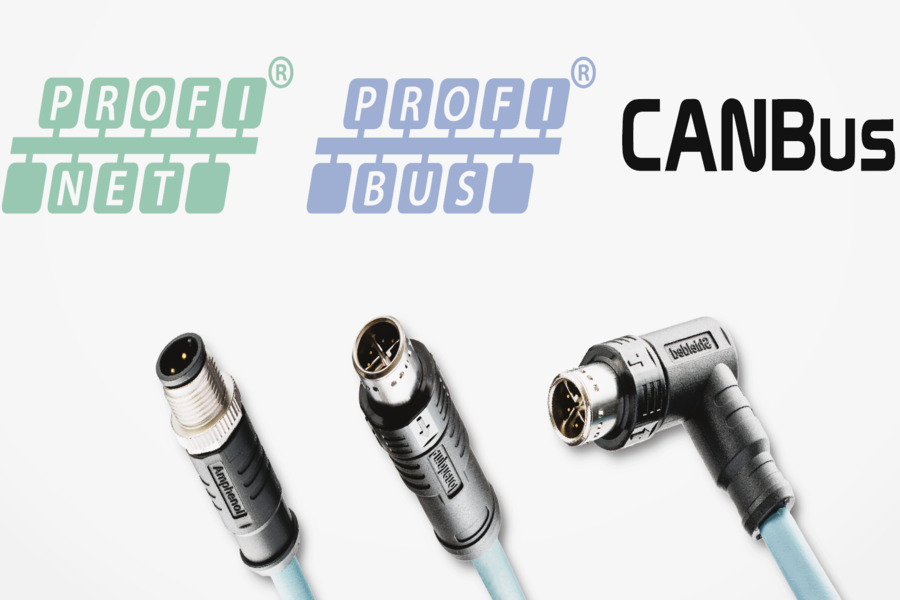
2. CANbus: Cost-Effective and Simple—The “National Level Industrial Bus”
When it comes to widespread usage, CANbus tops the list. Here’s why:
1. Affordable
2.Strong interference resistance (tested over decades in the automotive industry)
3.High protocol flexibility
CANbus is very common in internal industrial devices such as:
1.Motor controllers
2.Battery management systems (BMS)
3.Internal circuit boards
4.Simple sensor data transmission
In many gateway and controller applications, CANbus is used for “internal device communication” or to interface with custom protocols. However, it does have limitations:
1. Low bandwidth (1 Mbps)
2. Cannot support large industrial networks
3. Not suitable for managing complex equipment from different manufacturers.
3. Profibus: The Once-Dominant Purple Cable, Still in Use
Profibus is the classic “fieldbus of the past,” especially within Siemens’ automated systems. Its core advantages include:
1. Mature engineering
2. Extensive legacy systems
3. Wide compatibility with a variety of devices
4. Comprehensive configuration system (GSD files)
Many factories still use Profibus, not due to lack of funds but because there’s no need to upgrade. However, Profibus does have drawbacks:
1.Limited bandwidth (12 Mbps, typically lower in practice)
2. Limited topology options
3. Difficult to meet the demands of digitalization and big data
This is where Profinet steps in.
4. Profinet: The Main Network for the Smart Factory Era
Profinet is not simply a “new version of Profibus,” but an industrial Ethernet solution that elevates communication with higher speeds, more data capacity, and advanced management capabilities. Key features that align with modern smart manufacturing needs include:
1.High bandwidth (starting from 100 Mbps)
2.Flexible topology (chain, star, tree)
3.Scalable real-time performance (RT, IRT)
4.Can handle large volumes of data and complex devices
5.High compatibility with IT networks
Profinet is built for the future, while Profibus serves the needs of mature industrial automation. New devices increasingly support Profinet, while Profibus continues to focus on “compatibility.”
5. What’s the Relationship Between Them?
| Nome | Resemblance | Typical Application |
|---|---|---|
| CANbus | Short-distance bus for circuit boards | Internal control, drives, small devices |
| Profibus | Traditional shop-floor communication backbone | Field-level network, connecting legacy equipment |
| Profinet | Modern industrial Ethernet | Large systems, smart factories, upper-level management |
They serve different layers within an industrial system and are not directly comparable in terms of advancement.
6. How to Choose in Real Projects?
Here’s a common approach used in industrial practice:
1. Is it a new project or an old production line?
1) Old production line upgrade → Profibus compatibility is more important
2) New design or smart factory → Profinet is the clear choice
2. Required bandwidth and scale of nodes?
1) Large data (e.g., vision systems, sensor matrices) → Profinet
2) Few messages, simple control → Profibus or CANbus
3. Internal devices or external system?
1)Internal control → CANbus
2)External device communication → Profinet or Profibus
4. Manufacturer ecosystem?
1)More Siemens equipment → Profinet + Profibus
2) Custom equipment, small controllers → CANbus
5. Maintenance difficulty and skill cost?
Profinet offers better debugging tools and diagnostic capabilities, often making it cheaper to maintain compared to Profibus.
Common FAQ (Key Version)
Q1: Can Profinet directly replace Profibus?
No, it’s more about “Profinet for new projects, Profibus for existing projects.”
Q2: Can CANbus, Profibus, and Profinet communicate with each other?
They need a gateway. The protocols are completely different and cannot directly communicate.
Q3: Will Profibus be phased out?
Not anytime soon. Although new projects prefer Profinet, Profibus will continue to be used in legacy systems for many years.
Q4: Why is Profinet better for smart factories?
Because it’s based on Ethernet, offering high bandwidth and is designed for big data, remote diagnostics, and IT/OT convergence.
Q5: Is Profinet too heavy for small controllers?
Yes, for such cases, CANbus is more cost-effective and faster to implement with lower resource consumption.