 Video
Video


Description
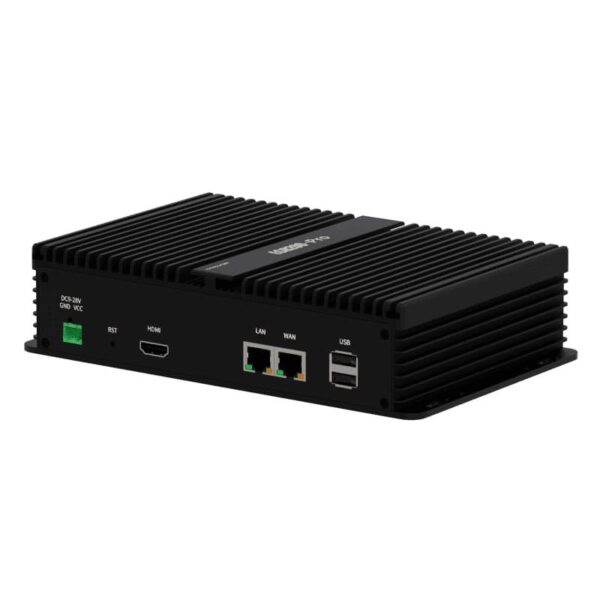
EG8200Pro 5G Industrial Edge Computing Gateway is a high-performance gateway by IOTRouter. It is powered by an 8-core Cortex-A55 CPU (1.8 GHz) and 2GB RAM. The Node-RED visual programming environment enables rapid deployment, streamlined workflows, and lower operational costs.
Certified to ISO 9001, ISO 14001, ISO 45001, CE, and FCC standards, the EG8200Pro is designed to perform reliably in demanding industrial environments, making it ideal for automation, energy management, and smart monitoring applications.
Key Features

Industrial-Grade
-40~85°C operation, 9–36V input, surge & ESD protection

Zero-Code Logic
Visual configuration with built-in Node-RED

Remote Virtual LAN
Secure VPN for remote PLC program upload/download

Multi-Protocol PLC
Siemens, Mitsubishi, Omron → MQTT / HTTP

Edge Intelligence
Local data analysis and logic execution at the edge

Flexible Customization
Custom logic and data formats via JavaScript

Reliable Connectivity
4G / Ethernet / Wi-Fi with auto failover

FUXA Visualization
Direct display of dashboards or SCADA screens
* Soutien OEM/ODM, contact customer service for details.
EG Series Products
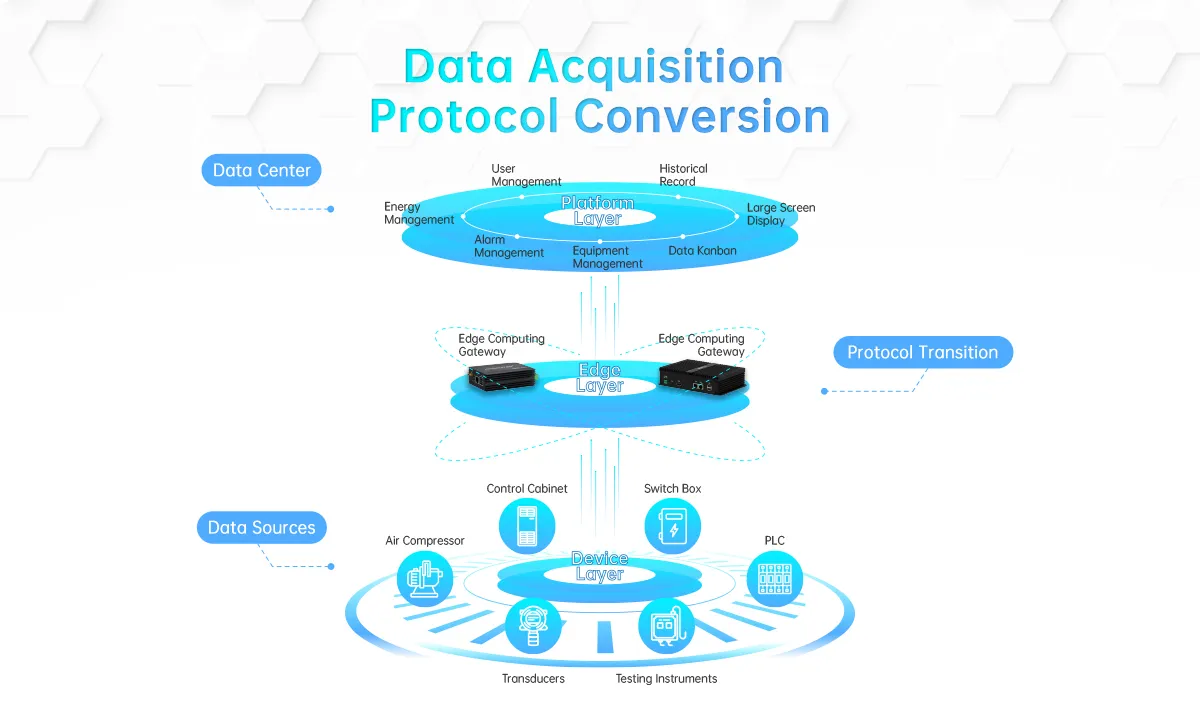
All gateways in the EG series share a highly consistent operating method. Differences between models are mainly reflected in hardware interfaces, and the corresponding variations are limited to the presence or absence of certain functional nodes.
| EG Series | 8200 Pro | 8200 | 8200 Mini | 8200 Lite | 8208 | 2000 | |||
|---|---|---|---|---|---|---|---|---|---|
| Key Feature | Haute performance | Multi-interface | Standard Version | DIN-rail Version | CNC Version | IEC104 Version | Low Cost | 8 Serial Ports | Passerelle LoRa |
| Processor | Octa-core A55 @1.8GHz | Dual-core A7 @1.2GHz | Dual-core A7 @1.2GHz | Dual-core A7 @1.2GHz | Dual-core A7 @1.2GHz | Dual-core A7 @1.2GHz | A7 @1.2GHz | Dual-core A7 @1.2GHz | Dual-core A7 @1.2GHz |
| Mémoire | 2GB | 512MB | 512MB | 512MB | 512MB | 512MB | 256MB | 512MB | 512MB |
| eMMC | 16GB | 4GB | 4GB | 4GB | 4GB | 4GB | 4GB | 4GB | 4GB |
| Carte SD | Max 128GB (optional) | Max 128GB (optional) | Max 128GB (optional) | Max 128GB (optional) | Max 128GB (optional) | Max 128GB (optional) | × | Max 128GB (optional) | Max 128GB (optional) |
| 4G | √ | √ | √ | √ | × | √ | √ | √ (optional) | √ (optional) |
| 5G | √ (optional) | × | × | × | × | × | × | × | × |
| HDMI | √ | × | × | × | × | × | × | × | × |
| Ports Ethernet | 1×WAN + 1×LAN | 1×WAN + 1×LAN | 1×WAN + 1×LAN | 1×WAN + 1×LAN | 1×WAN + 1×LAN | 1×WAN + 1×LAN | 1×WAN/LAN | 1×WAN/LAN | 1×WAN/LAN |
| LoRa | × | × | × | × | × | × | × | × | √ |
| Wi-Fi | Dual-band Wi-Fi 6 | Dual-band Wi-Fi 6 | Dual-band Wi-Fi 6 | Dual-band Wi-Fi 6 | Dual-band Wi-Fi 6 | Dual-band Wi-Fi 6 | × | × | × |
| GPS | × | √ | × | × | × | × | × | × | × |
| USB | 2×USB 2.0 | 1×USB 2.0 | × | × | × | × | × | × | × |
| RTC | √ | √ | √ | √ | √ | √ | × | √ | √ |
| RS485 | 3 | 2 | 2 | 2 | 2 | 2 | 2 | 8 | 1 |
| RS232 | 1 | 1 | 1 | 1 | 1 | 1 | × | × | × |
| CAN | × | 2 | × | × | × | × | × | × | × |
| DO | 2 | 2 | × | × | × | × | × | 8 | × |
| DI | 2 | 2 | × | × | × | × | × | × | × |
| AO | 2 | × | × | × | × | × | × | × | × |
| AI | 2 | × | × | × | × | × | × | × | × |
| Tension de fonctionnement | 9~36V | 9~36V | 9~36V | 9~36V | 9~36V | 9~36V | 9~36V | 9~36V | 9~36V |
| Courant d'exploitation | 500mA@12V | 280mA/12V | 150mA/12V | 150mA/12V | 150mA/12V | 150mA/12V | 60mA/12V | 170mA/12V | 180mA/12V |
| Certification | CE | CE | CE | CE | CE | CE | CE | CE | CE |
| Température de fonctionnement | -40 ~ 85°C | -40 ~ 85°C | -40 ~ 85°C | -40 ~ 85°C | -40 ~ 85°C | -40 ~ 85°C | -20 ~ 85°C | -40 ~ 85°C | -40 ~ 85°C |
| O&M à distance | √ | √ | √ | √ | √ | √ | √ | √ | √ |
| Gestion à distance | √ | √ | √ | √ | √ | √ | √ | √ | √ |
| Mise à jour à distance | √ | √ | √ | √ | √ | √ | √ | √ | √ |
| Virtual Network Interface | √ | √ | √ | √ | √ | √ | √ | √ | √ |
| Port série virtuel | √ | √ | √ | √ | √ | √ | √ | √ | √ |
| Local Database | √ | √ | √ | √ | √ | √ | × | √ | √ |
| Programmation visuelle | √ | √ | √ | √ | √ | √ | √ | √ | √ |
| PLC Protocol | √ | √ | √ | √ | × | √ | × | √ | × |
| CNC Protocol | × | × | × | × | √ | × | × | × | × |
| IEC 60870-5-104 | × | × | × | × | × | √ | × | × | × |
| Web Configuration | √ | × | × | × | × | × | × | × | × |
| Protocoles de l'industrie | CJ188/DLT645/HJ212/Modbus/OPC UA*/BACnet*/etc. | Identical | Identical | Identical | Identical | Identical | Identical | Identical | Identical |
| Protocoles de réseau | MQTT / HTTP / TCP / UDP / WebSocket / Alibaba Cloud IoT Platform / OneNET / etc. | Identical | Identical | Identical | Identical | Identical | Identical | Identical | Identical |
Quick Access to EG Series Products →
Main Functions
Massive PLC Protocols
– Millisecond Acquisition –
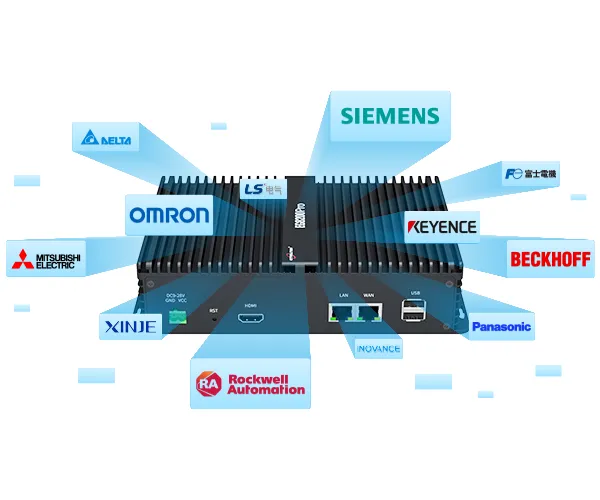
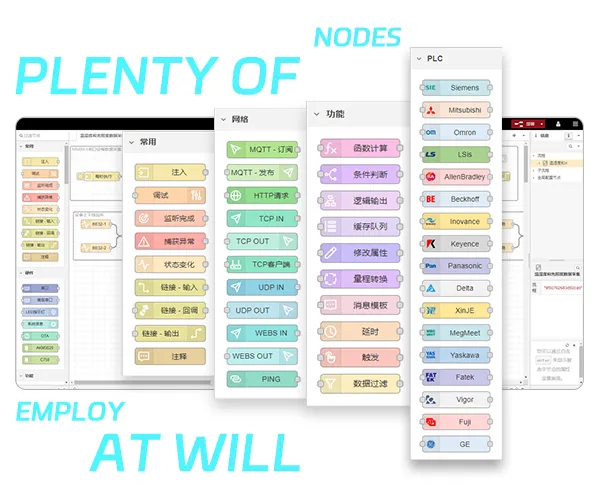
The EG8200Pro 5G industrial edge computing gateway supports docking with various mainstream PLC brands, including but not limited to SIEMENS, MELSEC, OMRON, LSis, Allen-Brandly, BeckhoffInovance, Keyence, Panasonic, Delta, XinJE, MegMeet, Yaskawa, Fatek, Vigor, Fuji, and others. You can consult with the customer service for a list of the specific PLC protocol models.
Multiple Industry Protocols
– Support Third-party Platform Docking –
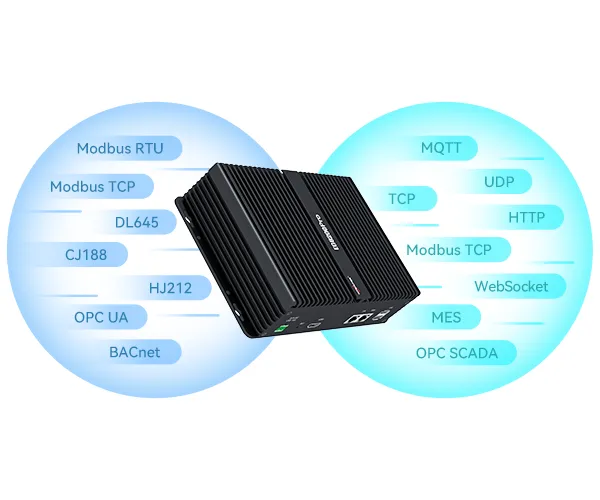
The EG8200Pro serves as a universal bridge for diverse industrial environments. It supports a wide range of standard protocols, including Modbus, MQTT, OPC UA/DA, HJ212, and IEC104, for seamless third-party platform docking. For complex, non-standard protocols, it offers the flexibility to parse and implement custom logic via JavaScript (JS).
Gestion à distance
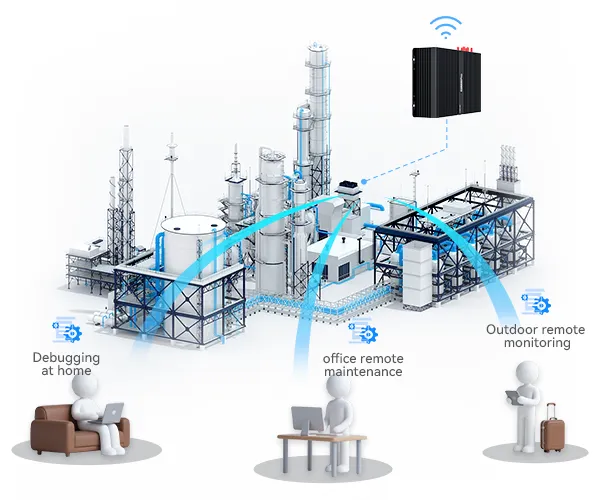
The EG8200 series remote management software supports remote configuration and remote debugging.
remote diagnosis, remote program update, and other functions for the equipment on-site.
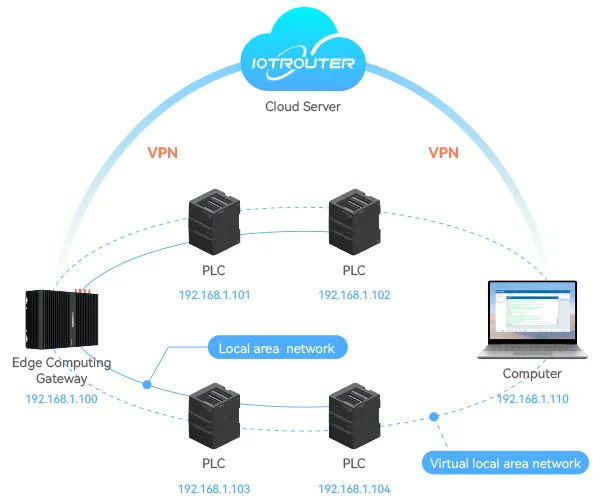
Remote Virtual LAN/ Port série
– PLC Remote Upload & Download –
With Virtual Ethernet and Virtual Serial Port, engineers can remotely access on-site devices for PLC and HMI programming, server maintenance, and serial sensor debugging, as if they were in the same local network, improving efficiency and reducing on-site maintenance costs.
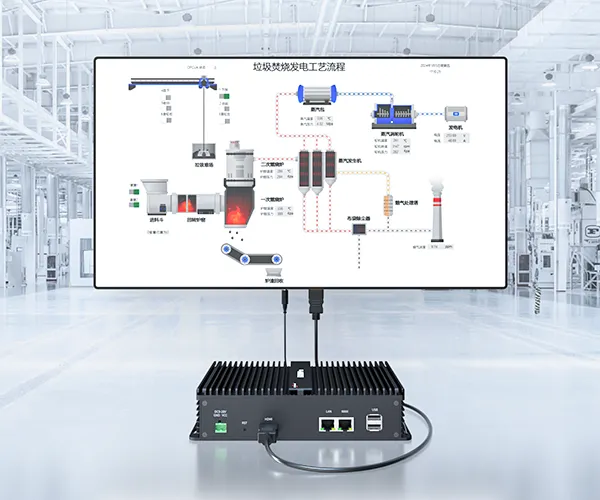
Web Configuration Industrial Data Visualization
– Free Quick Build HDMI Direct Out –
Le présent 5G industrial edge computing gateway can be configured locally or remotely through the browser, business logic, and Web configuration. Configuration components are rich and support secondary development. Users do not need to purchase configuration software to realize on-site data acquisition, edit it into the configuration screen, and finally display it locally or remotely.
Drag & Drop Programming
– Low-code visual programming –
Leveraging Node-RED visual programming and a vast library of proprietary nodes, the EG8200Pro enables lightning-fast integration with sensors and third-party platforms (via custom MQTT/JSON). This low-code approach significantly reduces development costs and time-to-market, allowing you to build a tailor-made gateway solution for any specific IIoT scenario.
Designed for industrial projects requiring analog signal processing, edge computing, high-speed connectivity, and local control, the EG8200Pro 5G Industrial Edge Computing Gateway combines rich industrial interfaces with powerful computing capabilities to form a high-performance industrial edge controller for advanced automation systems.
1. Process Control & Industrial Data Acquisition
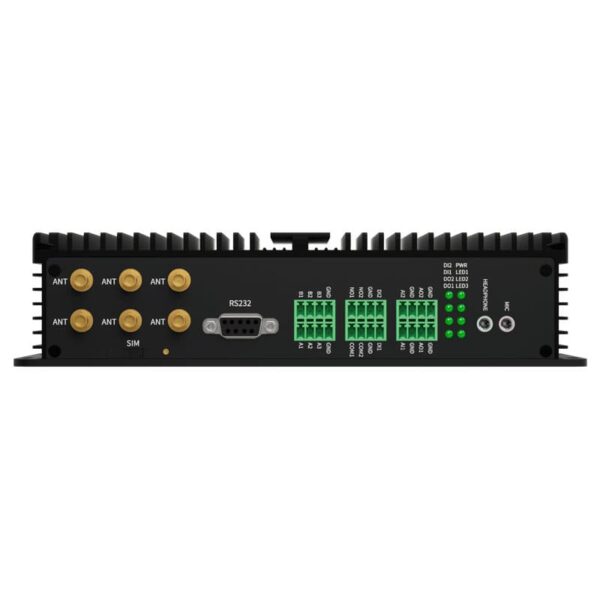
The EG8200Pro integrates multiple industrial interfaces, including RS485, CAN, DI/DO, as well as 2-channel analog inputs and outputs (4–20 mA).
This allows direct connection to PLCs, sensors, meters, and actuators, enabling real-time monitoring and regulation of variables such as temperature, pressure, flow, and liquid level.
Combined with high-speed 5G connectivity, the device can transmit industrial data reliably to remote control centers or cloud platforms.
It is commonly used in industrial process automation, pump station control, environmental monitoring systems, and smart utility infrastructure.
2. Edge Computing for Industrial Automation
Powered by an 8-core Cortex-A55 processor (1.8 GHz) and 2 GB RAM, the EG8200Pro provides strong edge computing capability for industrial applications.
With the Node-RED visual programming environment, engineers can build local automation workflows for data processing, alarm detection, and device coordination.
By processing data locally and transmitting key information through 5G high-bandwidth networks, the system improves response speed while reducing cloud computing load.
3. Local Visualization & Smart Control Panels
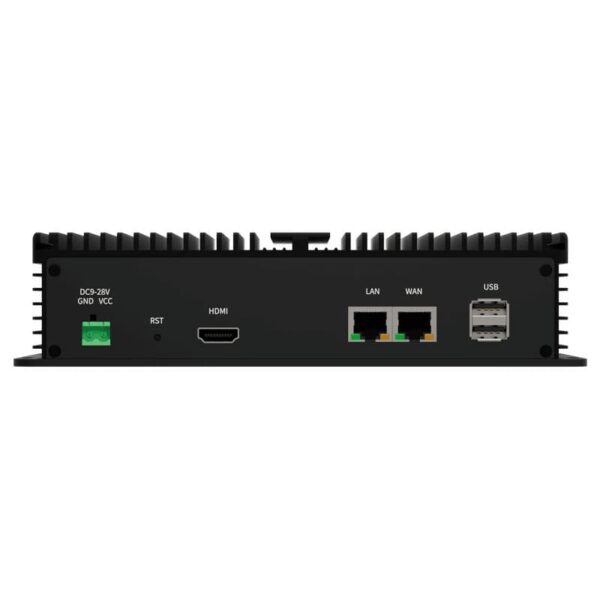
The built-in HDMI interface allows the EG8200Pro to connect directly to industrial displays, enabling on-site dashboards and monitoring interfaces.
Typical scenarios include:
-
equipment monitoring panels
-
industrial control cabinets
-
smart building control systems
-
local production dashboards
The Core Advantage
The EG8200Pro 5G Industrial Edge Computing Gateway integrates industrial communication, analog and digital I/O, high-speed 5G connectivity, and powerful edge computing into a single platform.
Compared with standard industrial gateways, it is better suited for projects requiring real-time control, high-speed data transmission, and advanced edge processing, making it ideal for complex automation systems and advanced industrial IoT deployments.
FAQ
Q1. What protocols does the EG8200Pro IIoT Gateway support?
A1: The EG8200Pro 5G industrial edge computing gateway supports a wide range of mainstream industrial and sector-specific protocols, including:
• Standard Modbus protocol
• SIEMENS / MELSEC / OMRON / LSis / Allen-Bradley PLC protocols, covering approximately 99% of mainstream PLC brands
• CJ188 / DLT645 / HJ212 / OPC UA / BACnet and other industry protocols
• Common network communication protocols, including: MQTT / HTTP / TCP / UDP / WebSocket / Alibaba Cloud IoT Platform / OneNET, etc.
For non-standard or proprietary protocols, data parsing can be implemented using custom JavaScript.
Q2. Does the 5G industrial edge computing gateway support secondary development? How to use Node-RED for PLC data acquisition on EG8200Pro?
A2: Yes. The EG8200Pro 5G industrial edge computing gateway includes a built-in Node-RED visual development environment, allowing users to implement logic through drag-and-drop configuration. For more complex functions, JavaScript function nodes can be used to handle data acquisition, processing, and uploading without the need for low-level programming.
Q3. What’s the difference between EC ARM open source industrial PCs and EG series edge computing gateways?
A3:
| Comparaison | EG Series (Low-code Industrial Gateway) | EC Series (Open Development Platform) |
|---|---|---|
| System Architecture | Closed software-hardware architecture | Standard Linux operating system |
| Development Method | Low-code / graphical configuration | Custom development / deep system customization |
| Node-RED | Pre-installed, fully customized Node-RED | Native Node-RED |
| Industrial Protocol Support | Built-in industrial protocol nodes | No built-in proprietary protocol nodes |
| Extension Method | Drag-and-drop configuration of business logic | Install community nodes or develop custom nodes |
| Target Users | System integrators and application-level users | Embedded system and IoT developers |
| Typical Scenarios | Rapid deployment and project delivery | System-level customization and secondary development |
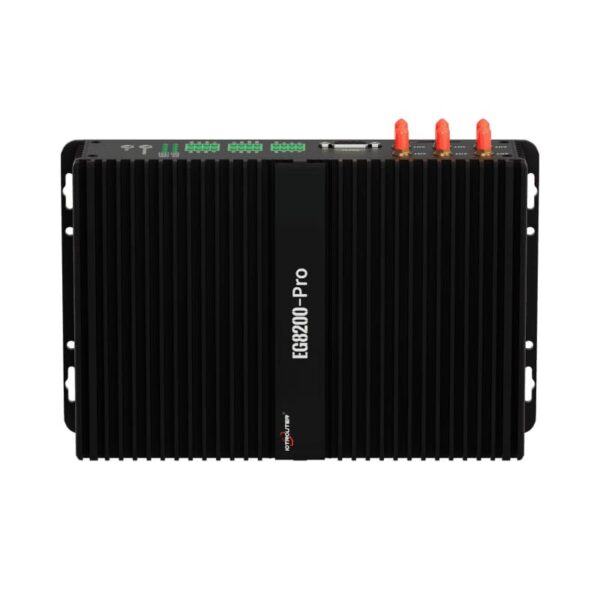
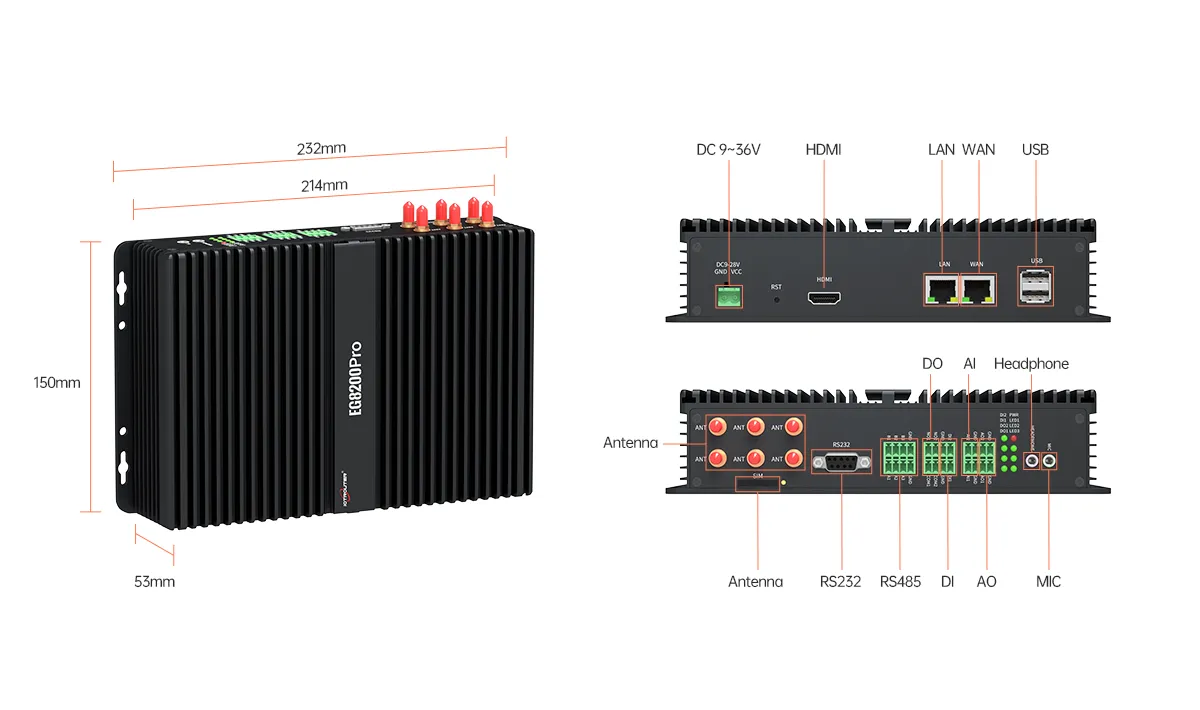
Product Size and Interfaces
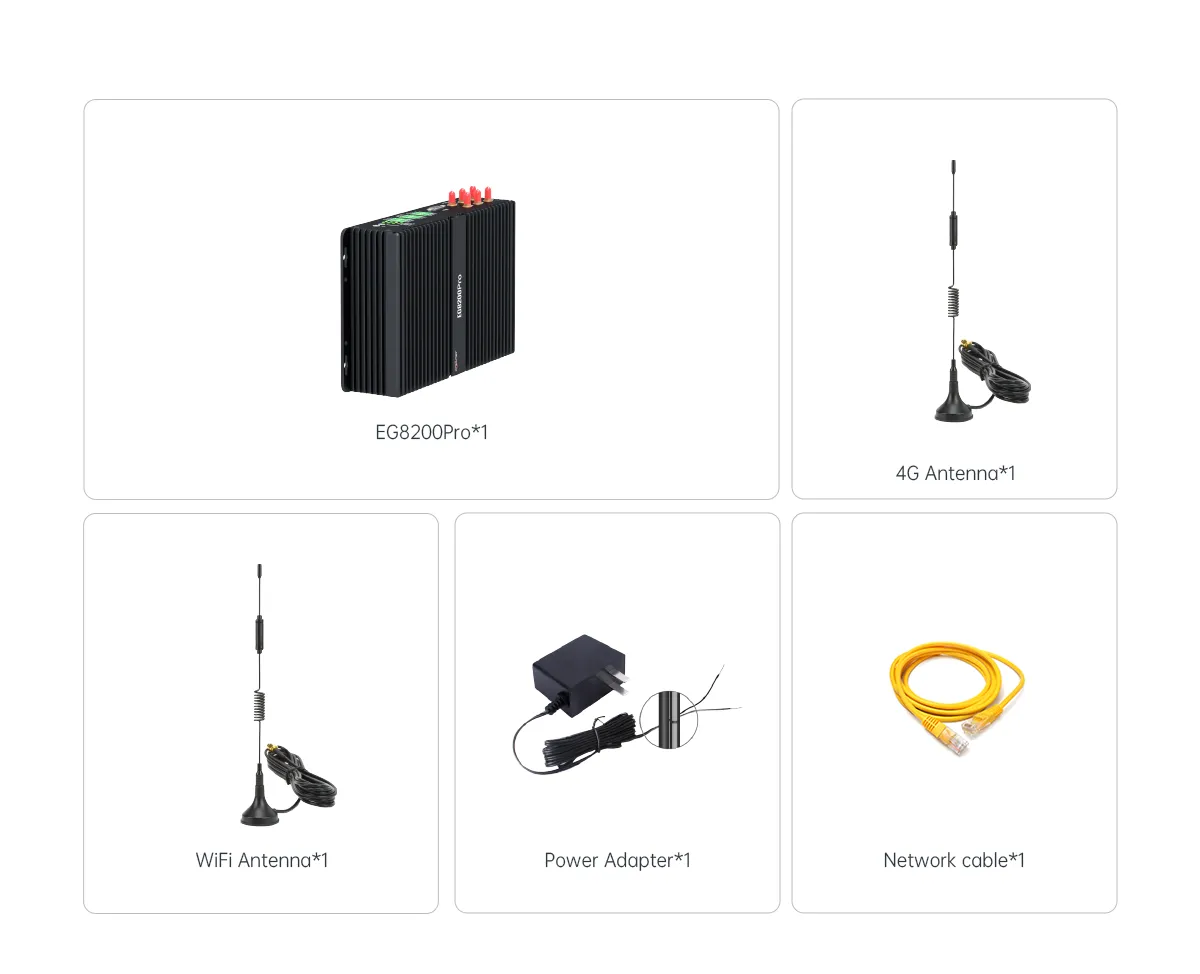
Packing List