
EG8200Pro 5G Industrial Edge Computing Gateway For High-Performance Data Acquisition And Protocol Conversion - IOTROUTER
Une fois toutes les 5 minutes

EG8200Pro 5G Industrial Edge Computing Gateway for High-Performance Data Acquisition and Protocol Conversion

5G Industrial AI Edge Computing Gateway

Seamless PLC Protocol Conversion & Data Acquisition. A powerful 5G industrial edge computing gateway avec Node-RED for edge intelligence.


Broad Protocols
Modbus RTU/TCP, MQTT, HJ212, and PLC (Siemens, Mitsubishi, Omron, etc.)
Versatile I/O
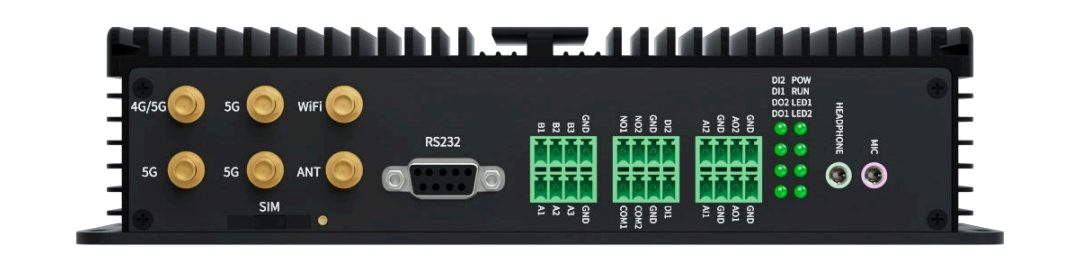
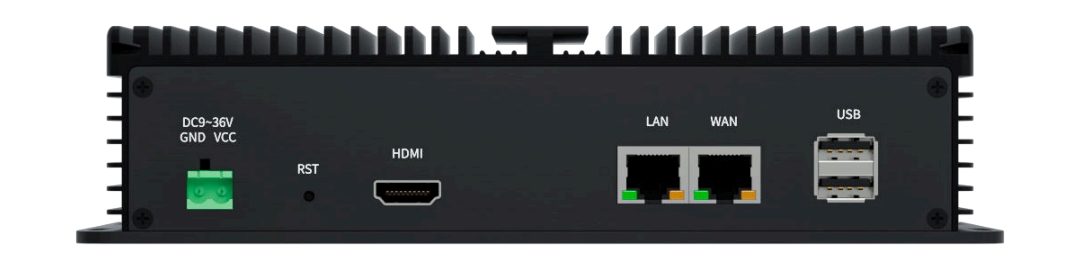
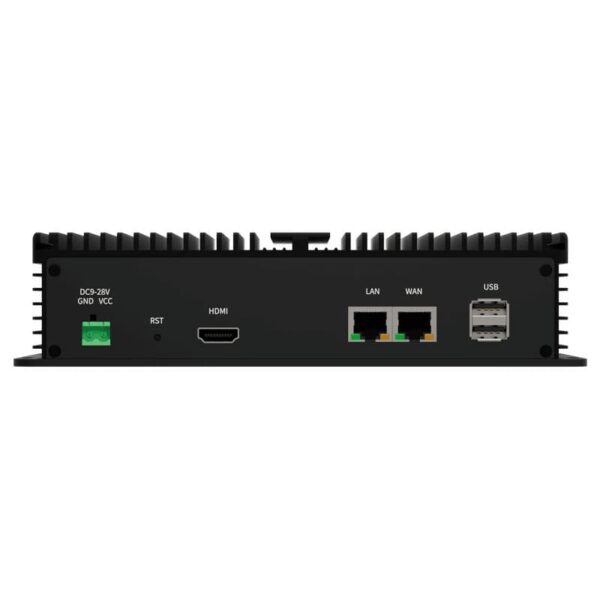
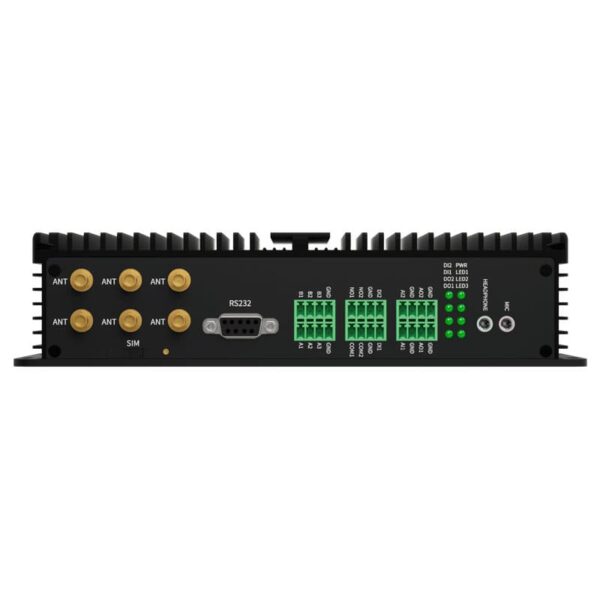
3*RS485, 1*RS232, 2*DI/DO, 2*AI/AO, HDMI, 2*USB 2.0
Edge Power
2Tops NPU for data pre-processing; 2G RAM + 16G eMMC
Connectivité
5G / 4G LTE / WiFi, Dual Gigabit Ethernet

Catégories : ,

Description

EG8200Pro is a powerful 5G industrial edge computing gateway designed to simplify industrial digital transformation. 
With an 8-core Cortex-A55 CPU and integrated NPU, it combines powerful edge computing with comprehensive industrial connectivity and local visualization.


Key Features

Industrial-Grade Design

-40~85°C operation, 9–36V input, surge & ESD protection

Zero-Code Logic

Visual configuration with built-in Node-RED

Remote Virtual LAN

Secure VPN for remote PLC program upload/download

Multi-Protocol PLC

Siemens, Mitsubishi, Omron → MQTT / HTTP

Edge Intelligence

Local data analysis and logic processing with NPU

Flexible Customization

Custom logic and data formats via JavaScript

Reliable Connectivity

4G / Ethernet / Wi-Fi with auto failover

HDMI Visualization

Direct display of dashboards or SCADA screens

* Soutien OEM/ODM, contact customer service for details.
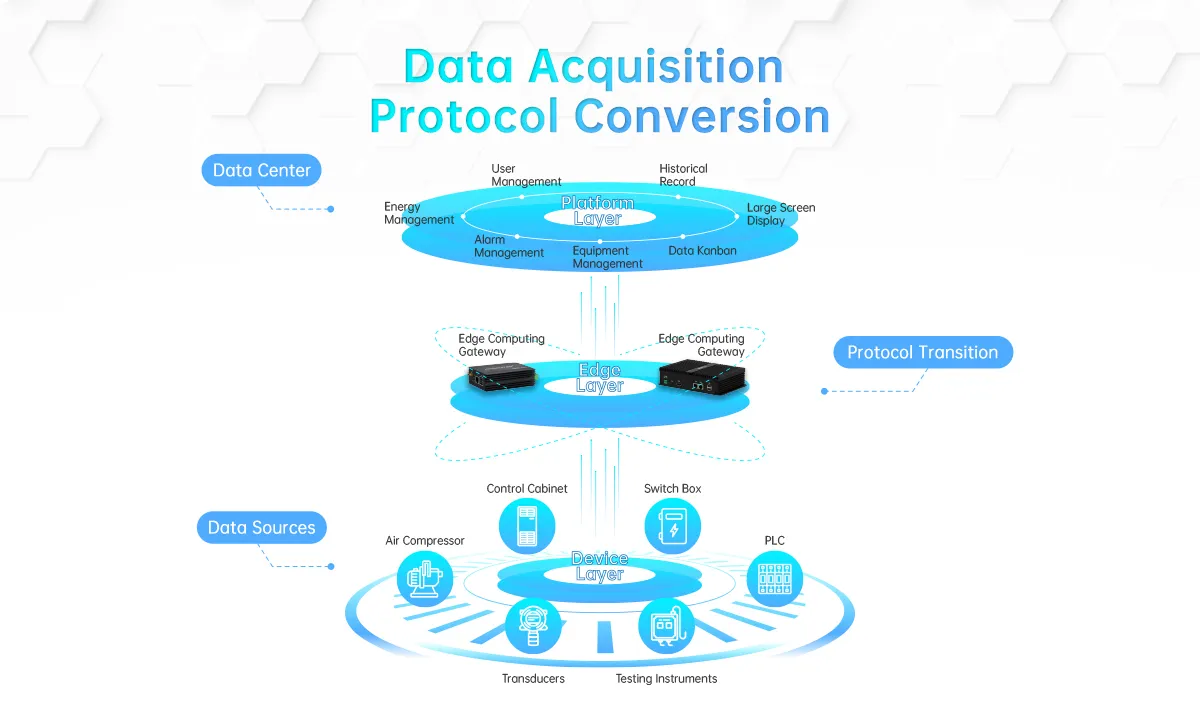
5G industrial edge computing gateway


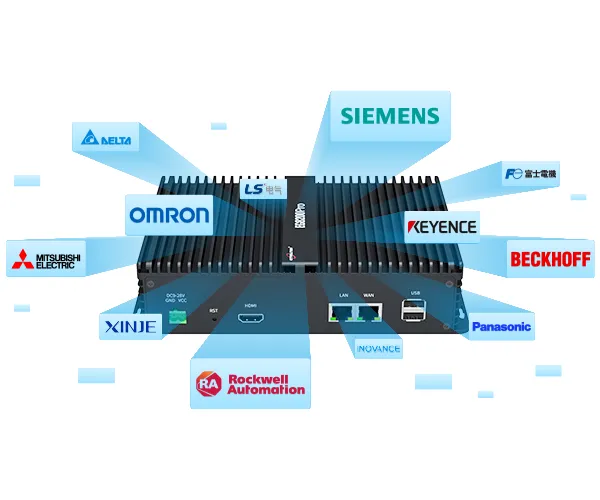
Massive PLC Protocols - Millisecond Acquisition Unlimited Data Points -  The EG8200Pro 5G Ultra-Powerful Edge Computing Gateway supports docking various mainstream PLC brands, including but not limited to SIEMENS, MELSEC, OMRON, LSis, Allen-Brandly, BeckhoffInovance, Keyence, Panasonic, Delta, XinJE, MegMeet, Yaskawa, Fatek, Vigor, Fuji, and so on. You can consult with the customer service to get the list of the specific PLC protocol models.

Massive PLC Protocols

– Millisecond Acquisition Unlimited Data Points – 

The EG8200Pro 5G industrial edge computing gateway supports docking various mainstream PLC brands, including but not limited to SIEMENS, MELSEC, OMRON, LSis, Allen-Brandly, BeckhoffInovance, Keyence, Panasonic, Delta, XinJE, MegMeet, Yaskawa, Fatek, Vigor, Fuji, and so on. You can consult with the customer service to get the list of the specific PLC protocol models.

Multiple Industry Protocols

– Support Third-party Platform Docking –

 The EG8200Pro serves as a universal bridge for diverse industrial environments. It supports a vast array of standard protocols, including Modbus, MQTT, OPC UA/DA, HJ212, and IEC104, for seamless third-party platform docking. For complex, non-standard protocols, it offers the flexibility to parse and implement custom logic via JavaScript (JS).
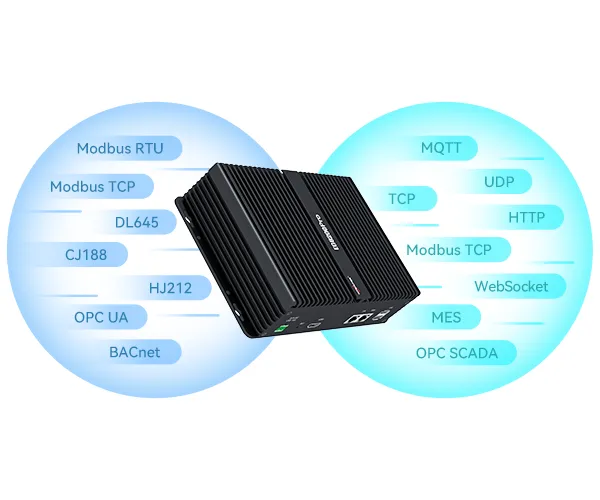
Multiple Industry Protocols - Support Third-party Platform Docking - The EG8200Pro 5G industrial edge computing gateway serves as a universal bridge for diverse industrial environments. It supports a vast array of standard protocols, including Modbus, MQTT, OPC UA/DA, HJ212, and IEC104, for seamless third-party platform docking. For complex, non-standard protocols, it offers the flexibility to parse and implement custom logic via JavaScript (JS).
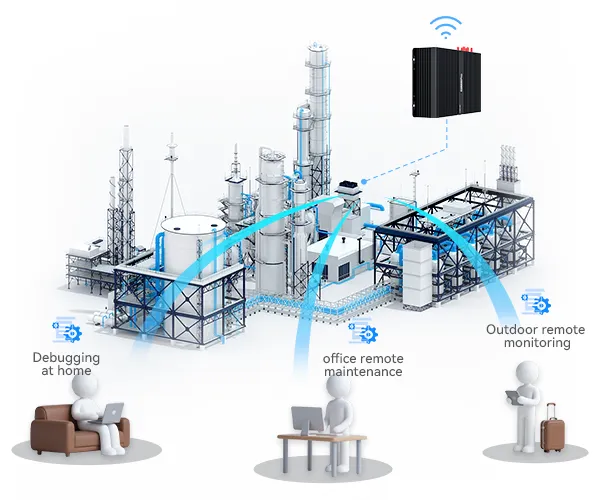
Remote Management The EG8200 series remote management software can realize remote configuration and remote debugging. remote diagnosis, remote program update, and other functions for the equipment on-site.

Gestion à distance

The EG8200 series remote management software can realize remote configuration and remote debugging.
remote diagnosis, remote program update, and other functions for the equipment on-site.

Remote Virtual LAN

– PLC Remote Upload & Download –

With Virtual Ethernet and Virtual Serial Port, engineers can remotely access on-site devices for PLC and HMI programming, server maintenance, and serial sensor debugging, as if they were in the same local network, improving efficiency and reducing on-site maintenance costs.
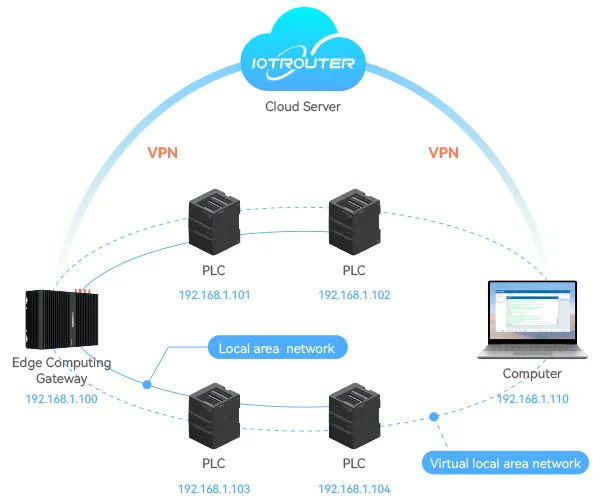
Remote Virtual LAN - PLC Remote Upload & Download - With Virtual Ethernet and Virtual Serial Port, engineers can remotely access on-site devices for PLC and HMI programming, server maintenance, and serial sensor debugging, as if they were in the same local network, improving efficiency and reducing on-site maintenance costs_5G industrial edge computing gateway
Web ConfigurationIndustrial Data Visualization for the 5G industrial edge computing gateway

Web ConfigurationIndustrial Data Visualization

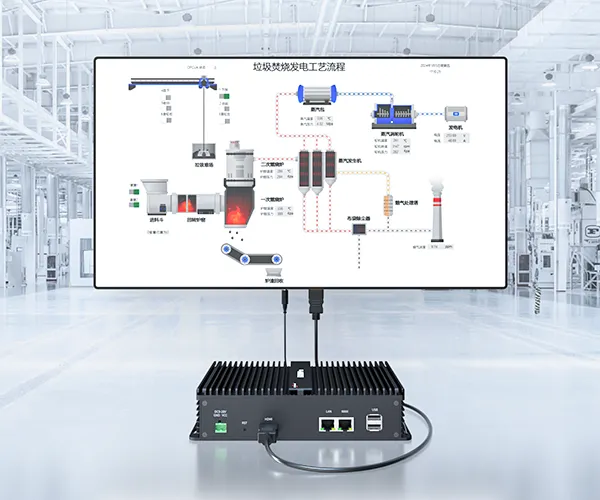
– Free Quick Build HDMI Direct Out – 

Le présent 5G industrial edge computing gateway can be configured locally or remotely through the browser, business logic, and Web configuration. Configuration components are rich and support secondary development. Users do not need to purchase configuration software to realizeon-site data acquisition, edit it into the configuration screen, and finally display it locally or remotely.

Drag & Drop Programming

– Low-code visual programming, rapid development of industrial logic –

Leveraging Node-RED visual programming and a vast library of proprietary nodes, the EG8200Pro enables lightning-fast integration with sensors and third-party platforms (via custom MQTT/JSON). This low-code approach significantly reduces development costs and time-to-market, allowing you to build a tailor-made gateway solution for any specific IIoT scenario.
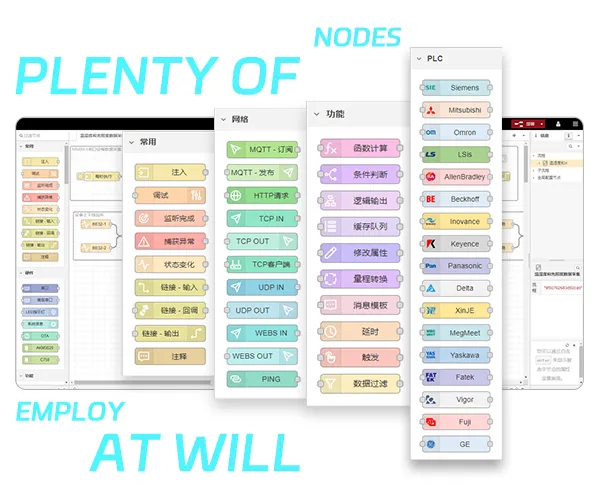
EG8200Pro 5G Ultra Powerful Edge Computing Gateway06

Applications Of The 5G Industrial Edge Computing Gateway

1. Industrial Data Hub

Acting as the core gateway for factory floors, it enables simultaneous connectivity and data acquisition from nearly all major brands. Through local edge processing (filtering, alarming, and logic calculation), it delivers unified, clean data to MES or Cloud platforms, ensuring full-scale production transparency.

2. Remote O&M for Critical Infrastructure

Perfect for deployment in remote or hazardous locations such as power stations and pump houses. Over-the-Air (OTA) updates, engineers can perform remote configuration, program debugging, and fault diagnostics over the internet without being on-site, significantly enhancing operational safety and efficiency while slashing maintenance costs.

3. The Bridge for System Integration & Retrofitting

Ideal for smart transformation projects, it effortlessly converts legacy protocols (e.g., Modbus RTU) into data formats recognized by modern IoT systems (e.g., MQTT). This creates a seamless bridge between legacy hardware and modern IT infrastructure, protecting your existing investment.

The Core Advantage: The EG8200 Pro is purpose-built for large-scale, complex industrial projects that demand multi-protocol processing, edge computing, and secure remote management.


FAQ

Q1. What protocols does the EG8200Pro IIoT Gateway support?

A1: The EG8200Pro 5G industrial edge computing gateway supports a wide range of mainstream industrial and sector-specific protocols, including:
• Standard Modbus protocol
• SIEMENS / MELSEC / OMRON / LSis / Allen-Bradley PLC protocols, covering approximately 99% of mainstream PLC brands
• CJ188 / DLT645 / HJ212 / OPC UA / BACnet and other industry protocols
• Common network communication protocols, including: MQTT / HTTP / TCP / UDP / WebSocket / Alibaba Cloud IoT Platform / OneNET, etc.

For non-standard or proprietary protocols, data parsing can be implemented via custom JavaScript scripts.

Q2. Does the 5G industrial edge computing gateway support secondary development?  How to use Node-RED for PLC data acquisition on EG8200Pro?

A2: Yes. The EG8200Pro 5G industrial edge computing gateway comes with a built-in Node-RED visual development environment, allowing users to implement logic through drag-and-drop configuration. For more complex functions, JavaScript function nodes can be used to complete data acquisition, processing, and uploading without the need for low-level programming. 

Q3. What’s the difference between EC ARM open source industrial PCs and EG series edge computing gateways?

A3:

Comparaison EG Series (Low-code Industrial Gateway) EC Series (Open Development Platform)
System Architecture Closed software-hardware architecture Standard Linux operating system
Development Method Low-code / graphical configuration Custom development / deep system customization
Node-RED Pre-installed, fully customized Node-RED Native Node-RED
Industrial Protocol Support Built-in industrial protocol nodes No built-in proprietary protocol nodes
Extension Method Drag-and-drop configuration of business logic Install community nodes or develop custom nodes
Target Users System integrators and application-level users Embedded system and IoT developers
Typical Scenarios Rapid deployment and project delivery System-level customization and secondary development

EG Series Product Selection Guide

All gateways in the EG series share a highly consistent operating method. Differences between models are mainly reflected in hardware interfaces, and the corresponding variations are limited to the presence or absence of certain functional nodes.

EG Series8200 Pro82008200 Mini8200 Lite82082000
Key FeatureHaute performanceMulti-interfaceStandard VersionDIN-rail VersionCNC VersionIEC104 VersionLow Cost8 Serial PortsPasserelle LoRa
ProcessorOcta-core A55 @1.8GHzDual-core A7 @1.2GHzDual-core A7 @1.2GHzDual-core A7 @1.2GHzDual-core A7 @1.2GHzDual-core A7 @1.2GHzA7 @1.2GHzDual-core A7 @1.2GHzDual-core A7 @1.2GHz
Mémoire2GB512MB512MB512MB512MB512MB256MB512MB512MB
eMMC16GB4GB4GB4GB4GB4GB4GB4GB4GB
Carte SDMax 128GB (optional)Max 128GB (optional)Max 128GB (optional)Max 128GB (optional)Max 128GB (optional)Max 128GB (optional)×Max 128GB (optional)Max 128GB (optional)
4G×√ (optional)√ (optional)
5G√ (optional)××××××××
HDMI××××××××
Ethernet Ports1×WAN + 1×LAN1×WAN + 1×LAN1×WAN + 1×LAN1×WAN + 1×LAN1×WAN + 1×LAN1×WAN + 1×LAN1×WAN/LAN1×WAN/LAN1×WAN/LAN
LoRa××××××××
Wi-FiDual-band Wi-Fi 6Dual-band Wi-Fi 6Dual-band Wi-Fi 6Dual-band Wi-Fi 6Dual-band Wi-Fi 6Dual-band Wi-Fi 6×××
GPS××××××××
USB2×USB 2.01×USB 2.0×××××××
RTC×
RS485322222281
RS232111111×××
CAN×2×××××××
DO22×××××8×
DI22×××××××
AO2××××××××
AI2××××××××
Tension de fonctionnement9~36V9~36V9~36V9~36V9~36V9~36V9~36V9~36V9~36V
Courant d'exploitation500mA@12V280mA/12V150mA/12V150mA/12V150mA/12V150mA/12V60mA/12V170mA/12V180mA/12V
CertificationCECECECECECECECECE
Température de fonctionnement-40 ~ 85°C-40 ~ 85°C-40 ~ 85°C-40 ~ 85°C-40 ~ 85°C-40 ~ 85°C-20 ~ 85°C-40 ~ 85°C-40 ~ 85°C
O&M à distance
Gestion à distance
Mise à jour à distance
Virtual Network Interface
Port série virtuel
Local Database×
Programmation visuelle
PLC Protocol×××
CNC Protocol××××××××
IEC 60870-5-104××××××××
Web Configuration××××××××
Protocoles de l'industrieCJ188/DLT645/HJ212/Modbus/OPC UA*/BACnet*/etc.IdenticalIdenticalIdenticalIdenticalIdenticalIdenticalIdenticalIdentical
Protocoles de réseauMQTT / HTTP / TCP / UDP / WebSocket / Alibaba Cloud IoT Platform / OneNET / etc.IdenticalIdenticalIdenticalIdenticalIdenticalIdenticalIdenticalIdentical

Quick Access to EG Series Products →


Product Size and Interfaces
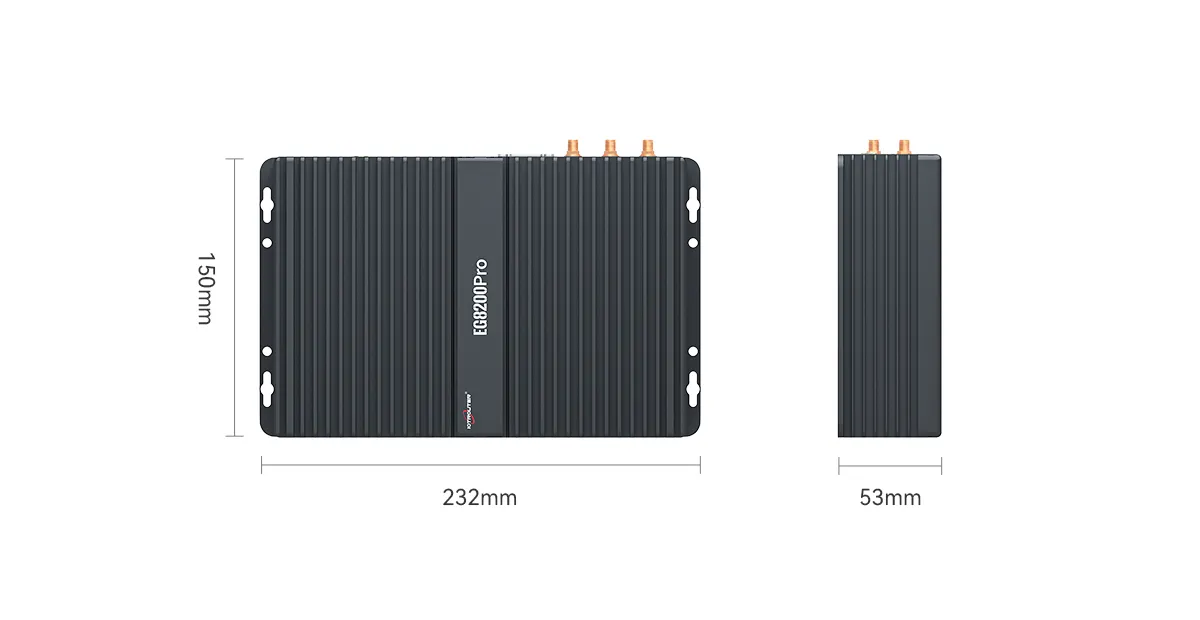
EG8200Pro 5G Ultra Powerful Edge Computing Gateway07

EG8200Pro Interface ldentification-2EG8200Pro Interface ldentification-1


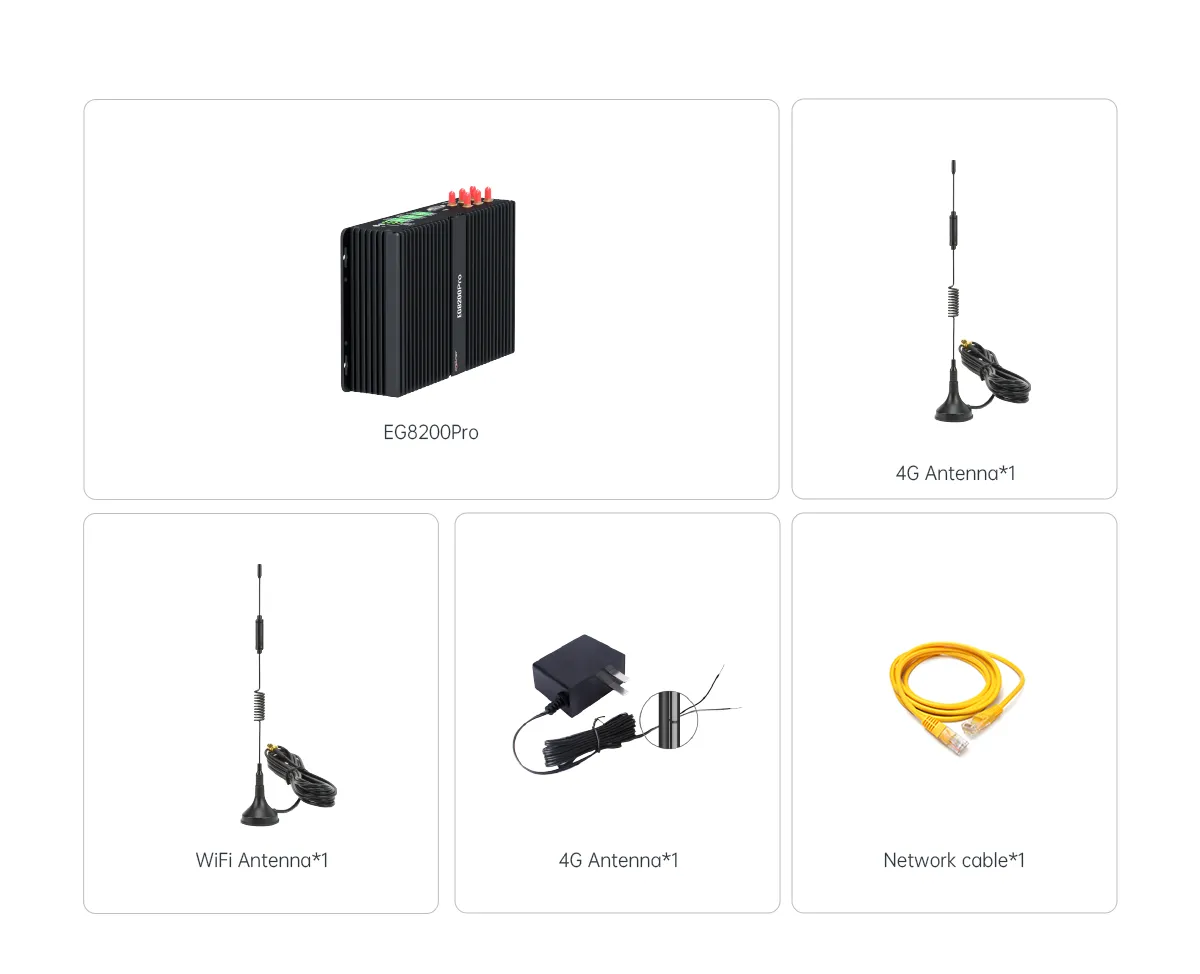
Packing List

EG8200Pro 5G Ultra Powerful Edge Computing Gateway08


passerelle de périphérie industrielle

Protocoles PLC

Protocoles PLC de la passerelle Edge Computing de la série EG8000

La passerelle est classée selon la structure hiérarchique marque->protocole->modèle, et des modèles d'API représentatifs sont sélectionnés pour être testés dans chaque catégorie. Les autres modèles pris en charge proviennent des documents officiels. Remarque : la passerelle prend en charge le protocole standard MOBUDS RTU/TCP, qui est pris en charge par tous les automates courants. (Par exemple, HollySys, Haiwell, Yokogawa, Runpower, etc.)


MarqueProtocoleInterfaceModèle PLC
SIEMENSConseils :Siemens, dans la vente de la série, prend en charge la communication par protocole S7, il est recommandé d'utiliser la communication par protocole S7.
S7EthernetSérie S7-S200smart, Série S7-S200, Série S7-S300, Série S7-S400, Série S7-S1200, Série S7-S1500
PPIPort sérieSérie S7-200
MELSECConseils :Mitsubishi utilise principalement le protocole MC pour la communication, les séries FX5, FX3, Q, etc. sont testées.
EtherNet/IPEthernetSérie FX5-ENET/IP, série RJ71EIP91, série QJ71EIP71
MC-1E/MC-3EEthernetSérie FX5, série RJ71EN71, série RnENCPU, série LJ71E71, série QJ71E71, série QnUCPU, série FX3
MODBUS TCPEthernetSérie FX5, série RJ71EN71, série RnENCPU, série LJ71E71, série QJ71E71
MC-3CPort sérieSérie FX5, série RJ71C24, série LJ71C24, série QJ71C24
MODBUS RTUPort sérieSérie FX5, série RJ71C24, série LJ71C24, série QJ71C24, série FX3
FxLinksPort sérieSérie FX3, Série FX2, Série FX1, Série FX0
FxSerialPort sérieSérie FX3, Série FX2, Série FX1, Série FX0
OMRONConseils :Omron utilise principalement le protocole Fins pour la communication.
EtherNet/IPEthernetSérie NX7, série NX1, série NX1P, série NJ, CJ1W-EIP21
PalmesEthernetSérie CP, série CS, série CJ, série CV
HostLinkPort sérieSérie CP, série CS, série CJ, série CV, série C
LSisConseils :LS utilise principalement le protocole FEnet/Cnet pour la communication.
XGB FEnetEthernetSérie XGB (XBC/XEC U, XBL-EMTA)
XGK FEnetEthernetSérie XGT (XGL-EFMT, XGL-EFMF, XGL-EH5T)
XGB CnetPort sérieSérie XGB (XBC/XEC U, XBL-C21A, XBL-C41A)
XGK CnetPort sérieSérie XGT (XGL-CH2A, XGL-C21A, XGL-C41A)
MarqueProtocoleInterfaceModèle PLC
AllenBrandlyConseils :Rockwell utilise principalement le protocole CIP, DF1 pour la communication.
EtherNet/IPEthernetSérie ControlLogix, série CompactLogix, série Micro800 (820, 850, 870)
DF1Port sérieSérie ControlLogix, série CompactLogix (module 5069-SERIAL), série Micro800 (820, 830, 850, 870)
Série SLC (500, 5/03, 5/04, 5/05) , Série Micro-Logix (1000, 1100, 1200, 1500)
BeckhoffConseils :Beckhoff utilise principalement le protocole ADS pour la communication.
ADSEthernetSérie CX, TwinCAT2, TwinCAT3
InovanceConseils :Inovance adopte principalement le protocole MODBUS pour la communication.
MODBUS TCPEthernetSérie AC, série AM, série H5U, série H3U
MODBUS RTUPort sérieSérie AC, Série AM, Série H5U, Série H3U, Série H1U
KeyenceConseils :Keyence utilise principalement le protocole KV pour la communication.
MC-3EEthernetSérie KV-8000, Série KV-7000, Série KV-5500, Série KV-5000
KV-EP21V, KV-LE21V, KV-LE20V, KV-LE20A et autres unités Ethernet
KVEthernet
KVPort sérieKV-7300, KV-3000, KV-1000, KV-700, KV Nano, KV-L21V, KV-L20V
PanasonicConseils :Panasonic utilise principalement le protocole Mewtocol pour la communication.
MC-3EEthernetSérie FP7, série FP0H, série FP-XH
MewtocolEthernetSérie FP7, série FP0H, série FP-XH
MewtocolPort sérieSérie FP7, série FP0H, série FP-XH, série FP-X0, série FP0R
DeltaConseils :Delta utilise principalement le protocole MODBUS pour la communication.
MODBUS TCPEthernetSérie AH, série AS, série AX-3, série DVP (Ethernet intégré)
MODBUS RTUPort sérieSérie AH, Série AS, Série AX-3, Série DVP
XinJEConseils :XinJE utilise principalement le protocole MODBUS pour la communication.
MODBUS TCPEthernetSérie CCSD, série XA, série XS, série XG, série XL
MODBUS RTUPort sérieSérie CCSD, série XA, série XS, série XG, série XL, série XC, série XD
MegMeetConseils :MegMeet utilise principalement le protocole MODBUS pour la communication.
MODBUS TCPEthernetSérie MC5100, série MC280, série MC200, série MC100, série MC80
MODBUS RTUPort sérieSérie MC5100, série MC280, série MC200, série MC100, série MC80
YaskawaConseils :Yaskawa utilise principalement le protocole MEMOBUS pour la communication (prend en charge le S7).
MemobusEthernetSérie GL120/130, Série GL60, Série MP3000, Série MP2300, Série Z1000
FatekConseils :Fatek utilise principalement le protocole Fatek pour la communication.
FatekPort sérieSérie FBs
VigueurConseils :Vigor utilise principalement le protocole privé VS pour communiquer.
VSPort sérieSérie VS
FujiConseils :Fuji utilise principalement le protocole SPH/SPB pour les communications.
SPHEthernetSérie SPH
SPBPort sérieSérie SPB


Spécifications

ModelEG8200Pro
Configuration de baseUNITÉ CENTRALE8 cores A55@1.8G
Mémoire2G
eMMC16G
StockageCarte SD128G max (Optional)
4GModuleQuectel-CAT4
Bande de fréquenceLTE-FDD : B1/B3/B5/B8
LTE-TDD : B34/B38/B39/B40/B41
WCDMA : B1/B5/B8
GSM: 900/1800MHz
Puissance d'émissionLTE-TDD : classe 3 (23 dBm ±2 dB)
LTE-FDD : classe 3 (23 dBm ±2 dB)
WCDMA : Classe 3 (24 dBm +1/-3 dB)
PCS1900 8-PSK : Classe E2 (26 dBm ±3 dB)
DCS1800 8-PSK : Classe E2 (26 dBm ±3 dB)
EGSM900 8-PSK : Classe E2 (27 dBm ±3 dB)
GSM850 8-PSK : Classe E2 (27 dBm ±3 dB)
PCS1900 : Classe 1 (30 dBm ±2 dB)
DCS1800 : Classe 1 (30 dBm ±2 dB)
EGSM900 : Classe 4 (33 dBm ±2 dB)
GSM850 : Classe 4 (33 dBm ±2 dB)
Bandwidth (The maximum rate is theoretical)LTE-FDD: Max 150Mbps(DL)/Max 50Mbps(UL)
LTE-TDD: Max 130Mbps(DL)/Max 30Mbps(UL)
5G (Optional)ModuleQuectel-5G
Bande de fréquence5G NR SA: n1/n28/n41/n77/n78/n79
5G NR NSA: n41/n78/n79
LTE-FDD: B1/B2/B3/B5/B7/B8/B20/B28
LTE-TDD : B34/B38/B39/B40/B41
WCDMA : B1/B2/B5/B8
Puissance d'émission5G NR n41/n78/n79 HPUE: Class 2 (26 dBm +2/-3 dB)
5G NR n77/n78/n79: Class 3 (23 dBm +2/-3 dB)
5G NR n28: Class 3 (23 dBm +2/-2.5 dB)
5G NR n1/n41: Class 3 (23 dBm +2 dB)
LTE B41 HPUE: Class 2 (26 dBm +2 dB)
LTE: Class 3 (23 dBm +2 dB)
WCDMA: Class 3 (23 dBm ±2 dB)
Bandwidth (The maximum rate is theoretical)NSA: 2.2 Gbps(Downlink Rate)/575 Mbps(Uplink Rate)
SA: 2 Gbps(Downlink Rate)/1 Gbps(Uplink Rate)
LTE: 600 Mbps(Downlink Rate)/150 Mbps(Uplink Rate)
WiFiWireless StandardsIEEE 802.11b/g/n/ac
Fréquence sans fil2.4~2.4835GHz & 5.15~5.85GHz
Mode WiFiAP+Station
Theoretical Rate433Mbps
Optimal Communication Distance10m
Nombre de liens en mode AP20
EthernetWAN1 × 10M/100M/1000M Self-Adaptive
LAN1 × 10M/100M/1000M Self-Adaptive
RS232Nombre d'interfaces1 Way
TerminauxRX, TX, GND
Débit en bauds2400~921600bps
Bits de données7, 8
Bits d'arrêt1, 2
Chiffre de contrôleNONE (No Check Digit)
EVEN (Even Check)
ODD (Odd Check)
Protection de l'environnementAntistatique, Anti-surge
RS485Nombre d'interfaces3-way
TerminauxA, B
Débit en bauds2400~921600bps
Bits de données7, 8
Bits d'arrêt1, 2
Chiffre de contrôleNONE (No Check Digit)
EVEN (Even Check)
ODD (Odd Check)
Protection de l'environnementAntistatique, Anti-surge
DONombre d'interfaces2-way
Terminaux(NO, COM) ×2
Capacité en courant alternatif250V 5A
Capacité en courant continu30V 5A
Durabilité mécanique10^6
Appliance Durability10^5
DINombre d'interfaces2-way
TerminauxDI*2, COM*2
Detection RangeDry Contact/NPN/PNP: Support 12V/24V
Impédance2K
Protection de l'environnementOptocoupler Isolation, Anti-static, Anti-surge
AONombre d'interfaces2-way
TerminauxAO*2, COM*2
Output Range4~20mA
Sample Rate12-bit Ad
Précision1%
Protection de l'environnementAntistatique, Anti-surge
AINombre d'interfaces2-way
TerminauxAI*2, COM*2
Detection Range4~20mA
Sample Rate12-bit Ad
Précision1%
Impédance250Ω
Protection de l'environnementAntistatique, Anti-surge
USBNombre d'interfaces2 × USB2.0
HDMINombre d'interfaces1 voie
RTCHorloge locale
Paramètres électriquesAuthentificationCE
Adaptateur12V/2A
Tension de fonctionnement9~36V
Courant d'exploitation500mA/12V
Paramètres environnementauxTempérature de fonctionnement-40~80℃
Température de stockage-40~80℃
Humidité de fonctionnement0~95%RH (No Condensation)
Humidité du magasin0~95%RH (No Condensation)
Paramètres mécaniquesTaille232×150×53mm
Matériau du boîtierAluminum Profiles
InstallationFixé par vis
Dissipation de la chaleurRefroidissement passif
Bouton RESTAppuyer sur la touche et la maintenir enfoncée pendant 10 secondes pour réinitialiser
EMCDécharge électrostatiqueNiveau de décharge de l'air3 ±8KV
Contact Niveau de décharge2 ±4KV
Surtensionlevel2±1KV
Éclatement (EFT)level2±1KV
Caractéristiques du logicielO&M à distance
Gestion à distance
Mises à jour à distance
Port de réseau virtuel
Port série virtuel
Bases de données de séries chronologiques
Programmation visuelle
Protocoles PLC
Protocoles de l'industrieCJ188 / DLT645 / HJ212 / Modbus / OPC UA / BACnet, etc.
Web Configuration
Protocoles de réseauMQTT / HTTP / TCP / UDP / WEB SOCKET / Alibaba Cloud IoT Platform / OneNET, etc.
SystèmeSystèmeLinux

Bandes 4G

*Vous pouvez contacter le service clientèle pour sélectionner le module de remplacement correspondant.

Module TypeBandes de fréquences
EC200A-CNLTE FDD : B1/B3/B5/B8
LTE TDD : B34/B38/B39/B40/B41
UMTS WCDMA : B1/B5/B8
EC200A-EULTE FDD : B1/B3/B5/B7/B8/B20/B28
LTE TDD : B38/B40/B41
UMTS WCDMA : B1/B5/B8
EC200A-AULTE FDD : B1/B2/B3/B4/B5/B7/B8/B28/B66
LTE TDD : B40
UMTS WCDMA : B1/B2/B4/B5/B8

Télécharger

Apply For Product Samples

Nous contacter