
 Video
Video


Description
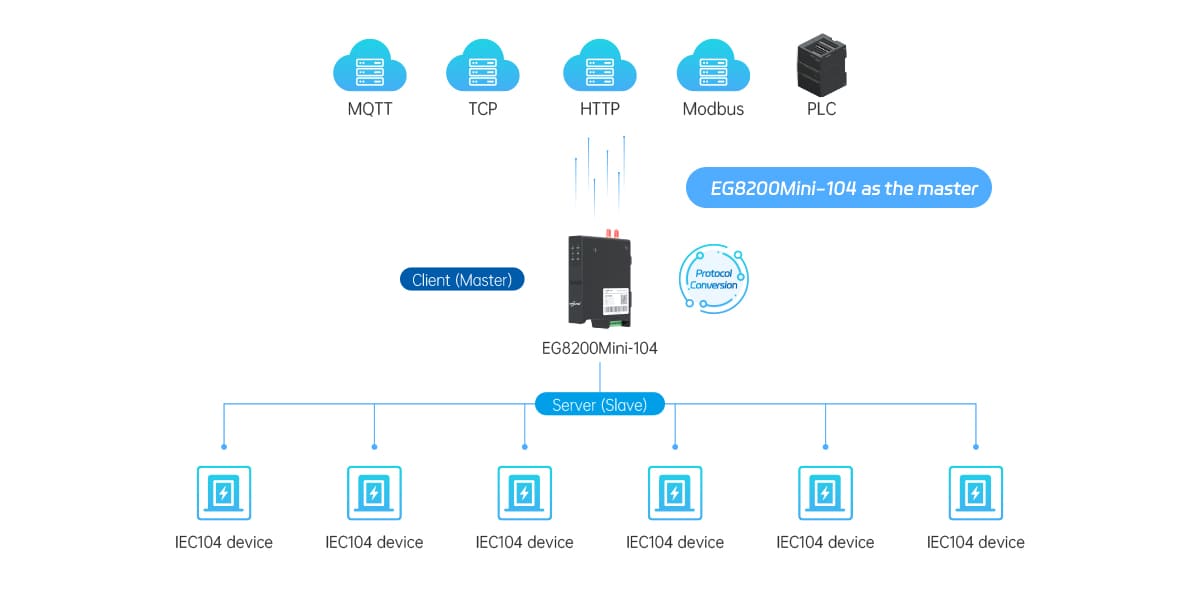
EG8200Mini-104 is an IEC 104 Gateway (IEC 60870-5-104 gateway ) designed for power automation and substation communication. It enables seamless conversion of Modbus RTU/TCP and PLC data into IEC 104 for integration with SCADA and dispatch systems.
It supports flexible master-slave configuration for bidirectional data exchange, as well as multi-device networking to interconnect multiple IEC 104 devices within a LAN. With support for multiple industrial protocols, remote management, and stable network connectivity, it ensures reliable data acquisition and transmission in energy and utility environments.
Key Features

IEC 104 Server/Client
Standard Server/Client modes for stable SCADA

Low-Code Development
Visual programming with built-in Node-RED

Remote Virtual LAN
Virtual LAN for remote PLC access and program upload/download

Multi-Protocole
Seamless communication across industrial protocols

Edge Intelligence
Local data analysis and logic execution at the edge

Gestion à distance
Remote configuration, debugging, and program updates

Reliable Connectivity
4G / Ethernet / Wi-Fi with auto failover

Industrial-Grade
Operates from −40°C to 85°C with 9–36V wide voltage input
* Soutien OEM/ODM, contact customer service for details.

EG Series Products
All gateways in the EG series share a highly consistent operating method. Differences between models are mainly reflected in hardware interfaces, and the corresponding variations are limited to the presence or absence of certain functional nodes.
| EG Series | 8200 Pro | 8200 | 8200 Mini | 8200 Lite | 8208 | 2000 | |||
|---|---|---|---|---|---|---|---|---|---|
| Key Feature | Haute performance | Multi-interface | Standard Version | DIN-rail Version | CNC Version | IEC104 Version | Low Cost | 8 Serial Ports | Passerelle LoRa |
| Processor | Octa-core A55 @1.8GHz | Dual-core A7 @1.2GHz | Dual-core A7 @1.2GHz | Dual-core A7 @1.2GHz | Dual-core A7 @1.2GHz | Dual-core A7 @1.2GHz | A7 @1.2GHz | Dual-core A7 @1.2GHz | Dual-core A7 @1.2GHz |
| Mémoire | 2GB | 512MB | 512MB | 512MB | 512MB | 512MB | 256MB | 512MB | 512MB |
| eMMC | 16GB | 4GB | 4GB | 4GB | 4GB | 4GB | 4GB | 4GB | 4GB |
| Carte SD | Max 128GB (optional) | Max 128GB (optional) | Max 128GB (optional) | Max 128GB (optional) | Max 128GB (optional) | Max 128GB (optional) | × | Max 128GB (optional) | Max 128GB (optional) |
| 4G | √ | √ | √ | √ | × | √ | √ | √ (optional) | √ (optional) |
| 5G | √ (optional) | × | × | × | × | × | × | × | × |
| HDMI | √ | × | × | × | × | × | × | × | × |
| Ethernet Ports | 1×WAN + 1×LAN | 1×WAN + 1×LAN | 1×WAN + 1×LAN | 1×WAN + 1×LAN | 1×WAN + 1×LAN | 1×WAN + 1×LAN | 1×WAN/LAN | 1×WAN/LAN | 1×WAN/LAN |
| LoRa | × | × | × | × | × | × | × | × | √ |
| Wi-Fi | Dual-band Wi-Fi 6 | Dual-band Wi-Fi 6 | Dual-band Wi-Fi 6 | Dual-band Wi-Fi 6 | Dual-band Wi-Fi 6 | Dual-band Wi-Fi 6 | × | × | × |
| GPS | × | √ | × | × | × | × | × | × | × |
| USB | 2×USB 2.0 | 1×USB 2.0 | × | × | × | × | × | × | × |
| RTC | √ | √ | √ | √ | √ | √ | × | √ | √ |
| RS485 | 3 | 2 | 2 | 2 | 2 | 2 | 2 | 8 | 1 |
| RS232 | 1 | 1 | 1 | 1 | 1 | 1 | × | × | × |
| CAN | × | 2 | × | × | × | × | × | × | × |
| DO | 2 | 2 | × | × | × | × | × | 8 | × |
| DI | 2 | 2 | × | × | × | × | × | × | × |
| AO | 2 | × | × | × | × | × | × | × | × |
| AI | 2 | × | × | × | × | × | × | × | × |
| Tension de fonctionnement | 9~36V | 9~36V | 9~36V | 9~36V | 9~36V | 9~36V | 9~36V | 9~36V | 9~36V |
| Courant d'exploitation | 500mA@12V | 280mA/12V | 150mA/12V | 150mA/12V | 150mA/12V | 150mA/12V | 60mA/12V | 170mA/12V | 180mA/12V |
| Certification | CE | CE | CE | CE | CE | CE | CE | CE | CE |
| Température de fonctionnement | -40 ~ 85°C | -40 ~ 85°C | -40 ~ 85°C | -40 ~ 85°C | -40 ~ 85°C | -40 ~ 85°C | -20 ~ 85°C | -40 ~ 85°C | -40 ~ 85°C |
| O&M à distance | √ | √ | √ | √ | √ | √ | √ | √ | √ |
| Gestion à distance | √ | √ | √ | √ | √ | √ | √ | √ | √ |
| Mise à jour à distance | √ | √ | √ | √ | √ | √ | √ | √ | √ |
| Virtual Network Interface | √ | √ | √ | √ | √ | √ | √ | √ | √ |
| Port série virtuel | √ | √ | √ | √ | √ | √ | √ | √ | √ |
| Local Database | √ | √ | √ | √ | √ | √ | × | √ | √ |
| Programmation visuelle | √ | √ | √ | √ | √ | √ | √ | √ | √ |
| PLC Protocol | √ | √ | √ | √ | × | √ | × | √ | × |
| CNC Protocol | × | × | × | × | √ | × | × | × | × |
| IEC 60870-5-104 | × | × | × | × | × | √ | × | × | × |
| Web Configuration | √ | × | × | × | × | × | × | × | × |
| Protocoles de l'industrie | CJ188/DLT645/HJ212/Modbus/OPC UA*/BACnet*/etc. | Identical | Identical | Identical | Identical | Identical | Identical | Identical | Identical |
| Protocoles de réseau | MQTT / HTTP / TCP / UDP / WebSocket / Alibaba Cloud IoT Platform / OneNET / etc. | Identical | Identical | Identical | Identical | Identical | Identical | Identical | Identical |
Quick Access to EG Series Products →
Main Functions
Wide PLC Compatibility
– Millisecond-Level Data Acquisition –
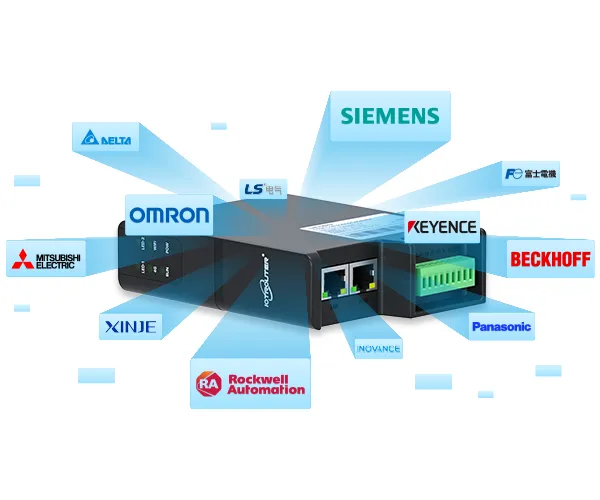
Supports communication with major PLC brands, including Siemens, Mitsubishi (MELSEC), Omron, Allen-Bradley, Beckhoff, Inovance, Keyence, Panasonic, Delta, and others, enabling rapid PLC data acquisition for edge applications. For a detailed list of supported PLC protocol models, please contact customer service.
Multi-Protocol Support
– Third-Party Platform Integration –
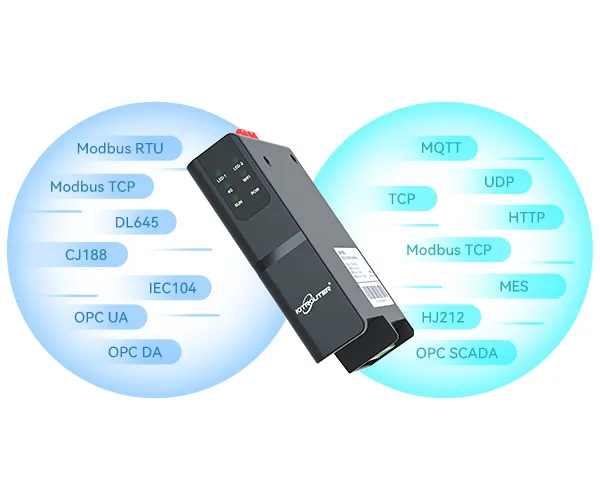
Supports standard industrial protocols, including Modbus, MQTT, OPC UA/DA, HJ212, and IEC 60870-5-104, enabling seamless integration with SCADA systems, cloud platforms, and other third-party applications. For non-standard protocols, custom parsing and logic can be implemented using JavaScript (JS).
Gestion à distance
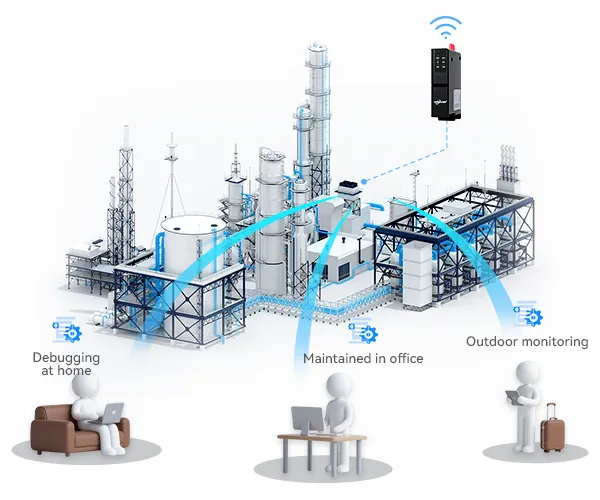
The EG8200 series remote management software enables remote configuration, debugging, diagnostics, and program updates for on-site devices.
Remote Virtual LAN
– PLC Remote Upload & Download –
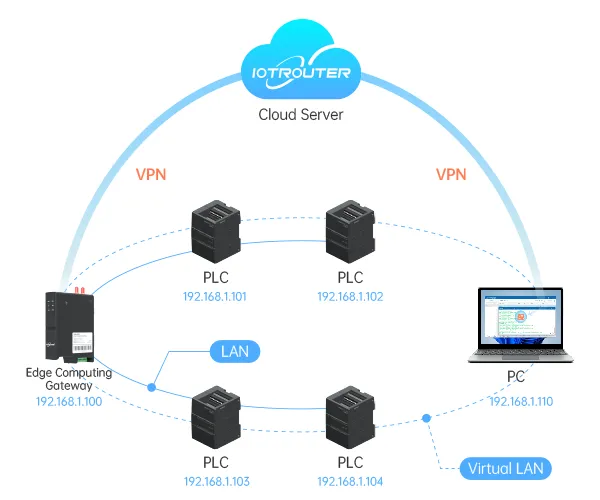
With Virtual Ethernet and Virtual Serial Port, engineers can remotely access PLCs, HMIs, and serial devices for programming, maintenance, and debugging as if they were on the same local network.
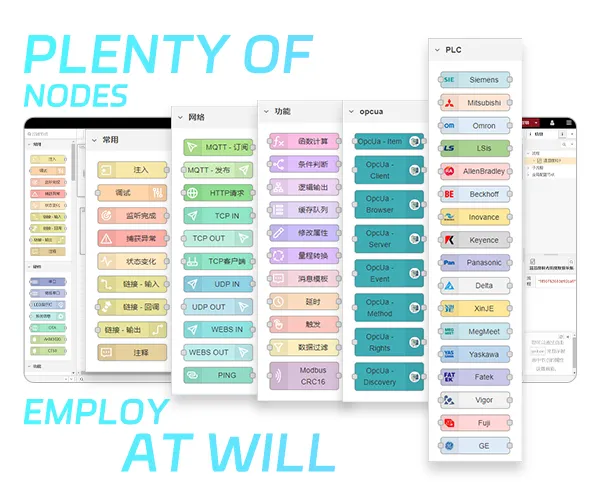
Drag & Drop Programming
– Low-code visual programming –
Using Node-RED visual programming, the EG8200Mini-104 gateway allows users to build automation workflows through drag-and-drop configuration. It supports integration with sensors and third-party platforms via protocols such as MQTT and JSON.
FAQ
Q1: What network options does the EG8200Mini-104 edge IEC 104 Gateway support? How can I use it in a substation without Ethernet?
A : EG8200Mini-104 IEC 104 Gateway offers very flexible networking options, fitting a variety of industrial site scenarios:
-
-
Wired (RJ45): Connect via the Gigabit WAN port or 100Mbps LAN port to your local network.
-
Wi-Fi: Supports dual-band Wi-Fi (2.4GHz & 5GHz) as a client to connect to existing wireless networks.
-
Cellular (4G LTE): Built-in 4G Cat.1 module—just insert a SIM card, and your gateway can send data over the mobile network.
-
So even in older substations with no network cables, you can still use 4G to reliably send data back to the control center.
Q2: How do I use the EG8200Mini-104 IEC 104 Gateway to read substation digital and analog data? Is it complicated?
A : Configuration is straightforward using the visual Node-RED tool—no coding required. Here’s the core workflow:
1. Network setup: Ensure the gateway is on the same network as your substation devices (e.g., protection relays). You can adjust the LAN IP via the management interface.
2. Add nodes: In Node-RED, drag an IEC104 Client node from the left palette into your workflow.
3. Configure connections and points:
-
-
-
In the node settings, enter the remote 104 slave’s IP address and port (default is 2404).
-
Digital inputs (DI/status points): Go to the “Digital” tab, add the points using the slave’s point addresses (like 1, 2), and assign names.
-
Analog inputs (AI/measurements): Go to the “Analog” tab, add the points with the corresponding addresses (like 16385, 16386) and names.
-
-
-
- 4. Deploy & verify: Once deployed, the gateway will automatically read data at the configured intervals. You can monitor real-time values in the debug panel.
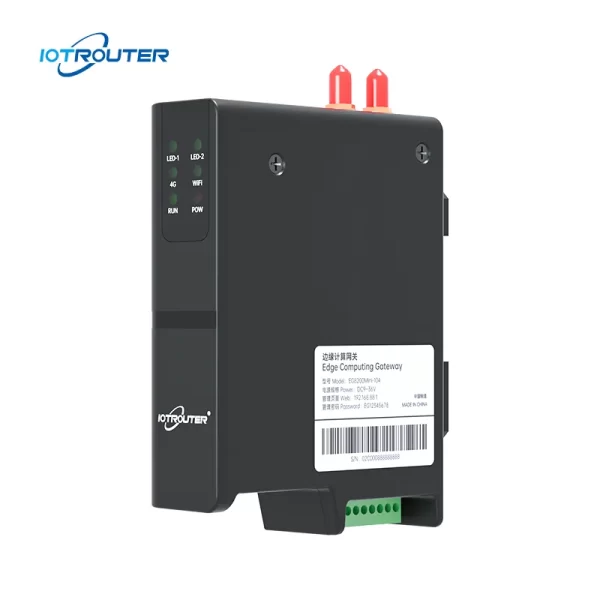
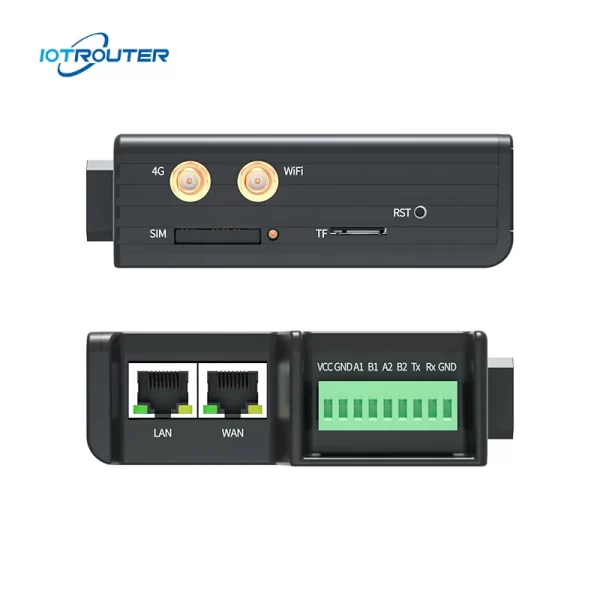
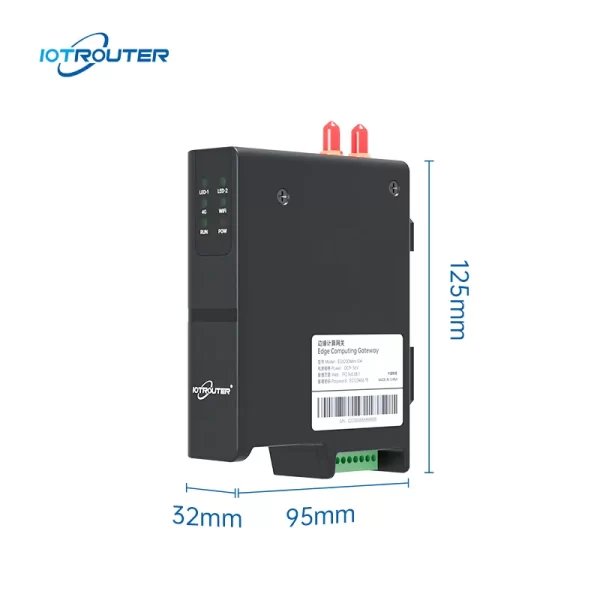
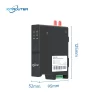
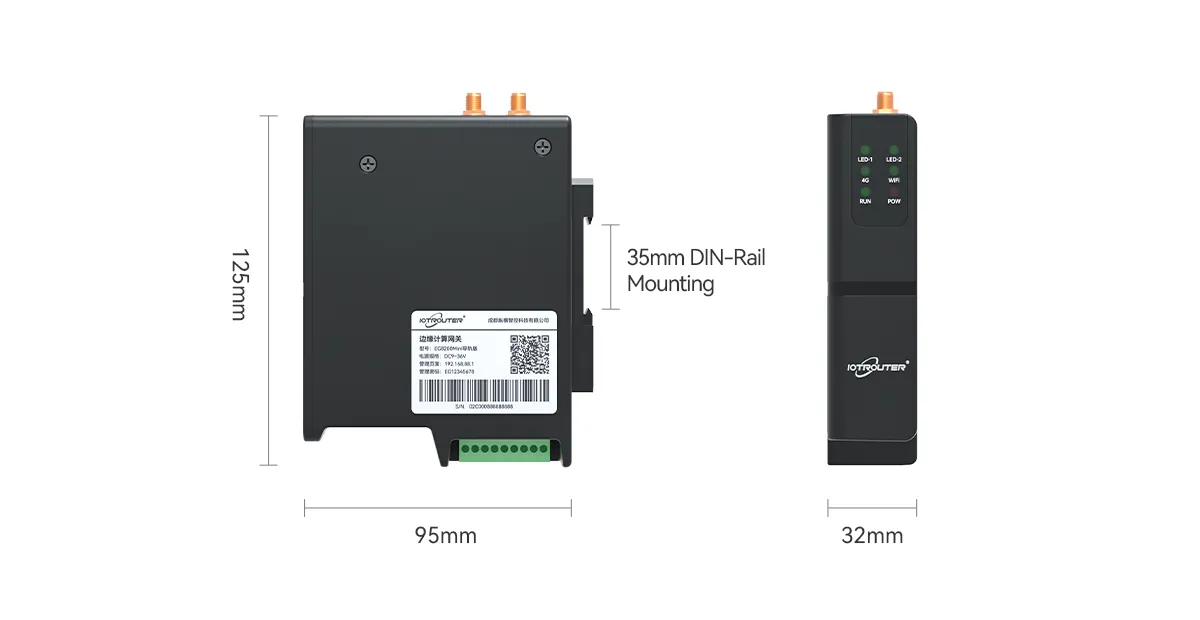
Product Size and Interfaces
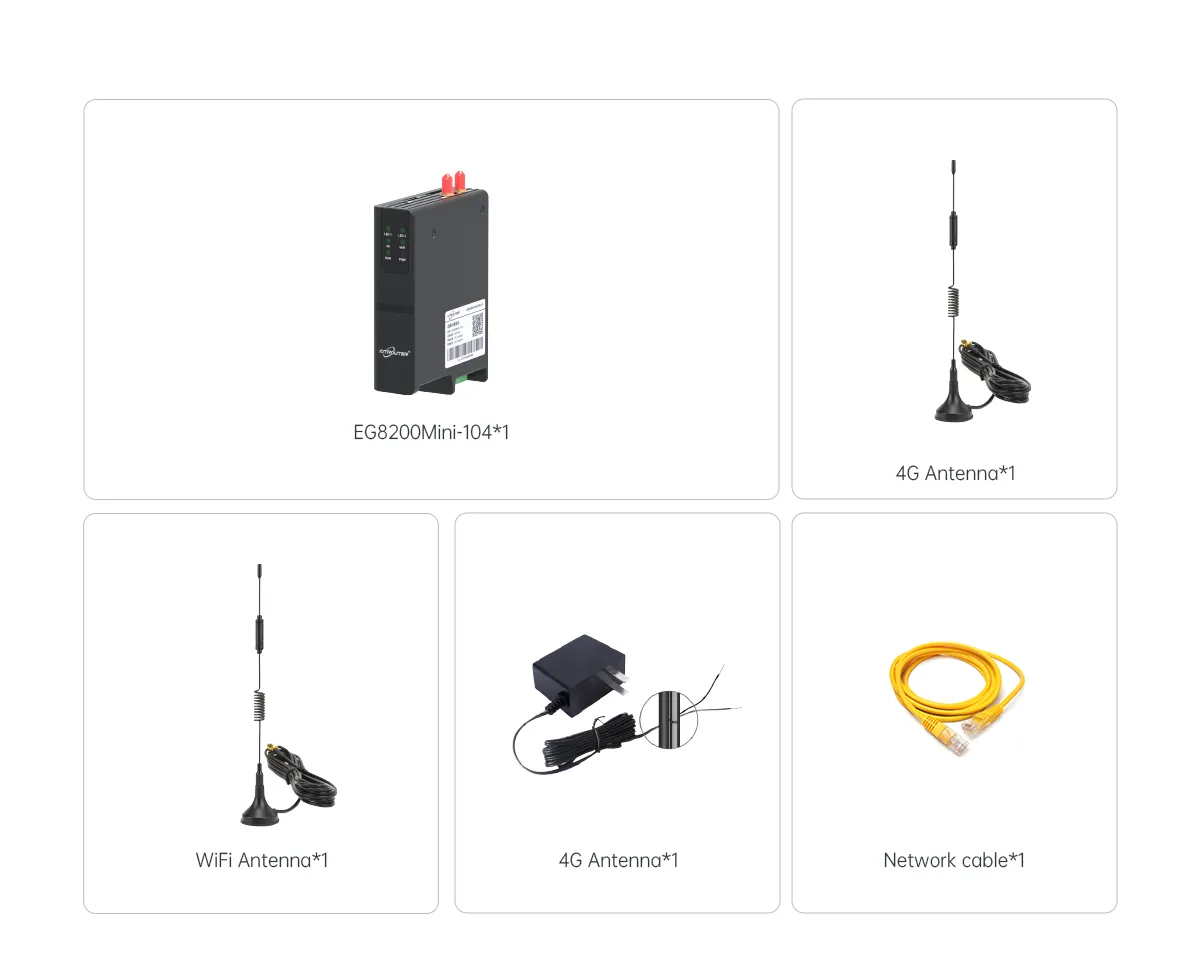
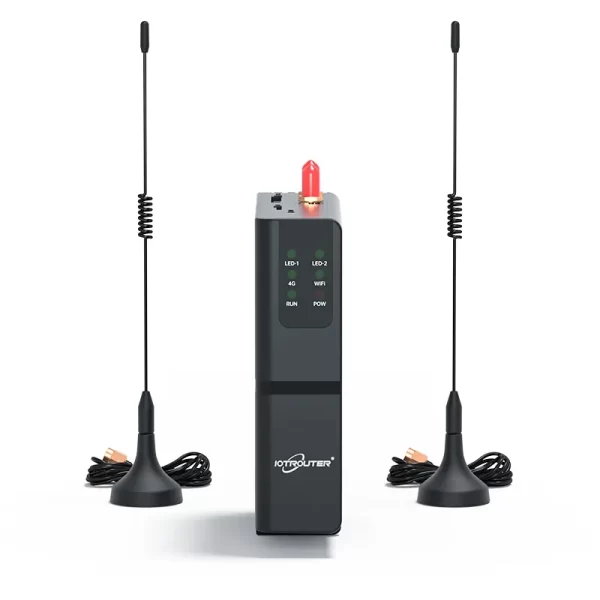
Packing List