
Stop focusing only on power generation and transmission. Today, the true measure of an advanced power system is different: whether it can clearly understand the flow of every kilowatt-hour of electricity and respond instantly in a data-driven power grid monitoring environment.
The challenge lies in the massive amount of real-time data generated across the grid. This includes vibration data from gas turbines, current waveforms from distribution feeders, and smart meter readings from thousands of households. All of these data streams are essential inputs for a modern power grid monitoring system.
However, these data sources often speak different “languages.” Protocols such as IEC 61850 and DL/T 645 are widely used in the power industry, but they are not always compatible with each other. As a result, data is often fragmented and isolated across different systems, making integrated power system monitoring difficult.
At the same time, traditional cloud-centric architectures are increasingly unable to meet the speed requirements of modern real-time grid monitoring systems. When data must travel to a centralized platform for processing and then return to field devices, even a delay of a few hundred milliseconds can be critical.
In fast-changing grid conditions, such delays may allow a local fault to escalate into a wider outage. This is why real-time power grid monitoring and fault response have become critical capabilities for modern utilities.
Data Explosion in Modern Power Grid Monitoring Systems
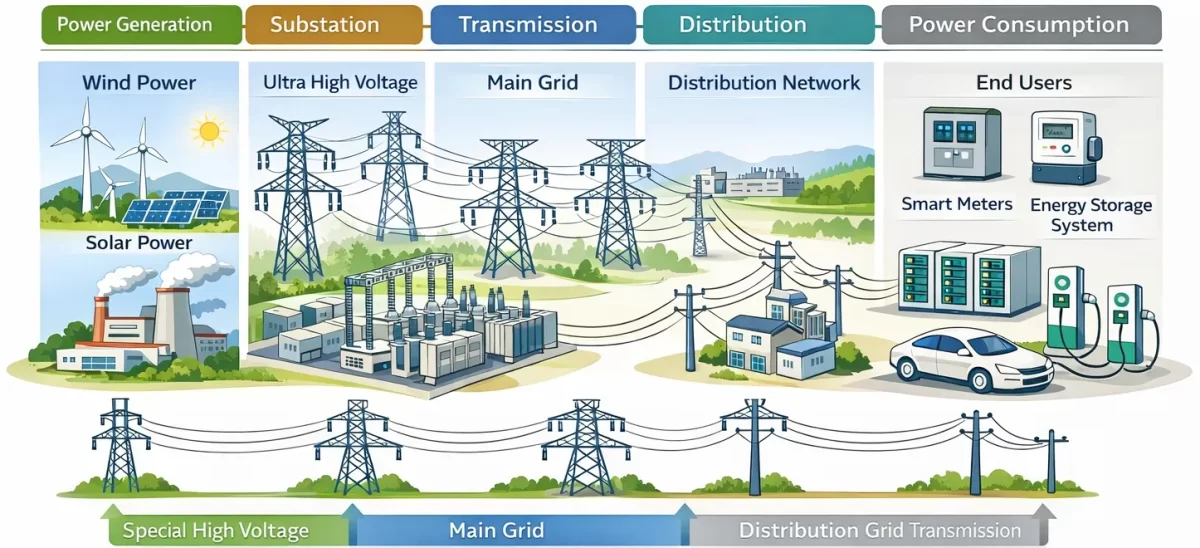
To understand the challenge, it helps to look at the overall structure of the power system. Electricity flows through a complete chain that includes generation, transmission, distribution, and consumption.
Wind power, solar power, and thermal power plants coexist on the generation side. Electricity then moves through ultra-high-voltage transmission networks and regional grids before reaching distribution networks and end users.
At the edge of the grid, the number of connected devices has grown dramatically. Smart meters, energy storage systems, and EV charging stations are now widely deployed. These devices are continuously generating data that feeds into modern smart grid monitoring platforms.
This growth has introduced three major challenges:
-
The number of devices continues to increase
-
Communication protocols are becoming more diverse
-
Real-time grid monitoring and control requirements are becoming stricter
In many scenarios—such as protection relay actions, grid fault monitoring, fault isolation, and grid self-healing—response times must be measured in milliseconds.
This raises a key question for modern power grid monitoring architectures: where should the first stage of data processing take place?
Moving Intelligence Closer to the Field
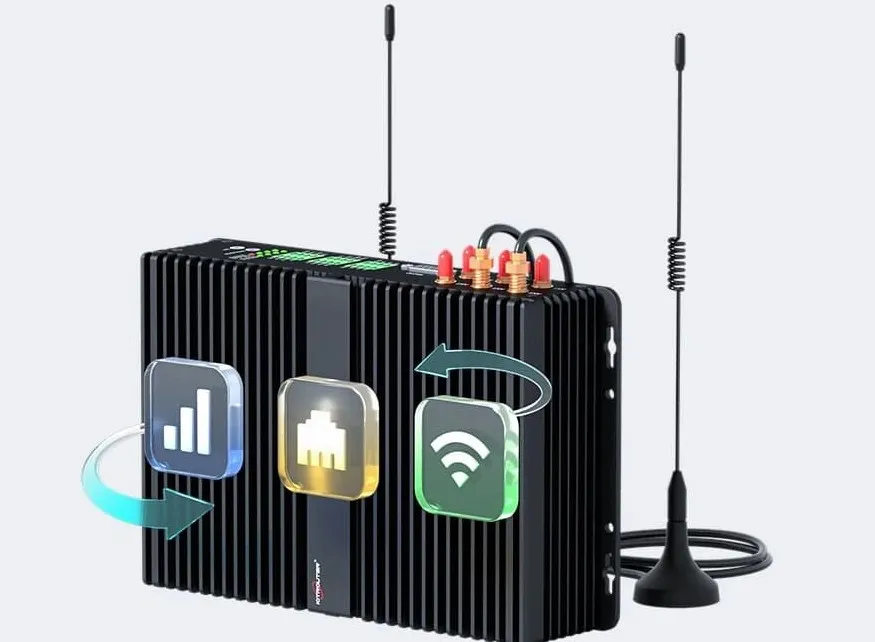
The answer is not simply building larger cloud platforms. Instead, computing intelligence needs to move closer to where data is generated—into substations, distribution rooms, and field installations.
This is the role of an industrial edge computing gateway for power grid monitoring.
An edge gateway is not just a device for collecting data. It acts as a local processing node capable of analyzing information and making decisions directly at the field site, enabling real-time grid monitoring and control at the edge.
Le EG8200Pro 5G Industrial Edge Computing Gateway is designed with this idea in mind.
Designed for complex industrial environments, it enables engineers to perform data acquisition, protocol conversion, and logic processing directly at the edge, thereby forming the foundation of a modern distributed power grid monitoring system.
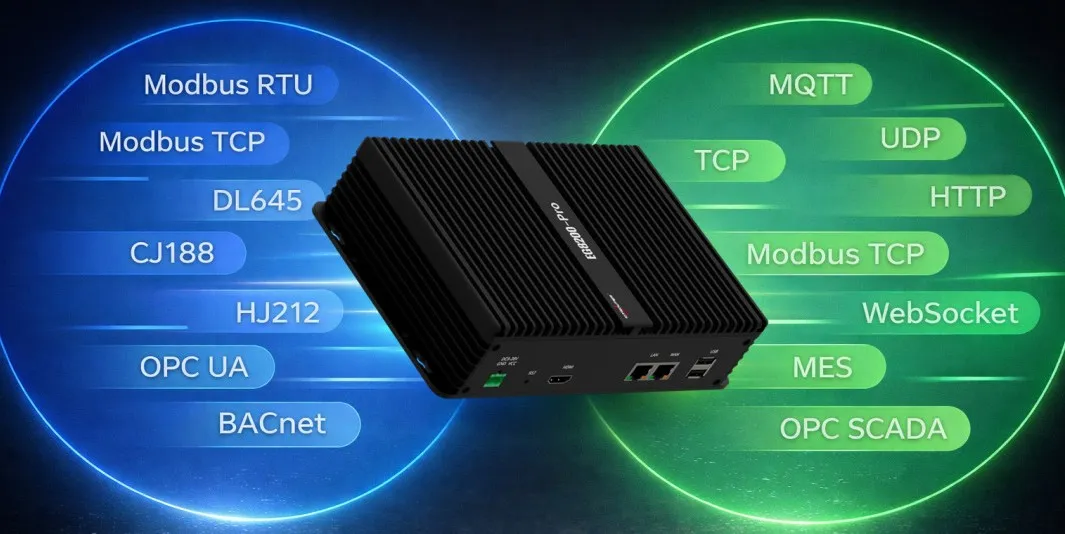
The gateway supports multiple industrial and power-industry protocols, including DL/T 645, enabling communication with protection relays, smart meters, and other electrical equipment from different manufacturers and generations. This capability is critical for building interoperable power system monitoring networks.
It also provides multiple industrial interfaces such as Gigabit Ethernet, RS485, RS232, and digital or analog I/O, allowing it to connect to a wide range of devices used in power grid monitoring and automation systems.
To simplify deployment, the gateway integrates Node-RED, a visual programming environment. Through a drag-and-drop interface, engineers can configure data processing workflows without writing code.
Tasks such as signal filtering, power quality calculations, alarm rule configuration, and basic control logic can all be implemented directly on the gateway. This allows the device to function as a local grid monitoring and analytics node.
The device is powered by an 8-core processor capable of performing real-time edge analytics, including power quality monitoring and disturbance recording—two key capabilities in modern smart grid monitoring systems.
Its industrial-grade design features a full metal enclosure and a wide operating temperature range from −40°C to 85°C, ensuring reliable operation in demanding environments such as substations and outdoor installations where continuous power grid monitoring is required.
For connectivity, the gateway supports Ethernet, 4G, 5G, and Wi-Fi communication. Data transmission can be protected with TLS encryption, ensuring secure communication between field devices and remote power grid monitoring platforms.
A Practical Example: Fast Fault Isolation
The advantages of edge computing become particularly clear in real operational scenarios.
Consider a 10 kV distribution line supplying electricity to an industrial park. If a single-phase grounding fault occurs, traditional architectures require the fault information to be transmitted to a central control system for analysis before a trip command is sent back to the field device.
This process may take tens of seconds or even minutes, which is unacceptable for real-time grid fault monitoring.
During this time, the fault arc can develop into a phase-to-phase short circuit, potentially causing a widespread power outage.
When an edge gateway such as the EG8200Pro is deployed near the distribution cabinet, the situation changes dramatically.
The gateway continuously collects voltage and current data from protection devices using industrial protocols such as IEC 104, enabling local power grid monitoring and fault detection.
When an abnormal change in zero-sequence current is detected, the gateway can immediately analyze the data locally and trigger a protection action or send a control signal through its digital output interface.
Because the entire process is completed locally, the faulty section of the line can be isolated within milliseconds without relying on cloud communication.
This type of edge-based power grid monitoring and protection significantly improves grid reliability.
Power can then be quickly restored to unaffected areas, greatly improving the resilience of the distribution network.
Cloud–Edge Collaboration
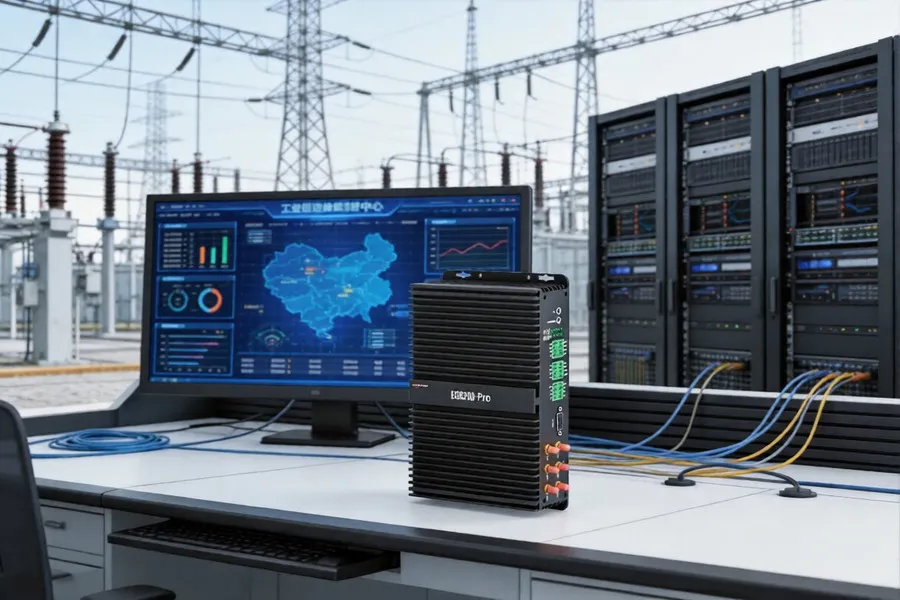
Edge computing is not intended to replace the cloud. Instead, it complements cloud platforms by handling time-critical tasks locally within the power grid monitoring architecture.
After performing real-time processing at the edge, the gateway can upload selected data—such as equipment health status, power quality indicators, and fault records—to cloud platforms through protocols like MQTT or HTTP.
These platforms may include Alibaba Cloud, Huawei Cloud, Tencent Cloud, or private cloud infrastructures used for large-scale grid monitoring and analytics.
With this architecture, edge devices handle immediate responses, while the cloud focuses on large-scale analysis, system optimization, and predictive maintenance.
This collaboration between edge and cloud creates a more resilient and flexible smart grid monitoring system capable of integrating distributed energy resources while maintaining centralized coordination.
A Transformation Driven by Data
The digital transformation of power systems does not occur only in central control rooms. It happens across thousands of substations, distribution facilities, and field installations.
Industrial edge gateways such as the EG8200Pro enable this transformation by bringing computing power closer to the equipment and allowing data to create value where it is generated.
By enabling real-time power grid monitoring, processing information locally, and responding faster to abnormal conditions, these devices help improve the reliability and intelligence of modern power grids.