Today, let’s talk about how to interface the EG edge gateway with Panasonic PLCs via the Mewtocol TCP Protocol.
L'article dont nous avons parlé précédemment :
Comment intégrer la passerelle EG edge computing avec General Electric PLC
Comment intégrer l'automate Xinjie via le protocole Modbus RTU ?
How to interface with Keyence KV-8000 series PLCs via the MC-3E protocol
How to interface with Keyence KV-7500 series PLCs via the KV TCP protocol
Compatible PLCs: Panasonic FP0H / Panasonic XHC60ET
1. Connexion du matériel
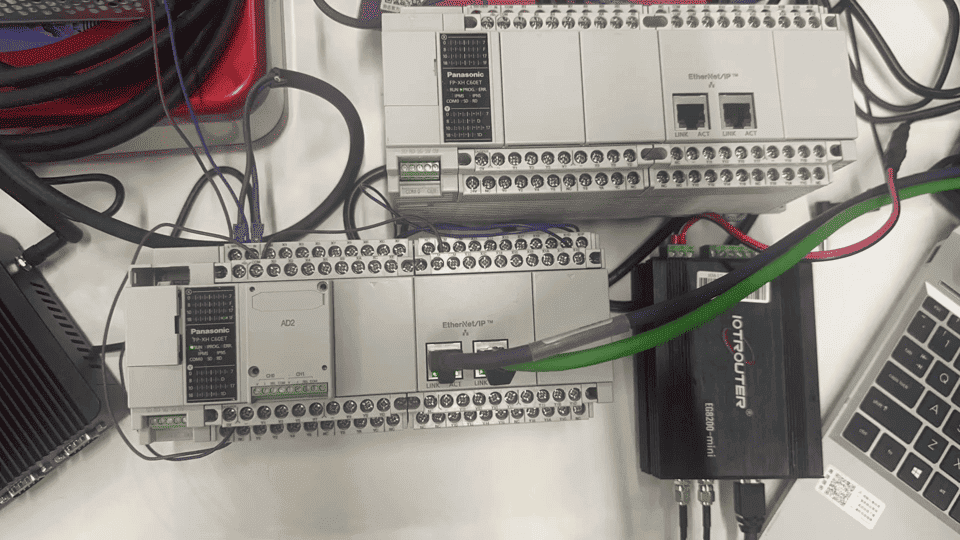
Mewtocol TCP protocol communicates via Ethernet. Therefore, simply ensure the gateway’s LAN port and the Panasonic PLC’s IP address are within the same subnet.
2. Paramètres de communication PLC
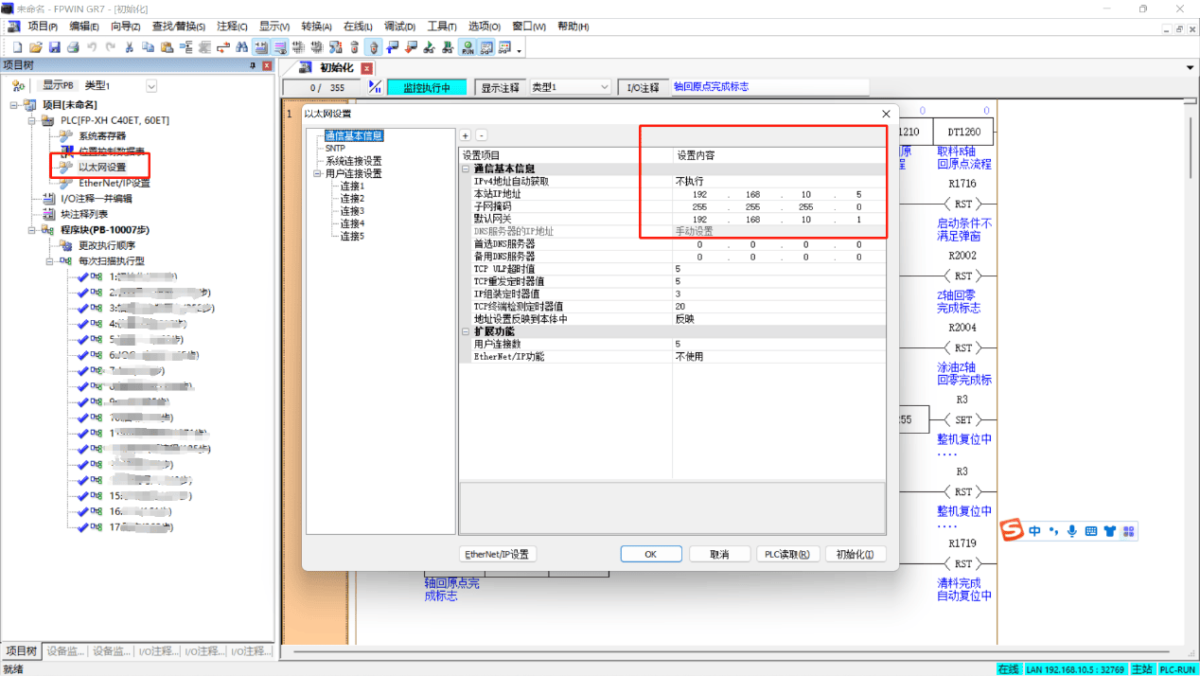
2.1. Ethernet Parameter Settings
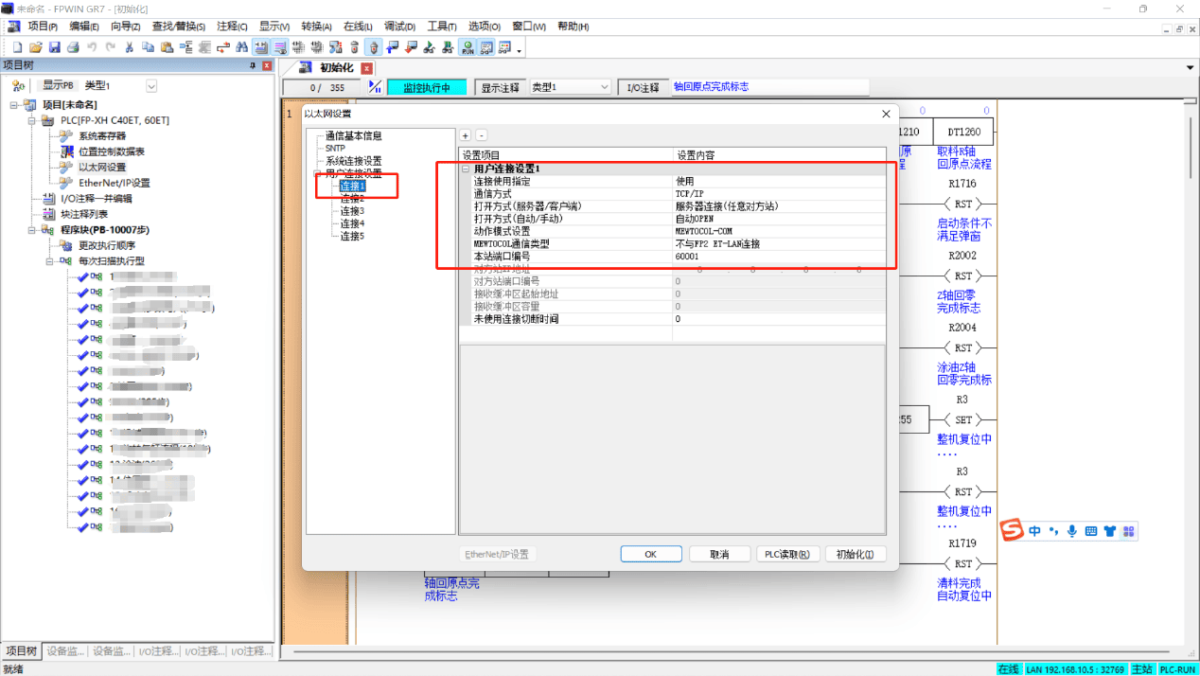
2.2. User Connection Port Settings
3. Paramètres de la passerelle
3.1. Paramètres de connexion PLC
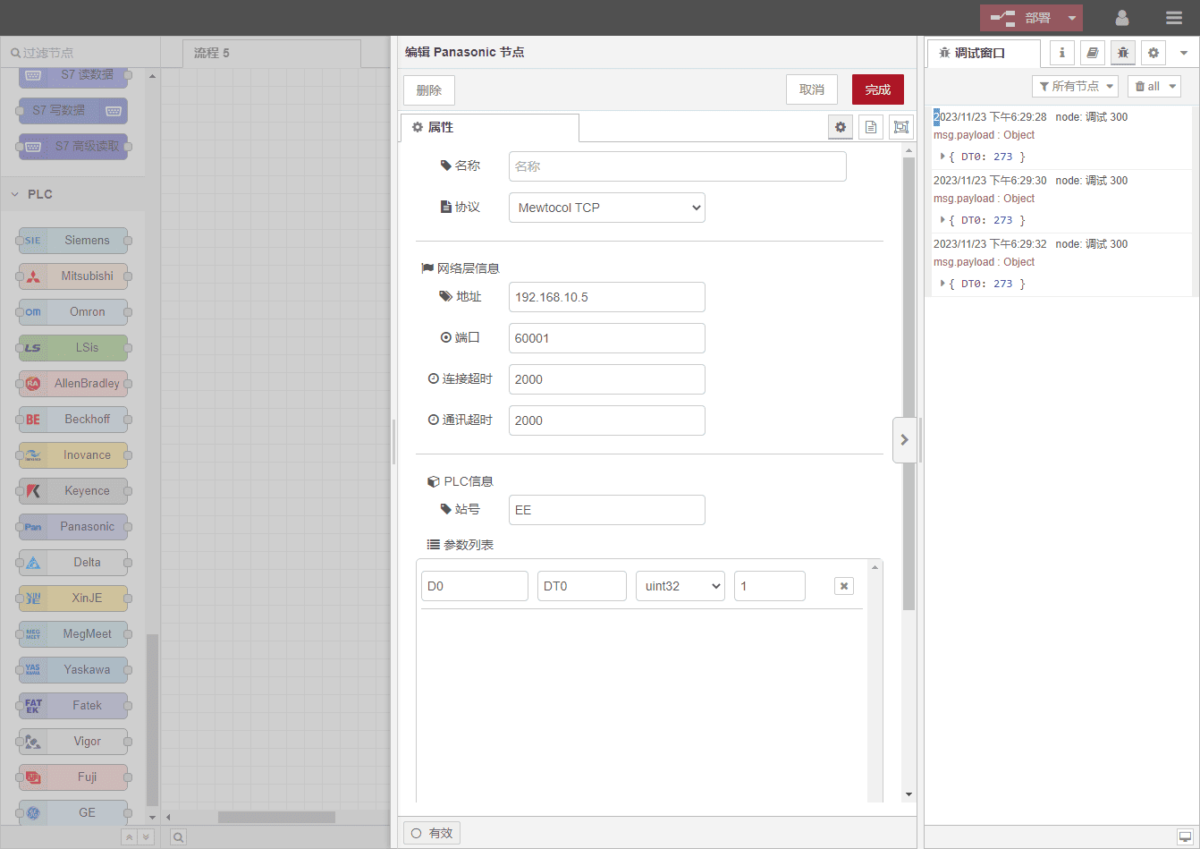
Drag a Panasonic node from the left panel and double-click to open its settings page. Configure the following based on the PLC’s serial port parameters:
Protocole : Select Mewtocol TCP
Adresse : Enter the PLC address (e.g., 192.168.10.5)
Port : Enter the PLC connection port (e.g., 60001)
Délai de connexion : 2000
Délai de communication : 2000
ID de la station : EE
3.2. Configuration des points de données
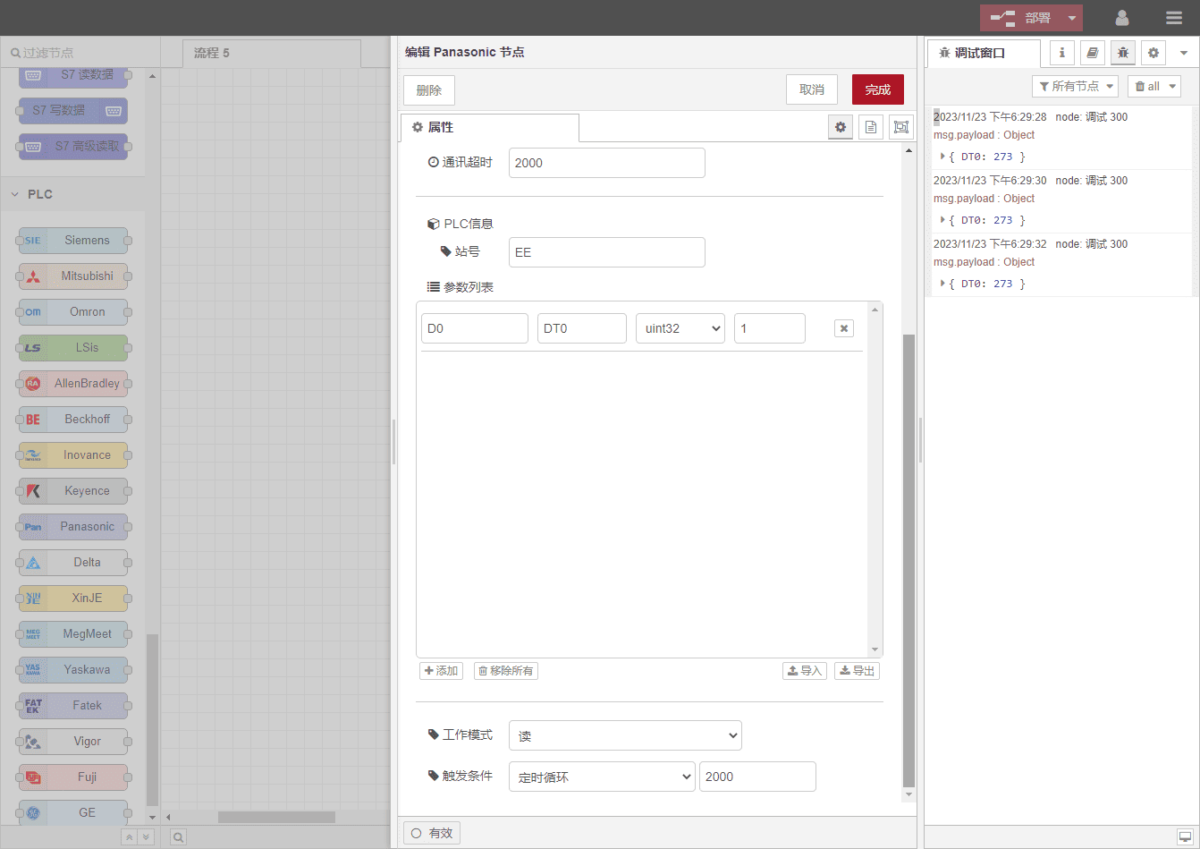
Enter the data points to be read into the parameter list of the Panasonic node. Once configured, the PLC data will be automatically retrieved at the specified frequency.
Les points de données sont généralement fournis par les ingénieurs API. Après avoir reçu la liste des points, remplissez les points de données selon le format requis par la passerelle. Pour une correspondance spécifique, se référer à :
This is a Yuque content card. Click the link to view:(Vous pouvez utiliser Google Chrome pour la traduction) https://iotrouter.yuque.com/zn3vdn/eg8000/frhrwhgsa8o2xpof
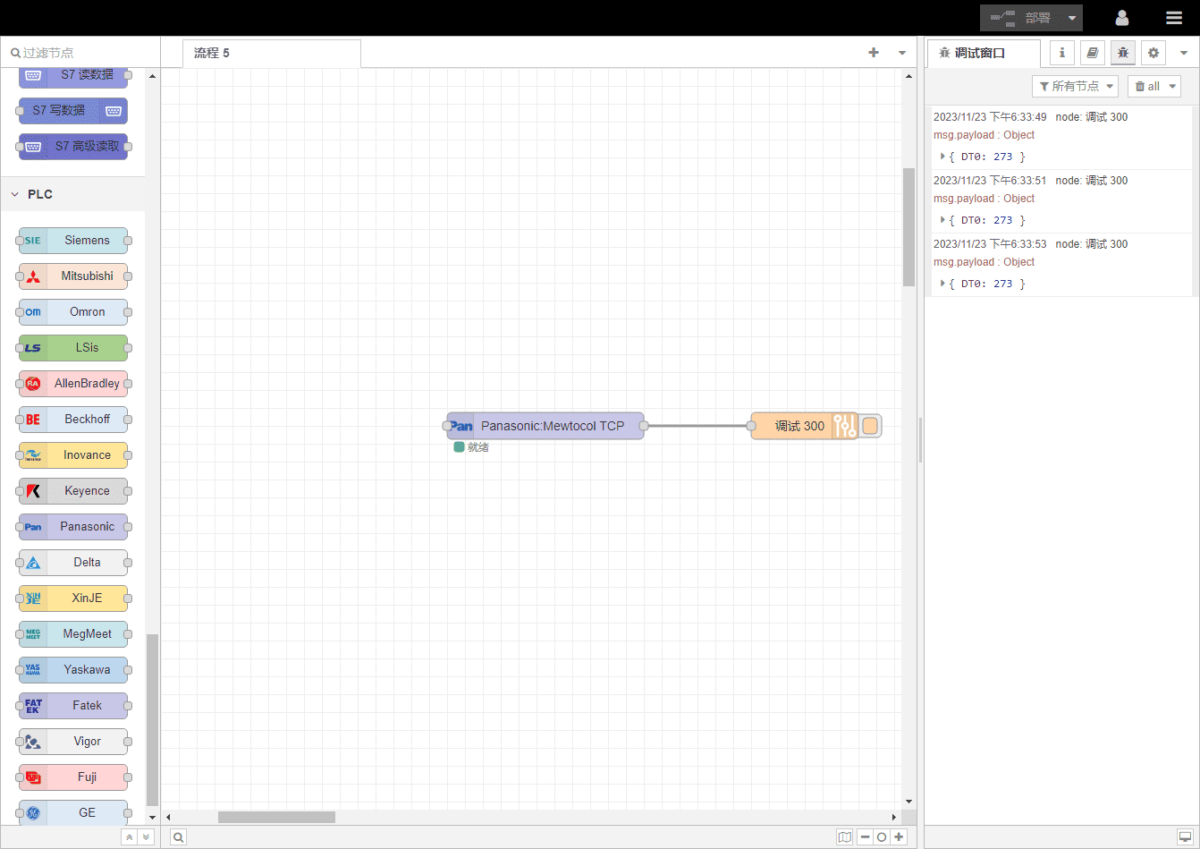
This example reads data from address DT0. Using FPWIN GR7 software, you can see that DT0 stores a signed 32-bit integer: 273. In the parameter list, fill in the address/name/data type/data length sequentially. Set a 2-second cycle for periodic reading, as shown in the figure:
3.3. Essais
Click Deploy and observe that a data point is printed every 2 seconds. The read data point result is: DT0:273. Communication successful!