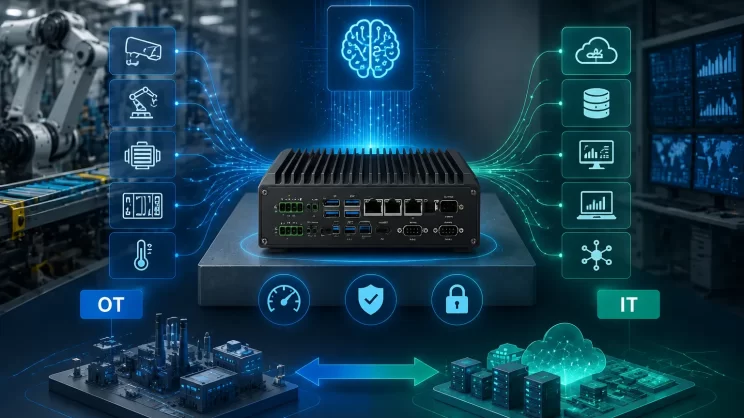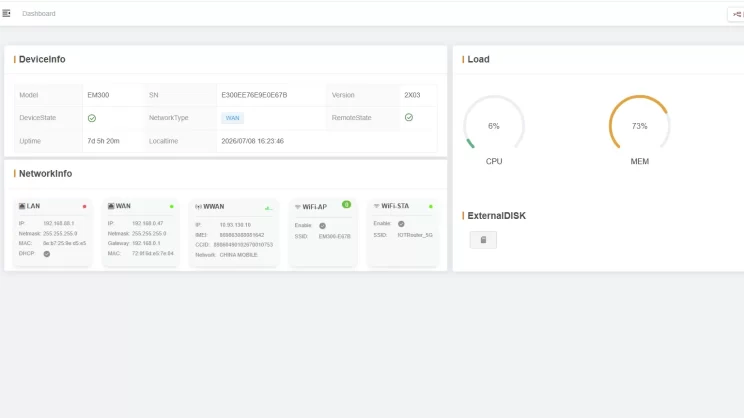
Speaking of the Internet of Things, are you both familiar and unfamiliar? Yes, from radio frequency technology that can be seen everywhere to smart wearables, smart appliances, and rapidly developing smart homes. Intelligent transportation, shared bicycles, drone transportation, smart medical care, etc. Behind these technological applications is the Internet of Things, but they are far from representing all of the Internet of Things.
The Internet of Things – this innovative Internet technology based on communication sensing technology and with unlimited potential for development- has set off the third wave of the development of the world’s information industry and will trigger huge changes in production and lifestyles. So how does communication sensing technology achieve such a powerful Internet of Things?
Der Ursprung des Internets der Dinge
Bevor wir das Internet der Dinge verstehen, müssen wir zunächst ein vorläufiges Verständnis der Konzepte und Technologien des Internets der Dinge entwickeln. Der Grund, warum das Internet der Dinge geboren wurde, ist eine Kaffeekanne. Ja, Sie haben richtig gehört. Es handelte sich um eine gewöhnliche Kaffeekanne, die 1991 unten im Truy Computer Laboratory der Universität Cambridge stand. Die Kaffeekanne konnte den Wissenschaftlern oben nichts Intelligentes sagen. Um festzustellen, ob der Kaffee gut gebrüht ist, schrieben die schlauen Wissenschaftler eine Reihe von Programmen, installierten eine Kamera neben der Kaffeekanne und nutzten die Bildaufnahmetechnik der Endgerätekamera, um sie mit einer Rate von 3 Bildern pro Sekunde an den Laborcomputer zu übertragen, so dass die Wissenschaftler jederzeit überprüfen können, ob der Kaffee gebrüht ist. Unerwartet wurde diese "Erfindung des faulen Mannes" zum frühesten Prototyp des Internets der Dinge.
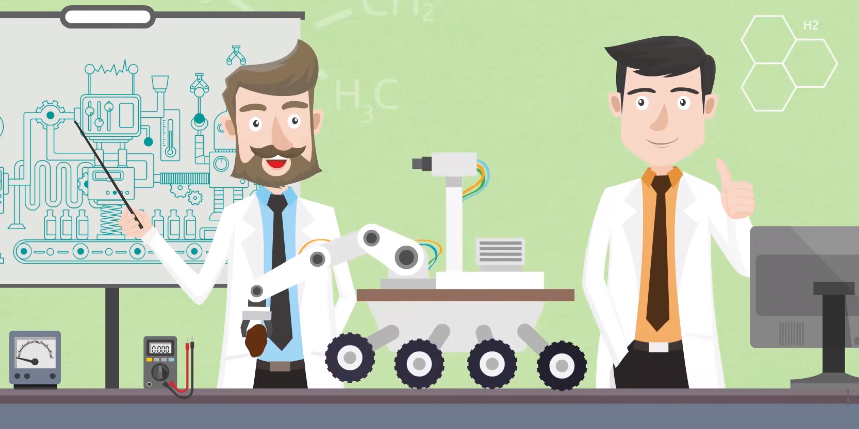
In 1993, as the first X-Windows system case. The “Truy Coffee Pot Server” incident was also spread online. As far as network digital cameras are concerned, to be precise, their market development, technical applications, and various future network expansions all originated from the world’s most prestigious “Truy coffee pot”, so when was the concept of the Internet of Things proposed?
Vorschlag für das Konzept des Internets der Dinge
Eight years after the “coffee pot” incident, that is, in 1999, Kevin Ashton first proposed the concept of the Internet of Things at the Auto-ID Center of the Massachusetts Institute of Technology in the United States. The Internet of Things at this time only refers to relying on RFID technology and equipment. The agreed communication protocol is combined with the Internet to realize intelligent identification and management of item information, and realize the interconnection, exchange, and sharing of item information to form a network.
Entwicklungsgeschichte des Internets der Dinge
An der Schwelle zum 21. Jahrhundert hat das Internet der Dinge eine rasante Entwicklung genommen, die sich in fünf Phasen vollzog.
(1) In 2005, the International Telecommunication Union ITU released the “ITU Internet Report 2005: Internet of Things” at the World Summit on the Information Society (WSIS) in Tunisia, which applied the concept of “Internet of Things”. At this time, the definition and scope of the Internet of Things have changed, and it is no longer just IoT based on RFID technology.
(2) Im November 2008 schlug IBM das Konzept des "Smart Planet" vor.
(3) Im August 2009 trieb "Perceiving China" die Forschung und Anwendungsentwicklung im Bereich des Internets der Dinge in meinem Land auf einen Höhepunkt. Die Stadt Wuxi übernahm die Führung bei der Einrichtung des Forschungszentrums "Perceiving China". Die Chinesische Akademie der Wissenschaften und die Wuxi Jiangnan Universität gründeten außerdem eine nationale Akademie für die erste physische IoT-Fabrik.
(4) Im April 2013 schlug die deutsche Regierung auf der Industriemesse in Hannover offiziell die Strategie "Industrie 4.0" vor, die darauf abzielt, das Intelligenzniveau der Fertigungsindustrie zu verbessern. Ihre technische Grundlage sind vernetzte Systeme und das Internet der Dinge.
(5) Am 8. Mai 2015 wurde "Made in China 2025" unterzeichnet und veröffentlicht. Als erstes Zehnjahresprogramm der China Power Strategy hat die gründliche Umsetzung von "Made in China 2025" die Entwicklung von Big Data, Big Data und dem Internet der Dinge weiter beschleunigt. Anwendungen in der industriellen Fertigung.
Wenn man den Entwicklungsprozess des Internets der Dinge in den letzten 20 Jahren und seine Zukunft unterteilt, kann man ihn grob in drei Perioden einteilen.
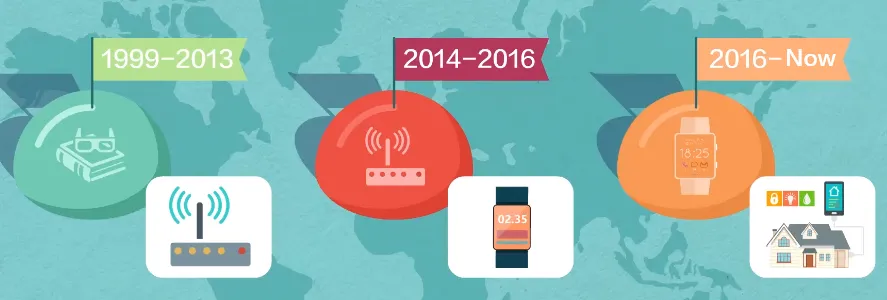
The first period is from the introduction of the concept of the Internet of Things to 2013. During this period, the Internet of Things remained in the conceptual stage, and the equipment involved was limited to “things” in the field of wireless radio frequency. The equipment involved is also limited to “things” in the field of wireless radio frequency. “thing”.
Der zweite Zeitraum ist von 2014 bis 2016. Dieser Zeitraum ist geprägt von der Übernahme von Nest durch Google. Das Internet der Dinge hat sich von drahtlosen Funkgeräten zu intelligenten Wearables und Smart-Home-Geräten entwickelt.
Die dritte Phase begann 2016 und dauert bis heute an. In diesem Zeitraum sind intelligente tragbare Geräte und intelligente Haushaltsgeräte ausgereift und haben Einzug in den Alltag gehalten. Gleichzeitig nimmt der Reifegrad der IoT-Technologie rasch zu und bildet die Grundlage für die Entwicklung des IoT-Ökosystems. Schaffen Sie eine gute Grundlage für den Aufbau.
The freezing of the NB-IoT protocol marks a breakthrough for the Internet of Things at the wide-area connection protocol level. If analyzed from the perspective of our cloud-pipe-end system logic system, the trend of the cloud-pipe-end closed-loop completion of the Internet of Things has become more and more obvious. It is becoming more and more obvious, and we can even determine that 2016 is the first year of the Internet of Things ecosystem.
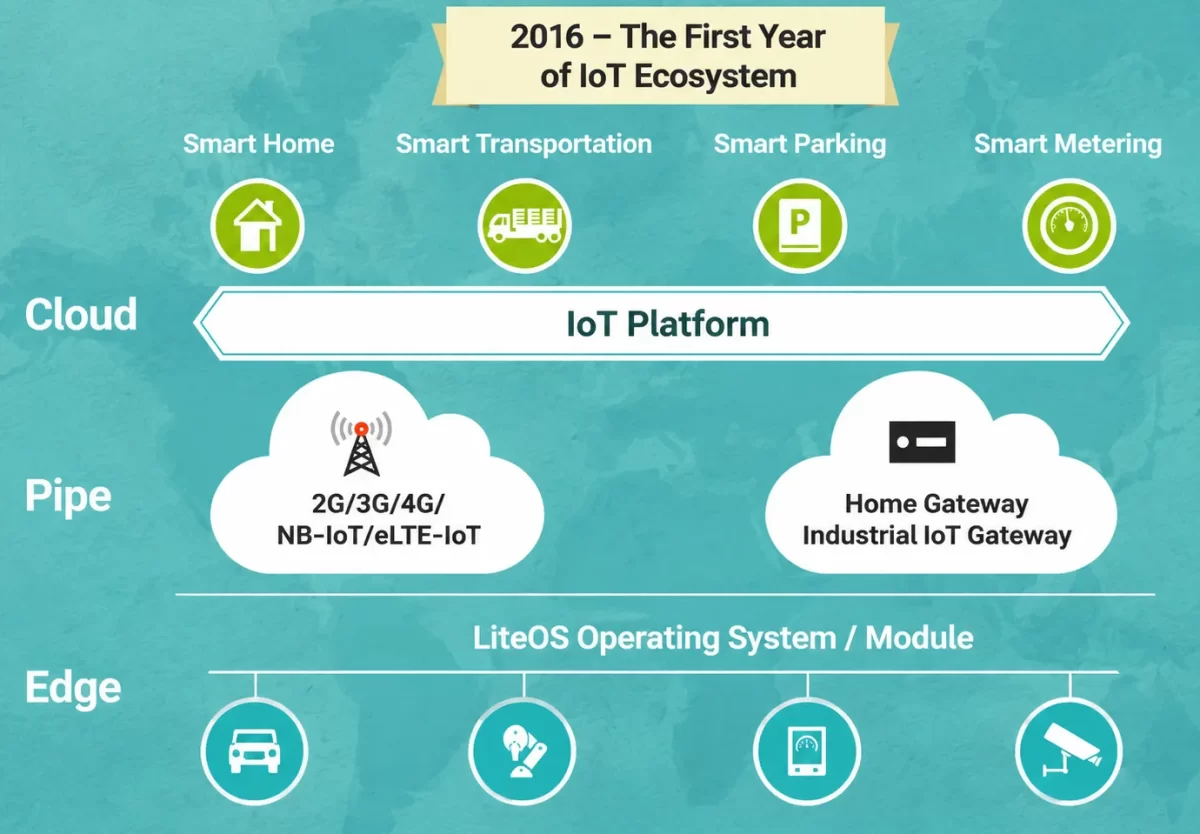
IoT-Schicht
From the perspective of the cloud-pipe-end logical system, the levels of the Internet of Things can be simply divided into four levels: perception layer, network layer, platform layer, and application layer. (For example, our company – Chengdu Zongheng Intelligent Control is at the network layer, and the company’s business is the research and development and production of Internet of Things data transmission equipment). Let’s use a picture to describe these four layers.
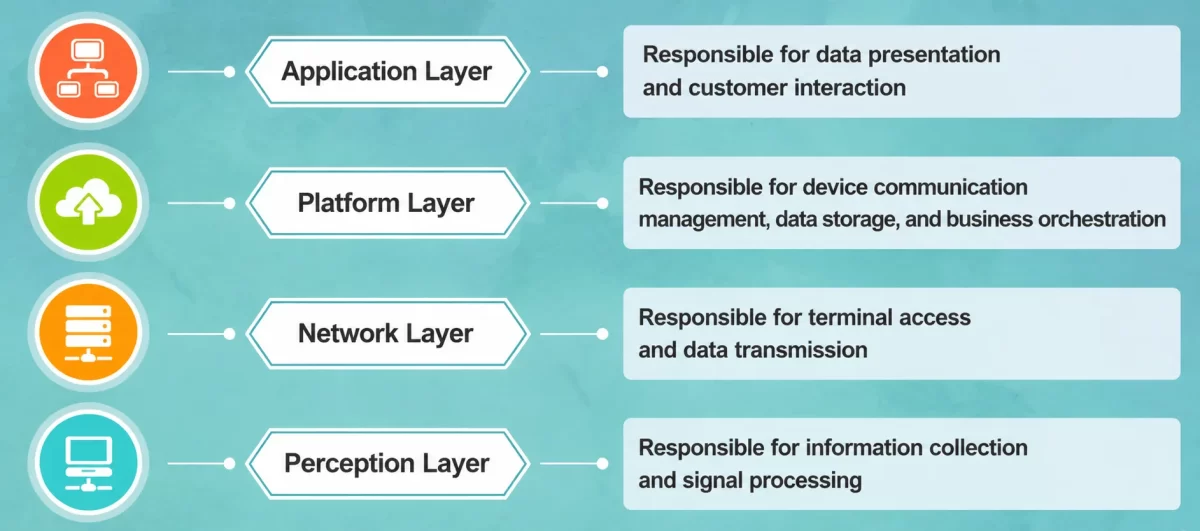
If further divided by vertical fields, the IoT industry applications can be simply divided into several major fields, such as industrial IoT, Internet of Vehicles, smart home IoT, etc. The communication used in IoT application scenarios in different vertical fields is not the same. Usually, the Internet of Things will adopt corresponding communication technologies based on business needs.
Here we list the business applications of wide-area wireless communication technology, such as Internet of Vehicles and video surveillance. Businesses such as Internet of Vehicles and video surveillance have high communication transmission rate requirements, usually above 100Mbps, and will use 4G, 5G, or LTE-V communication methods. These communication methods are characterized by low delay, fast speed, high power consumption, and high cost.
For services such as smart wearable devices, elevator networking, electronic advertising, and wireless ATMs that we have access to daily, communication methods such as eMTC and GPRS are usually used. The characteristics of these communication methods are that the transmission rate is around 1Mbps, with low latency and low cost. Power consumption is also lower.
Für Dienste wie die Fernablesung von Zählern, intelligentes Parken und intelligente Landwirtschaft wird NB-IoT für die Kommunikation verwendet, um die Merkmale niedrige Kosten, geringer Stromverbrauch, niedrige Kosten und große Reichweite zu erfüllen.

In diesem Artikel haben wir die Entwicklungsgeschichte und die hierarchische Einteilung des Internets der Dinge verstanden. Im nächsten Artikel werden wir über die drahtlose Kommunikationstechnologie sprechen und das Internet der Dinge aus einer technischen Perspektive verstehen.