Speaking of the Internet of Things, are you both familiar and unfamiliar? Yes, from radio frequency technology that can be seen everywhere to smart wearables, smart appliances, and rapidly developing smart homes. Intelligent transportation, shared bicycles, drone transportation, smart medical care, etc. Behind these technological applications is the Internet of Things, but they are far from representing all of the Internet of Things.
The Internet of Things – this innovative Internet technology based on communication sensing technology and with unlimited potential for development- has set off the third wave of the development of the world’s information industry and will trigger huge changes in production and lifestyles. So how does communication sensing technology achieve such a powerful Internet of Things?
Зарождение Интернета вещей
Прежде чем понять, что такое Интернет вещей, необходимо составить предварительное представление о концепциях и технологиях Интернета вещей. Причиной появления Интернета вещей стал кофейник. Да, вы не ослышались. Это был обычный кофейник, стоявший внизу в компьютерной лаборатории Трюи Кембриджского университета в 1991 году. Кофейник не мог ничего вразумительного сказать ученым наверху. Умные ученые написали набор программ, установили рядом с кофейником камеру и, используя технологию захвата изображения с терминальной камеры, передавали его на лабораторный компьютер со скоростью 3 кадра в секунду, чтобы ученые могли в любой момент проверить, сварился ли кофе. Неожиданно это "изобретение ленивого человека" стало самым ранним прототипом Интернета вещей.
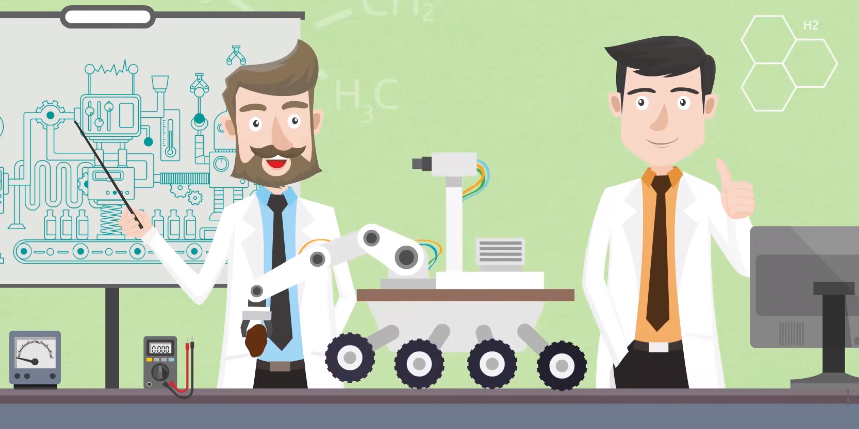
In 1993, as the first X-Windows system case. The “Truy Coffee Pot Server” incident was also spread online. As far as network digital cameras are concerned, to be precise, their market development, technical applications, and various future network expansions all originated from the world’s most prestigious “Truy coffee pot”, so when was the concept of the Internet of Things proposed?
Предложение концепции Интернета вещей
Eight years after the “coffee pot” incident, that is, in 1999, Kevin Ashton first proposed the concept of the Internet of Things at the Auto-ID Center of the Massachusetts Institute of Technology in the United States. The Internet of Things at this time only refers to relying on RFID technology and equipment. The agreed communication protocol is combined with the Internet to realize intelligent identification and management of item information, and realize the interconnection, exchange, and sharing of item information to form a network.
История развития Интернета вещей
Вступив в XXI век, Интернет вещей начал стремительно развиваться, и процесс его развития прошел пять этапов.
(1) In 2005, the International Telecommunication Union ITU released the “ITU Internet Report 2005: Internet of Things” at the World Summit on the Information Society (WSIS) in Tunisia, which applied the concept of “Internet of Things”. At this time, the definition and scope of the Internet of Things have changed, and it is no longer just IoT based on RFID technology.
(2) В ноябре 2008 года компания IBM предложила концепцию "Умной планеты".
(3) В августе 2009 года проект "Воспринимая Китай" подтолкнул развитие исследований и приложений в области Интернета вещей в нашей стране к кульминации. Город Уси взял на себя инициативу по созданию исследовательского центра "Воспринимая Китай". Китайская академия наук и Цзяннаньский университет Уси также создали национальную академию "Первая физическая фабрика IoT".
(4) В апреле 2013 года на Ганноверской промышленной выставке правительство Германии официально предложило стратегию "Индустрия 4.0", направленную на повышение уровня интеллекта в обрабатывающей промышленности. Ее технической основой являются сетевые системы и Интернет вещей.
(5) 8 мая 2015 года был подписан и опубликован документ "Сделано в Китае 2025". Являясь первой десятилетней программой Китайской стратегии могущества, углубленная реализация "Сделано в Китае 2025" еще больше ускорила развитие больших данных, больших данных и Интернета вещей. Применение в промышленном производстве.
Если разделить процесс развития Интернета вещей за последние 20 лет и его будущее, то его можно условно разделить на три периода.
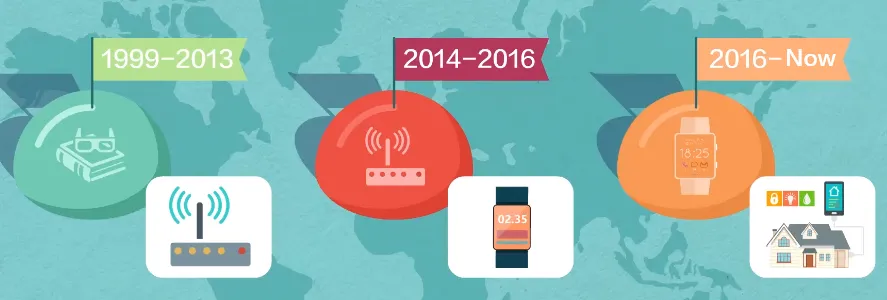
The first period is from the introduction of the concept of the Internet of Things to 2013. During this period, the Internet of Things remained in the conceptual stage, and the equipment involved was limited to “things” in the field of wireless radio frequency. The equipment involved is also limited to “things” in the field of wireless radio frequency. “thing”.
Второй период - с 2014 по 2016 год. Этот период отмечен приобретением компанией Google компании Nest. Интернет вещей превратился из беспроводных радиочастотных устройств в умные носимые устройства и устройства "умного дома".
Третий период начался с 2016 года по настоящее время. За это время умные носимые устройства и устройства для умного дома стали более совершенными и вошли в повседневную жизнь. В то же время зрелость технологий IoT стремительно растет, создавая основу для развития экосистемы IoT. Заложите хороший фундамент для строительства.
The freezing of the NB-IoT protocol marks a breakthrough for the Internet of Things at the wide-area connection protocol level. If analyzed from the perspective of our cloud-pipe-end system logic system, the trend of the cloud-pipe-end closed-loop completion of the Internet of Things has become more and more obvious. It is becoming more and more obvious, and we can even determine that 2016 is the first year of the Internet of Things ecosystem.
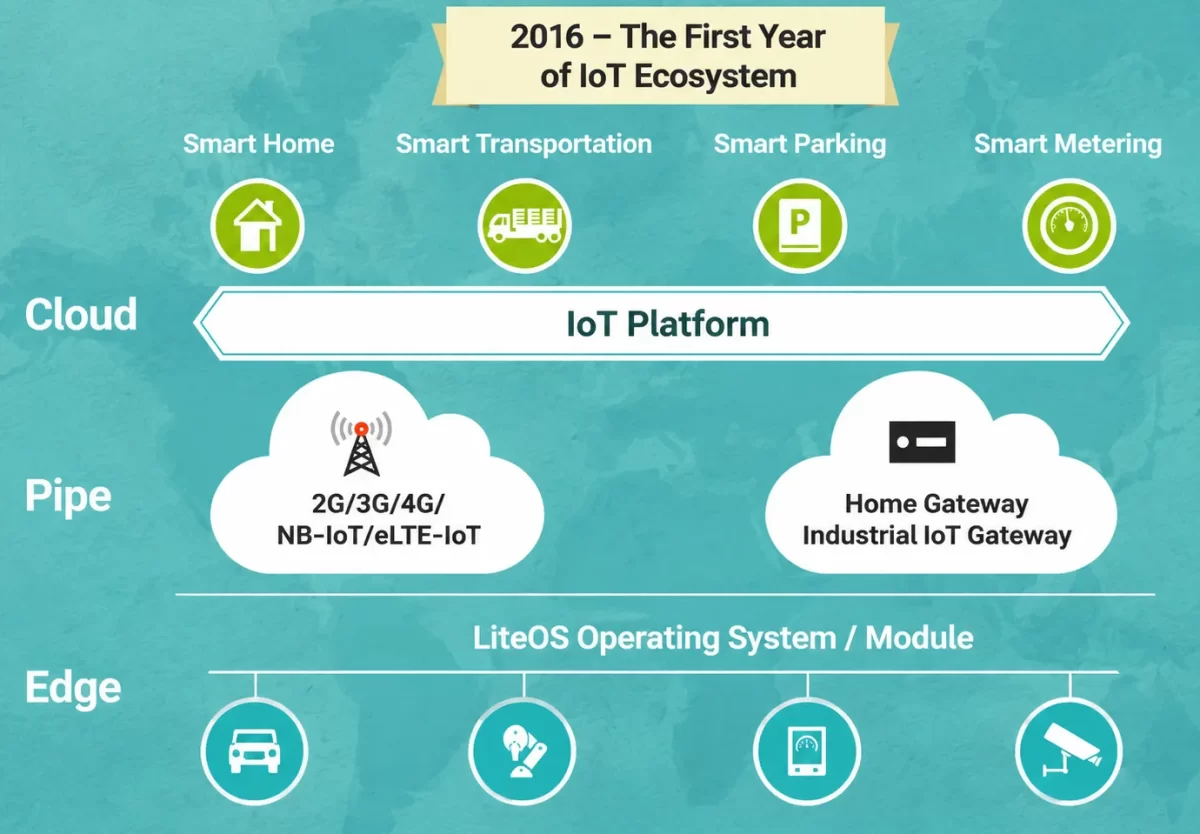
Уровень IoT
С точки зрения логической системы "облако-труба-конец", уровни Интернета вещей можно разделить на четыре: уровень восприятия, сетевой уровень, уровень платформы и уровень приложений. (Например, наша компания - Chengdu Zongheng Intelligent Control - находится на сетевом уровне, и деятельность компании заключается в исследовании, разработке и производстве оборудования для передачи данных Интернета вещей). Чтобы описать эти четыре уровня, давайте воспользуемся картинкой.
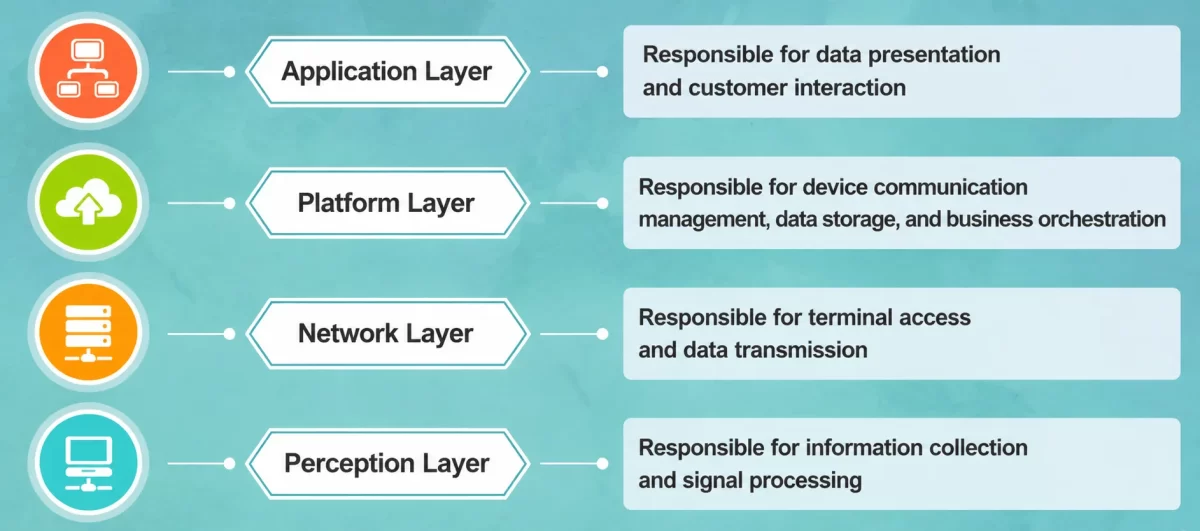
If further divided by vertical fields, the IoT industry applications can be simply divided into several major fields, such as industrial IoT, Internet of Vehicles, smart home IoT, etc. The communication used in IoT application scenarios in different vertical fields is not the same. Usually, the Internet of Things will adopt corresponding communication technologies based on business needs.
Here we list the business applications of wide-area wireless communication technology, such as Internet of Vehicles and video surveillance. Businesses such as Internet of Vehicles and video surveillance have high communication transmission rate requirements, usually above 100Mbps, and will use 4G, 5G, or LTE-V communication methods. These communication methods are characterized by low delay, fast speed, high power consumption, and high cost.
For services such as smart wearable devices, elevator networking, electronic advertising, and wireless ATMs that we have access to daily, communication methods such as eMTC and GPRS are usually used. The characteristics of these communication methods are that the transmission rate is around 1Mbps, with low latency and low cost. Power consumption is also lower.
Для таких сервисов, как дистанционное считывание показаний счетчиков, "умная" парковка и "умное" сельское хозяйство, для связи будет использоваться NB-IoT, отвечающий таким характеристикам, как низкая стоимость, низкое энергопотребление, низкая цена и широкое покрытие.

Благодаря этой статье мы поняли историю развития и иерархическое деление Интернета вещей. В следующей статье мы поговорим о технологиях беспроводной связи и разберем Интернет вещей с технической точки зрения.