
In many industrial data collection projects, cabling quickly becomes one of the largest hidden costs.
It’s a common scenario: only a small amount of data is needed from remote devices, yet the distance between sites makes traditional wiring expensive and slow to deploy. In industrial parks, agricultural fields, legacy facilities, or other dispersed locations, running cables can easily complicate the project, extend timelines, and increase long-term maintenance efforts.
As industrial systems expand, one question often arises:
How can reliable industrial data be collected over long distances without relying on extensive cabling?
For many distributed industrial scenarios, LoRa (Long Range wireless communication) provides a practical solution.
LoRa as a Practical Option for Long-Range Industrial Communication
LoRa is a low-power, wide-area wireless technology designed for long-distance communication with small data payloads. Unlike traditional wired solutions or high-bandwidth wireless technologies, LoRa prioritizes stability, coverage, and efficiency over raw speed.
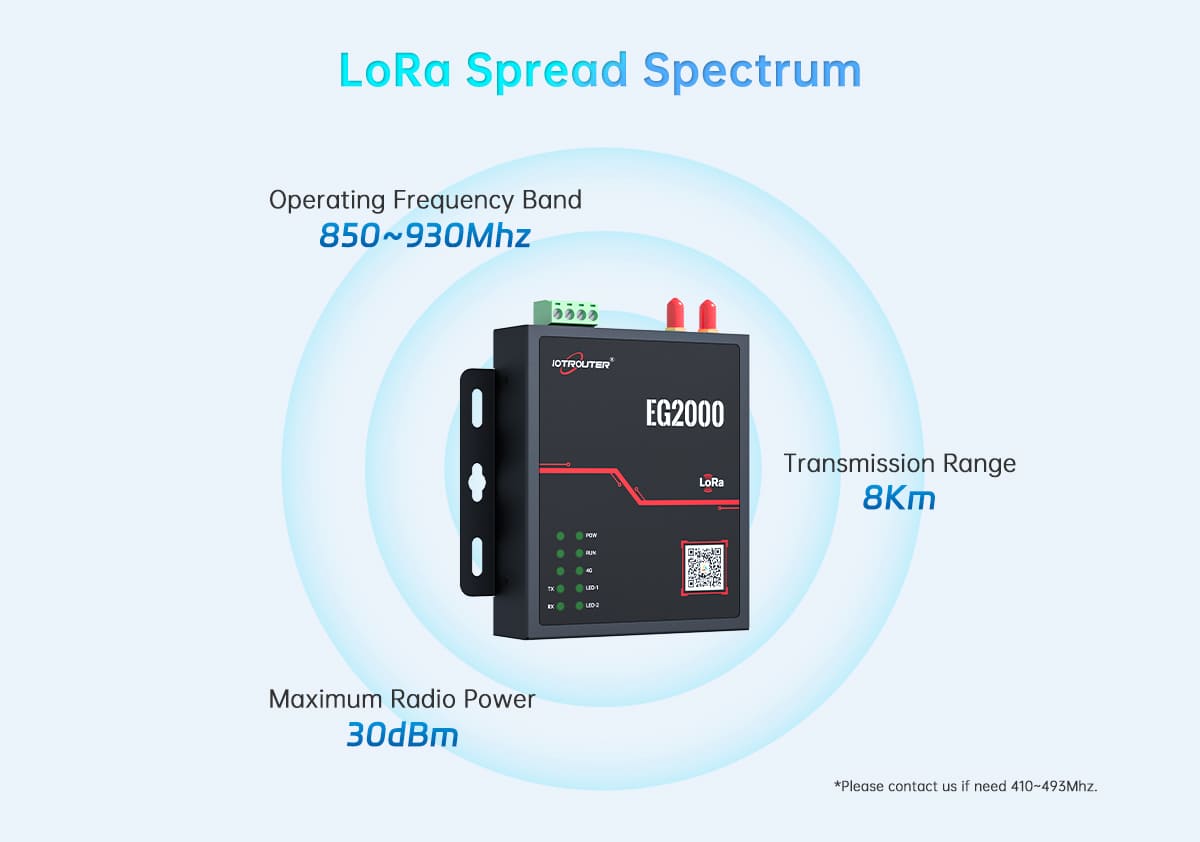
In open areas, LoRa communication can reach several kilometers. In more complex industrial environments with buildings, machinery, and electromagnetic interference, transmission distances are shorter but still sufficient for most layouts where devices are widely distributed.
From our observations in multiple deployments, even a few kilometers of reliable wireless link can dramatically simplify installation and reduce costs.
The main advantage of LoRa is not just its range—it also minimizes physical infrastructure. Fewer cables mean faster deployment, fewer potential failure points, and simpler long-term maintenance.
From Wireless Links to a Complete Industrial Data System
Wireless communication alone does not solve the full problem. Data still needs to be collected from field devices, processed locally when necessary, and integrated into higher-level systems securely.
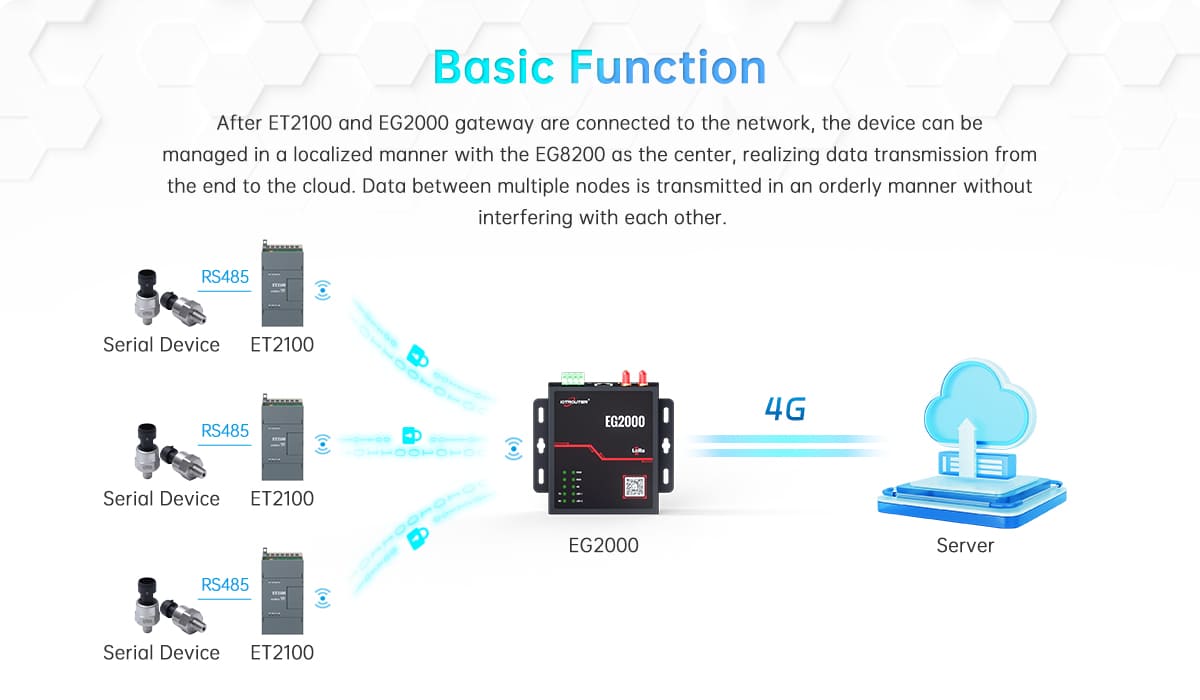
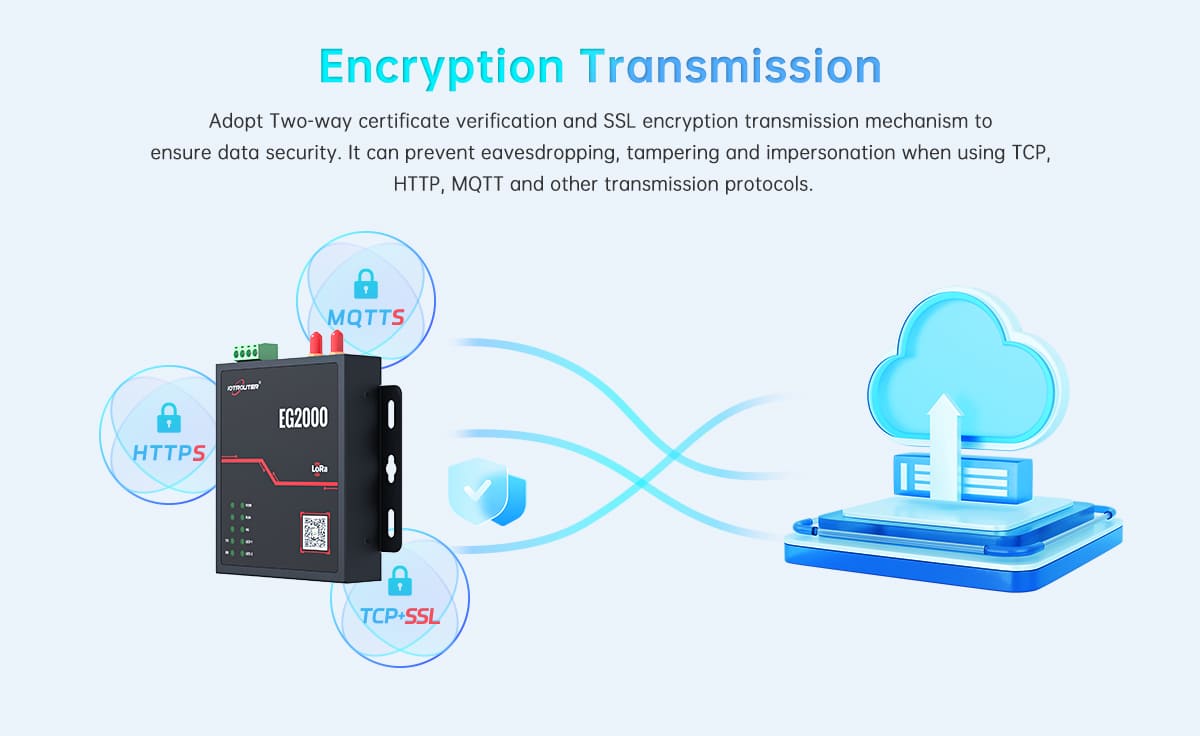
In many deployments, an industrial LoRa edge gateway, such as the EG2000, acts as the central node. Serving as a bridge between field devices and IT systems, the gateway supports common industrial protocols like Modbus RTU/TCP, MQTT, and OPC, allowing seamless communication with PLCs, meters, and sensors.
The edge processing capabilities enhance system efficiency. Simple filtering, logic execution, and protocol conversion can be handled locally, reducing unnecessary cloud traffic and improving response times. This approach keeps the system flexible without adding unnecessary complexity.
Typically, remote LoRa terminal devices are connected to field equipment via RS485 interfaces. Data is transmitted wirelessly to the gateway, and then forwarded to cloud platforms or supervisory systems over Ethernet or cellular networks. From our experience, this setup works reliably in both temporary and permanent deployments.
Understanding the Real Value Behind “8 Kilometers”
Communication range is often expressed as a single number, but its practical implications are far more significant in real deployments.
1)Reduced cabling costs
Extending fiber or Ethernet over long distances involves not only cable material but also trenching, protection, and labor. LoRa-based architectures can substantially reduce infrastructure needs.
2)Faster deployment and easier expansion
Wireless nodes can be installed or relocated without construction work, which is particularly valuable for temporary installations or phased expansions.
3)Lower maintenance complexity
Fewer physical connections mean fewer failure points, simplifying long-term operation and maintenance.
While open-area deployments may reach distances close to 8 kilometers, industrial environments typically require more conservative planning. Stable communication within shorter ranges usually meets the requirements of most distributed systems.
Typical Application: Distributed Irrigation and Remote Control
A common scenario is large-scale agricultural irrigation, where control points such as valves and pump stations are spread across wide areas.
Traditional wired solutions require communication lines from a central control room to each remote location, often resulting in high installation costs. A LoRa-based system allows a central gateway to communicate wirelessly with multiple remote nodes. Operational data and control commands are transmitted reliably, while the gateway handles integration with cloud platforms for monitoring and management.
In practice, this approach not only lowers deployment costs but also makes future system expansions more straightforward. From several projects we observed, the difference in setup time and flexibility can be dramatic.
Frequently Asked Questions
1.Can LoRa achieve long-distance communication in real industrial environments?
Yes, though the effective range depends on obstacles, interference, and site layout. Open areas allow longer distances, while industrial sites usually see stable connections over shorter ranges.
2.How does LoRa compare with 4G or Wi-Fi?
LoRa is optimized for low data rates over long distances. Cellular and Wi-Fi are better suited for high bandwidth or large data volumes.
3.Is local data processing supported?
Yes. Industrial edge gateways handle local processing, logic execution, and protocol conversion, reducing cloud load and improving responsiveness.
Conclusione
LoRa is not intended to replace wired communication, but to complement it where cabling is expensive, impractical, or difficult to maintain.
By combining long-range wireless communication with industrial edge gateways, distributed systems can collect and process data efficiently without increasing infrastructure complexity. This approach balances flexibility, scalability, and long-term reliability—making it a practical choice for many industrial data collection projects.