If you’re looking for “smart IoT companies,” chances are you’re not looking for a specific product. You probably want to know who the major players are, what kind of companies are working in this space, how they differ from each other, and what the overall market looks like today.
This article is about that.
A smart IoT company can generally be described as a company providing hardware, software, connectivity, or platforms to collect, process, and act on data from connected devices. This ecosystem includes hardware vendors, cloud platform providers, industrial automation companies, connectivity providers, and specialized solution providers. Knowing who these companies are and what they do can help you evaluate partners, compare solutions, or just try to make sense of a crowded market.
The market at a glance
Recent industry reports show the enterprise IoT market is still growing steadily. Growth is being enabled by AI deployment, industrial automation, and growing deployments in manufacturing, energy, and logistics. Today, there are billions of active IoT endpoints in the world, and the conversation has moved on—IoT is increasingly seen as a given. But the real question is, what do you actually do with all that connected device data?
Where specialized industrial IoT companies fit in
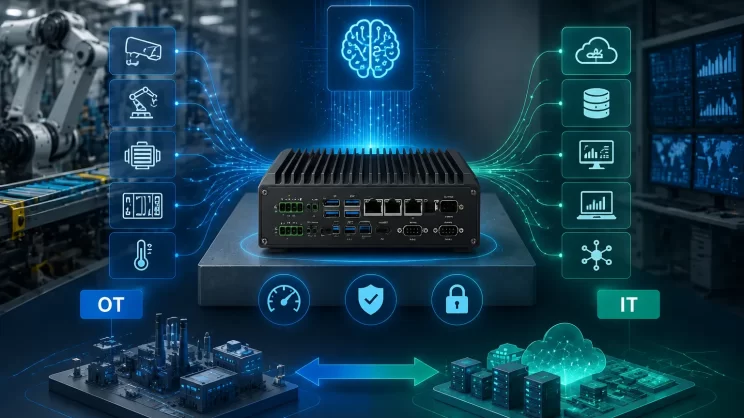
The IoT market is not only shaped by large automation vendors and cloud providers. More and more specialized industrial IoT companies are emerging between factory floor and cloud platforms. These companies address practical deployment challenges such as integrating legacy equipment, converting protocols, and processing data at the edge. Large vendors provide comprehensive platforms, but they do not always address the specific connectivity needs of mixed-vendor environments or legacy equipment that was never designed for cloud connectivity. This is where the specialized hardware providers come in to bridge the gap between what’s already installed and what’s possible with modern IoT architecture.
Smart IoT Company Types
Not all IoT companies are created equal. The market is divided into a few distinct categories. There are companies of all sizes and roles within the IoT ecosystem. The big vendors provide a full platform, and the specialists provide specific layers like edge hardware, connectivity, or protocol integration.
| Company Type | Beispiele | Main Focus |
|---|---|---|
| Industrielle Automatisierung | Siemens, ABB, Schneider Electric, Honeywell | PLCs, factory automation, industrial IoT platforms |
| Industrial Edge Hardware | Advantech, Moxa, and other specialized providers such as IOTRouter | Gateways, edge controllers, protocol conversion |
| Cloud IoT Platforms | Microsoft Azure, AWS | Device management, data analytics, AI integration |
| Connectivity & Networking | Cisco, Huawei, Nokia | Network infrastructure, 5G, private wireless |
| IoT Security | Nozomi Networks, Dragos, Forescout | OT cybersecurity, device identity, compliance |
Key Players and Their Roles
Industrielle Automatisierung
Siemens is one of the bigger names in the industrial IoT space. The company specializes in industrial automation, PLC, and smart factory solutions. Siemens has established a strong position around Industrial Edge, digital twin technologies, and its Siemens Xcelerator ecosystem. Digital Twin Composer is a software solution that combines Siemens’ digital twin technologies with libraries from NVIDIA Omniverse and real-time physical data and was introduced at CES 2026. The solution will develop high-fidelity industrial digital twins and is expected to be available on the Siemens Xcelerator Marketplace in mid-2026. Siemens is well known for serving large manufacturing enterprises that need end-to-end automation and deep integration with existing plant floor equipment.
Schneider Electric has expertise in energy management, building automation, and industrial control. It uses IoT to optimize energy consumption, to improve the efficiency of its buildings, and to enable predictive maintenance in its properties.
ABB focuses on robotics, industrial drives, electrification, and digital solutions for industrial applications. ABB Genix Industrial IoT and AI Suite, built in collaboration with Microsoft, uses analytical and generative AI to make sense of industrial data in real time.
Honeywell and Rockwell Automation are also in this segment.
Industrial Edge Hardware Connectivity to Local Intelligence
Beyond the big automation providers, there is a whole ecosystem of niche hardware players specializing in edge connectivity, industrial gateways, and protocol conversion. These include Advantech, Moxa, Lantronix, Axiomtek, and more. These companies generally supply system integrators and industrial end users who require flexible, deployable hardware that connects legacy equipment to modern cloud platforms.
Whereas large-scale automation vendors provide complete automation ecosystems, specialized industrial IoT hardware vendors are focused on flexible connectivity, protocol integration, and edge deployment for specific industrial use cases. They integrate legacy industrial equipment with modern cloud-based IoT platforms.
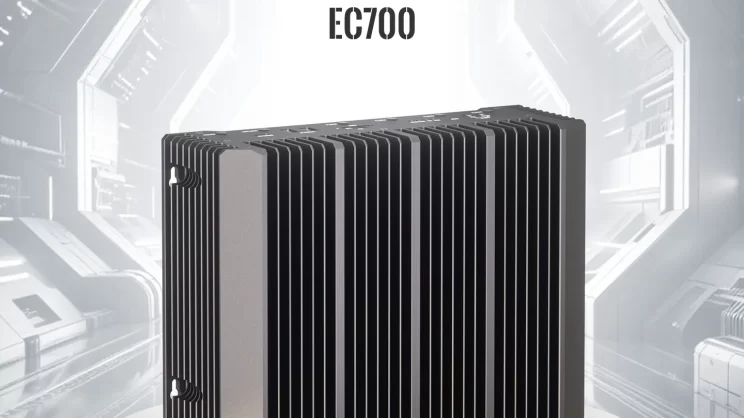
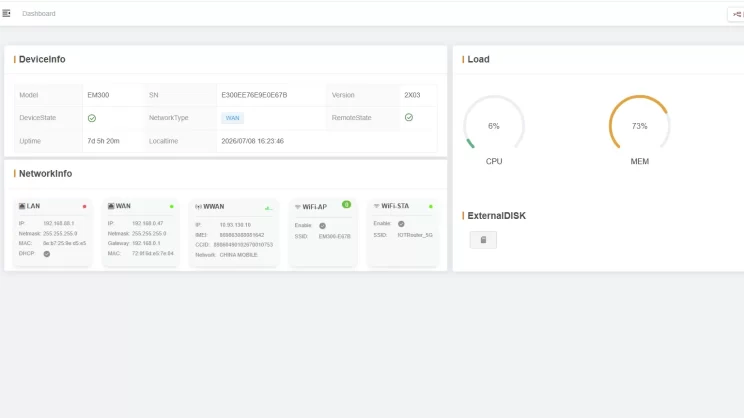
IOTRouter is an industrial IoT hardware provider specializing in connectivity, data acquisition, and edge intelligence. The company provides industrial gateways for data acquisition and protocol conversion (e.g., converting industrial protocols such as Modbus to cloud protocols such as MQTT), edge computing gateways, and edge controllers that combine data acquisition and real-time control on a single platform.
The company mainly targets industrial system integrators, equipment manufacturers, and enterprises that need to connect existing machines, PLCs, meters, and field devices to modern IoT platforms. These solutions enable factories, energy systems, and building automation projects to connect legacy equipment, collect field data, and integrate industrial devices with modern IoT platforms. Designed for industrial environments that require reliable, flexible connectivity, IOTRouter’s hardware is used to pull data from PLCs to enable remote monitoring of widely distributed assets or local processing at the edge.
Cloud IoT Platforms
Microsoft Azure IoT is an end-to-end cloud IoT platform. Azure IoT Hub is a managed service for communications between IoT devices and cloud solutions. It’s known for its strong enterprise integration, AI capabilities, and hybrid deployment options that are well-suited to organizations already invested in Microsoft’s ecosystem.
Amazon Web Services (AWS) IoT provides cloud infrastructure, device management, and edge computing capabilities. With AWS IoT Greengrass, you can process IoT locally at the edge. Organizations that require extensive coverage of services and deep integration with other AWS cloud services often choose AWS.
In August 2023, Google Cloud IoT Core was decommissioned. Most IoT solutions on Google Cloud today are built with custom architectures leveraging Google Cloud services, analytical tools, and third-party connectivity components. IBM also has cloud, data analytics, and AI capabilities that support IoT-related applications.
Networking & Connectivity
Cisco Systems focuses on industrial networking and IoT connectivity. Cisco’s industrial routers and Catalyst switches are used in factories, utilities, and transportation infrastructure. The company provides industrial-grade networking equipment that supports WiFi 6, 5G, 4G LTE, and private wireless networks. Cisco serves enterprises requiring secure industrial networking infrastructure across distributed sites.
Huawei and Nokia are also big connectivity players, especially in markets outside North America.
Security of IoT
Security is now a basic requirement, not an afterthought. Nozomi Networks, Dragos, and Forescout are key players in OT and IoT cybersecurity. These companies offer threat detection, asset visibility, and vulnerability management for industrial control systems and connected devices. Security specialists have become key partners for industrial operators as OT environments become more connected.
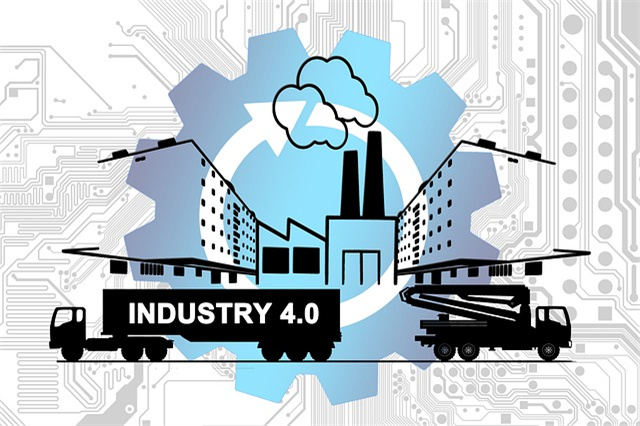
Major trends in the industry
AI and IoT Are Combining
This is a huge trend. The enterprise IoT market is headed toward what industry analysts call the “agentic and AI phase” of maturity. AI accelerators are being embedded in hardware by device makers. Connectivity is more and more pervasive and less and less evident. And software is more assistive, slowly moving toward self‑optimizing orchestration.
Edge AI has been a hot topic at industry events such as MWC, with the idea of doing more data processing on the device rather than sending it back over the network. This is critical for industrial use cases where latency, bandwidth, and data sovereignty are real concerns.
Edge Computing Is the New Normal
The shift from cloud-only to edge computing is gathering steam. For time-sensitive applications (autonomous systems, grid automation, safety monitoring), processing data at the edge reduces latency in ways that matter operationally. Edge gateways and industrial edge servers are becoming the key component of IIoT architecture.
Digital Twins Are Here
Digital twins have graduated from pilot projects to operational tools. One example is Siemens’ Digital Twin Composer, which allows companies to create photorealistic virtual representations of plants and test scenarios before they’re put into place. ABB and other automation vendors provide similar capabilities.
Private Wireless Networks and 5G
Industrial Ethernet, private wireless networks, and 5G are expanding connectivity options for factories, ports, mines, and utilities. Cisco industrial routers now support 5G, and module vendors are moving to RedCap and eRedCap migration for low-power IoT applications.
Industrial Cybersecurity Is a Requirement
As OT systems become more connected, cybersecurity has evolved from a supporting function to a core design requirement. Industrial operators must take into account the EU Cyber Resilience Act and other frameworks, identity and access control, network segmentation, and vulnerability management, among others. This has led to increased demand for security vendors such as Nozomi Networks, Dragos, and Forescout.
How to Choose a Smart IoT Company for Industrial Applications
If you’re evaluating IoT partners for an industrial project, here are a few things to consider.
Hardware capability. Does the company offer equipment that can handle your operating environment? Look at industrial temperature range, protocol support, and reliability specifications. Not all hardware is built for factory floors or outdoor installations.
Edge intelligence. Can the device process data locally? Protocol conversion, data filtering, and local decision‑making reduce dependence on cloud connectivity and improve response times.
Connectivity options. What does the device support? Ethernet, 4G/5G, LoRaWAN—the right mix depends on your deployment scenario. If you’re working in remote locations, cellular or LPWAN matters more than Wi‑Fi.
Integration with your existing stack. Does the solution work with your current PLCs, SCADA systems, and cloud platforms? Open standards like OPC UA and MQTT make integration easier.
Security. Look for devices and platforms that follow established security standards. This is especially important if you’re in a regulated industry.
Häufig gestellte Fragen
What is a smart IoT company? A smart IoT company develops technologies—hardware, software, or both—that connect devices, process data, and enable intelligent decision‑making across industries. This includes industrial automation firms, cloud platform providers, connectivity specialists, and hardware vendors.
What’s the difference between IoT platform companies and IoT hardware companies? Platform companies (like Microsoft Azure and AWS) provide cloud‑based services for device management, data analytics, and AI integration. Hardware companies (like Advantech, Moxa, and IOTRouter) provide the physical devices—gateways, edge controllers, and communication devices—that collect and transmit data from the field.
Which industries benefit most from Industrial IoT? Manufacturing is one of the largest application areas for Industrial IoT, together with energy, utilities, transportation, and process industries.
How do industrial IoT companies support smart manufacturing? They provide the connectivity, edge processing, and data integration that enable real‑time visibility, predictive maintenance, quality control, and operational optimization across factory floors.
The Bottom Line
The IoT industry is less about “connecting things” and more about what you do with the connections. The major players are all moving in the same direction—toward AI integration, edge intelligence, and industry‑specific solutions—but they’re approaching it from different angles. Industrial automation giants like Siemens and ABB start from the factory floor. Cloud providers like Microsoft and AWS start from the data center. Connectivity specialists like Cisco start from the network. And specialized hardware vendors focus on the edge devices that tie it all together.
For most enterprises, the right answer isn’t picking one “best” company. It’s understanding which type of player fits your specific needs—and how different types can work together in a coherent architecture. For industrial projects requiring flexible gateways, edge controllers, and protocol integration, specialized Industrial IoT hardware providers offer a practical alternative to full‑stack automation solutions, especially for projects that involve protocol integration, legacy equipment connectivity, and edge‑based data processing.